
The Celine bag history represents one of fashion's most remarkable transformations, evolving from a modest children's shoe business into one of the most coveted luxury handbag brands in the world. Understanding this evolution provides insight into how craftsmanship, strategic design decisions, and shifting cultural values can elevate a brand from practical accessory maker to fashion house icon. The story of Celine bags reflects broader changes in women's roles, luxury consumption, and the meaning of timeless design in contemporary fashion.
The Foundation: Celine Vipiana's Vision 1945
The Celine bag history begins not with handbags at all, but with children's footwear. In 1945, Celine Vipiana and her husband Richard opened a made-to-measure children's shoe boutique at 52 rue de Malte in Paris. According to fashion historian Didier Grumbach's research on French luxury brands, post-war Paris was rebuilding both physically and economically, creating opportunities for skilled artisans willing to serve demanding clientele.
Celine Vipiana brought exceptional attention to detail and quality craftsmanship to her children's shoes. Her work emphasized traditional French leatherworking techniques, including hand-stitching and careful leather selection. These foundational principles of quality and craftsmanship would later define the Celine bag history when the company expanded beyond footwear.
The boutique's success among Parisian families established Celine's reputation for reliability and refinement. Within a few years, customers began requesting matching leather goods to complement the shoes, including small bags and accessories for children. This organic customer demand, rather than calculated business strategy, initiated Celine's movement toward handbag production.
Expanding into Women's Accessories: 1960s
The 1960s marked the crucial expansion that would eventually create the Celine bag history as we know it today. Celine launched its first women's ready-to-wear fashion line in 1960, focusing on sportswear with a practical, chic aesthetic. By the mid-to-late 1960s, the brand ventured into fine Italian-made leather goods, opening a factory in Florence and introducing collections that included handbags, gloves, and belts, applying the same quality standards and leatherworking techniques developed for children's shoes to adult accessories.
These early Celine bags emphasized practical elegance. According to the Victoria and Albert Museum's fashion accessories collection research, 1960s handbags generally fell into two categories: structured, ladylike styles associated with established luxury houses, or youthful, mod-influenced designs promoted by emerging designers like Mary Quant. Celine positioned itself between these extremes, offering well-constructed bags with clean lines that appealed to sophisticated women seeking quality without ostentation.
By the late 1960s, Celine had established a recognizable aesthetic in the Celine bag history: understated luxury characterized by exceptional materials, precise construction, and minimal branding. According to fashion journalist Suzy Menkes' research on French fashion houses, this approach differentiated Celine from more logo-prominent competitors, appealing to women who valued discretion alongside quality.
The 1970s: Establishing Bag Design Language
The 1970s solidified core design principles that would define Celine bag history through subsequent decades. Celine introduced several bag styles during this period that established the house's design vocabulary of structured shapes, functional hardware, and refined simplicity.
The Celine horse-and-carriage logo, introduced in the early 1970s, became the brand's first recognizable symbol. This emblem referenced both Parisian heritage and the tradition of fine harness-making, connecting Celine bags to centuries of French leather craftsmanship. Unlike the prominent monogram patterns popularized by some competitors, Celine used its logo sparingly, typically as small hardware details or subtle embossing.
Color palettes during the 1970s Celine bag history emphasized rich, enduring tones. Pantone fashion color research archives show while many 1970s accessories embraced bold oranges, yellows, and greens, Celine focused on cognac browns, deep burgundies, forest greens, and classic blacks. These choices reinforced the brand's positioning as offering investment pieces rather than trend-driven accessories. The introduction of bags featuring the Triomphe clasp during this era established a design signature that would endure for decades. Celine Triomphe bags, characterized by this distinctive hardware inspired by Parisian architecture, exemplified the house's approach to creating recognizable designs through subtle details rather than prominent logos.
The 1980s: Growing International Recognition
The 1980s brought significant expansion to Celine bag history as the brand gained international recognition. In 1987, LVMH (Moët Hennessy Louis Vuitton) acquired Celine, providing resources for global expansion while maintaining the brand's craftsmanship heritage. LVMH annual reports from the period indicate this acquisition aimed to strengthen the conglomerate's accessories division with a brand emphasizing quality over logo visibility.
During the 1980s power dressing era, Celine bags appealed to professional women seeking sophisticated accessories that conveyed competence rather than conspicuous consumption. Fashion historian Valerie Steele's research on 1980s fashion demonstrates how the decade's emphasis on shoulder pads, structured silhouettes, and authoritative dressing created demand for equally structured handbags. Celine bag history from this period includes numerous box-shaped bags with top handles, designed to accompany tailored suits into boardrooms and business meetings.
The Celine Boston bag emerged during this era, as documented in luxury accessories archives. This soft, rounded bag with double handles and a shoulder strap offered versatility unusual for structured handbags of the period. The Boston bag's generous interior and supple leather construction made it practical for professional women carrying documents, while its refined appearance maintained appropriate formality for business environments.
Michael Kors served as Celine's creative director from 1997 to 2004, though he joined near the end of the 1990s. His appointment marked LVMH's recognition that Celine bag history needed contemporary interpretation to appeal to younger luxury consumers while maintaining the brand's heritage of quality.
The 2000s: Modern Classics Under Kors
Michael Kors' tenure brought American sportswear sensibility to Celine bag history. Vogue archives from the period show how Kors maintained Celine's commitment to quality materials and construction while introducing more relaxed silhouettes and lighter color palettes. His designs emphasized wearability and versatility, characteristics valued by increasingly mobile, international luxury consumers.
The Celine Boogie bag, introduced during Kors' tenure, exemplified this approach. Women's Wear Daily coverage from 2004 describes the Boogie bag as featuring soft, unstructured leather with multiple pockets and an adjustable shoulder strap, offering casual sophistication distinct from both Celine's traditionally structured bags and heavily logo-marked competitors' offerings. The bag appealed to women seeking luxury accessories for weekend wear rather than formal occasions.
Color became more important in Celine bag history during the 2000s. Kors expanded Celine's traditionally conservative palette to include soft pinks, blues, and seasonal colors while maintaining the house's signature neutrals. This evolution reflected broader fashion trends toward personalization and individual expression through accessories.
However, by the mid-2000s, Celine bag history faced challenges. Luxury industry analysts noted the brand lacked the must-have iconic bags that drove competitors' success. While Celine maintained loyal customers who valued quality and discretion, it had not created the cultural phenomenon pieces that generated waiting lists and media attention.
The Phoebe Philo Revolution: 2008-2018
The appointment of British designer Phoebe Philo as creative director in 2008 initiated the most transformative period in Celine bag history. Business of Fashion reporting indicates Philo had previously revitalized Chloé, and LVMH tasked her with making Celine relevant to contemporary luxury consumers without abandoning its heritage.
Philo's approach revolutionized Celine bag history by creating bags that professional women actually wanted to carry. Her interviews in T Magazine and other publications reveal she designed for herself and women like her, busy professionals balancing careers and personal lives who needed beautiful, functional bags rather than status symbols requiring careful handling.
The Luggage Tote: Redefining Celine Bag History
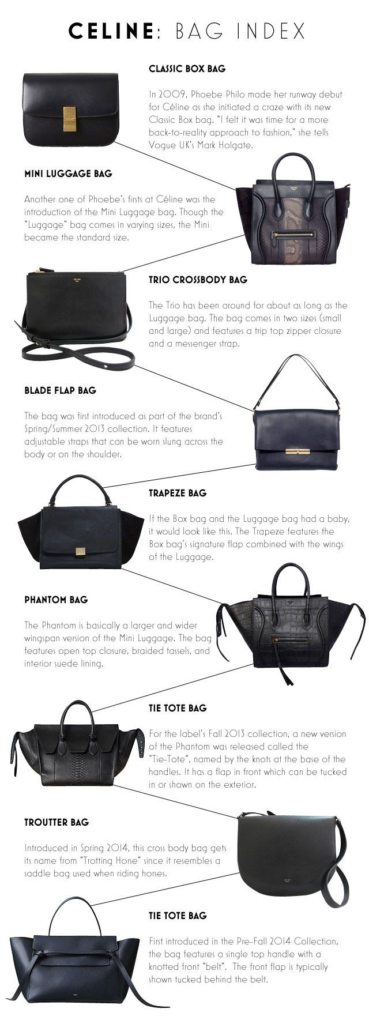
The Celine Luggage Tote, introduced in 2010, became the most important bag in modern Celine bag history. Fashion journalist Alexander Fury's analysis highlights how the Luggage Tote's distinctive face-like front, with wing-like side panels and a central zipper resembling a smile, created immediate recognition without relying on logos.
The bag's construction demonstrated Celine's craftsmanship heritage. Luxury accessories manufacturing research shows each Luggage Tote required careful leather cutting to achieve the structured shape, with reinforced panels maintaining the bag's distinctive silhouette even when empty. Multiple sizes, from nano to phantom, allowed women to choose proportions appropriate for different needs and body types.
The Luggage Tote's success transformed Celine bag history commercially and culturally. LVMH financial reports document how bag sales drove significant revenue growth during Philo's tenure. The bag appeared on the arms of celebrities, editors, and professional women globally, becoming one of the 2010s' defining accessories.
The Classic Box Bag: Minimalist Perfection
The Celine Classic Box bag, introduced in 2011, further cemented Philo's impact on Celine bag history. Vogue's coverage describes how the Classic Box referenced 1960s structured handbags while feeling utterly contemporary through precise proportions and impeccable construction.
The bag's clasp, designed to resemble the closure on vintage suitcases, became instantly recognizable. Luxury hardware suppliers confirm that Celine commissioned custom hardware manufacturing to achieve the exact aesthetic Philo desired, demonstrating the brand's commitment to design integrity regardless of cost.
The Classic Box's minimal branding epitomized Philo's approach to Celine bag history. A small embossed logo on the interior provided the only marking. Fashion theorist Adam Geczy's research on luxury branding demonstrates this restraint appealed to consumers seeking luxury that communicated through design excellence rather than visible logos, reflecting broader cultural shifts toward understated wealth display.
Cultural Impact: Celine Bags and Contemporary Luxury
Philo's era in Celine bag history coincided with and influenced broader luxury fashion shifts. The late 2000s and 2010s saw growing consumer rejection of obvious logos and trend-driven fashion in favor of investment pieces emphasizing quality and design.
Celine bags became emblematic of this "quiet luxury" movement. The Business of Fashion reporting documents how women working in creative industries, finance, and technology adopted Celine bags as signals of sophisticated taste and professional success. The bags communicated belonging to a knowing community that valued design literacy over brand recognition.
Social media amplified Celine bag history's cultural impact. Digital fashion research demonstrates that fashion bloggers and Instagram users extensively documented their Celine bags, creating communities around collecting different styles and colors. Unlike logo-heavy bags that might appear boastful in social media posts, Celine bags' understated elegance translated well to digital platforms while remaining recognizable to informed viewers.
Post-Philo Era: Hedi Slimane and Continuity
Phoebe Philo's departure in 2017 created uncertainty in Celine bag history. Hedi Slimane's appointment as creative director in 2018 brought dramatic aesthetic shifts, including dropping the accent from "Céline" to "Celine" and introducing rock-influenced ready-to-wear. Women's Wear Daily coverage noted longtime Celine enthusiasts worried that Slimane would abandon the wearable sophistication that defined Philo's bags.
However, Slimane maintained several iconic bags from Philo's era in the Celine bag history collection. The Classic Box, Luggage Tote, Trio, and other signature styles continued production, recognizing their importance to the brand's commercial success and customer loyalty. LVMH statements confirm these bags had achieved "classic" status transcending individual creative directors' visions.
Slimane introduced new bags reflecting his aesthetic, including smaller, more decorated styles with chain straps and embellishments. Vogue Runway coverage shows these bags appealed to younger consumers and different occasions while existing alongside the minimalist classics in Celine's expanded bag range.
Celine Bag Construction and Quality Standards
Throughout Celine bag history, construction quality has remained paramount. Luxury leather goods manufacturing research reveals Celine maintains strict standards for materials and assembly regardless of price point or style.
Leather selection begins at tanneries, where Celine buyers inspect hides for grain consistency, color uniformity, and absence of imperfections. Tannery industry sources confirm Celine rejects significantly more leather than it accepts, ensuring only exceptional hides become bags. The house primarily uses calfskin, lambskin, and occasionally exotic skins, all sourced from suppliers meeting luxury industry quality and ethical standards.
Hardware receives equal attention in Celine bag history. Metalworking industry documentation shows Celine commissions custom hardware from specialized manufacturers, often requiring multiple prototypes before approving final designs. Hardware typically features solid brass construction with gold, palladium, or ruthenium plating, chosen for durability and resistance to tarnishing.
Assembly techniques combine traditional hand craftsmanship with precise modern methods. Leatherworking research indicates Celine artisans undergo extensive training in cutting, stitching, and finishing techniques. Each bag passes through multiple quality control checkpoints, with imperfect examples rejected rather than sold at discount, protecting brand integrity.
Conclusion: Enduring Legacy in Fashion History
The Celine bag history spans nearly eight decades, from children's shoes in post-war Paris to iconic handbags carried by professional women worldwide. This evolution reflects changing roles for women, shifting luxury values, and the enduring appeal of exceptional craftsmanship.
From Celine Vipiana's initial leather goods to Phoebe Philo's revolutionary designs, Celine bag history demonstrates how heritage brands can maintain core values while adapting to contemporary needs. The bags that define Celine today, particularly the Luggage Tote and Classic Box, succeeded because they offered what women genuinely wanted: beautiful, functional, well-made bags that enhanced rather than overwhelmed their lives.
Understanding Celine bag history enriches appreciation for these accessories beyond their surface appeal. Each Celine bag connects to decades of leatherworking tradition, design evolution, and cultural shifts in how women present themselves professionally and personally. Whether choosing a vintage Celine bag from the 1970s or a contemporary Classic Box, buyers participate in this ongoing history of Parisian craftsmanship and modern luxury.


