Perfume, that invisible adornment, has long whispered of status, seduction, and selfhood. Since the days when Cleopatra perfumed her sails, fragrance has been used to enchant, to declare presence, and to mark a moment in time. Selecting a signature luxury perfume is not simply about following what's trending. It is to compose a private symphony of scent that lingers long after one has left the room.
A Scented History
The desire to perfume the body is as old as civilization itself. In Ancient Egypt, incense and oils bore ritual significance. The Renaissance courts of France and Italy revived the practice with lavish enthusiasm, where scent masked the pungency of the era and simultaneously announced refinement. By the 18th century, aristocrats wore perfume as both an olfactory shield and a social statement.
Today, fragrance has returned to that older role: not mere cosmetic flourish, but deeply personal expression. Much like choosing one's wardrobe silhouette or signature lipstick shade, selecting a luxury perfume is an act of self-styling.
The Fragrance Families: A Rosetta Stone of Scent

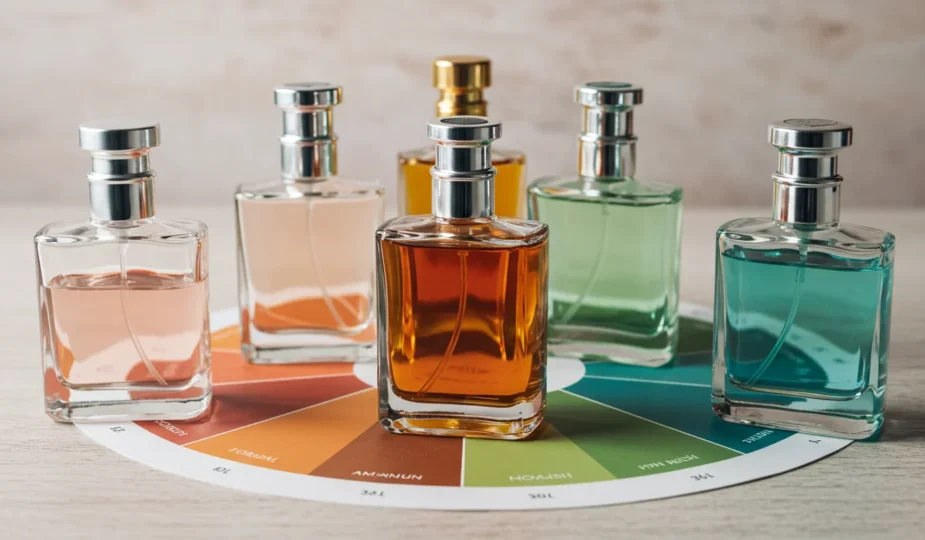
To choose a perfume, one must first learn to read fragrance. The modern “Fragrance Wheel,” first developed by Michael Edwards, classifies perfumes by families: floral, oriental, woody, and fresh.
Each comes with distinct qualities.
Floral Fragrances
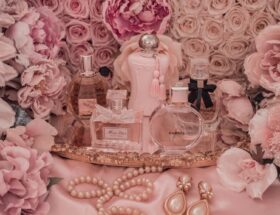
Floral scents can be single-flower (soliflore) notes such as a single-petal rose or a delicate jasmine, or they can be heavy bouquets. Pink roses are often associated with romantic love.
Oriental/Amber Fragrances
“Oriental/Amber” fragrances tend to be warm and sensual, with notes of vanilla, spices (cinnamon, clove), and exotic resins. These have depth and a warm embrace.
Woody Fragrances
Earthy and elegant woody fragrances have a grounding effect. They exude warm notes of sandalwood, cedar, vetiver, or patchouli, conveying strength and natural elegance.
Fresh Fragrances
Fresh fragrances are described as zesty, with notes of lemon and bold bergamot, along with crisp aquatic notes and green nuances. They are bright and clean, ideal for a light touch.
The language of scent is emotional. To know what you’re drawn to is to begin understanding what your olfactory persona might be.
Matching Fragrance to Personality
Just as one woman may favour a Dior New Look silhouette and another a Chanel tweed, fragrance follows personality:
Go beyond a single signature scent and build a luxury perfume wardrobe. Feel free to adjust your fragrance signature with changing seasons and temperatures.
Spring: Fresh & Rejuvenating
It's time to embrace those light florals and crisp green notes. Think peony and lily of the valley. These symbolize rejuvenation and freshness.
Summer: Light & Fruity
In summer, use fresh and fruity perfumes for a citrusy, tropical flower, and aquatic vibe. They make you feel refreshed.
Autumn: Warm & Spicy
Indulge in the aromas of warm spices like cinnamon and nutmeg, rich woods like sandalwood, and amber. These scents evoke a sense of warmth and sophistication.
Winter: Cozy & Woody
Woodsy fragrances like cedar, pine, and sandalwood will enhance the cozy feeling of winter evenings. They add warmth and depth against the cold.
This is no marketing gimmick; even Queen Elizabeth I was known to favour a rosemary blend, and Napoleon reputedly doused himself in eau de cologne by the gallon.
Designer and Niche Perfumes
The 20th century saw fashion houses extend their empires into fragrance. From Chanel No. 5 to Diorissimo, designer perfumes became aspirational signatures. These creations, often housed in equally iconic bottles, blend craftsmanship and mass appeal.
More recently, niche perfumery has taken centre stage for those seeking olfactory distinction. Small ateliers like Frederic Malle, Diptyque, or Byredo craft scents not for the masses, but for the individual with a cultivated nose. They use rare ingredients and unusual compositions: green tomato leaf, ink, even paper and rain.
Sampling and the Art of Selection
One does not commit to a scent lightly. Try before you buy, and wear it as you would a garment. Always test perfume on the skin, never on a paper strip alone. Let it develop. The “dry down”, what remains hours later, is your true match.
Avoid sampling too many at once; olfactory fatigue is real. And always sample in the mood you wish to wear it: a scent may feel different on a grey Tuesday than on a golden evening.
Final Thoughts: Fragrance as Legacy
The right perfume becomes a kind of memory. It clings to scarves, lingers on gloves, and recalls moments long after they’ve passed. Coco Chanel once said, "A woman who doesn’t wear perfume has no future." Pauline might counter: a woman who wears her scent with intention is unforgettable.
So whether you reach for a Prada Infusion d’Iris, a classic Guerlain, or a mysterious niche extrait, let it be more than a trend. Let it be your scent story.