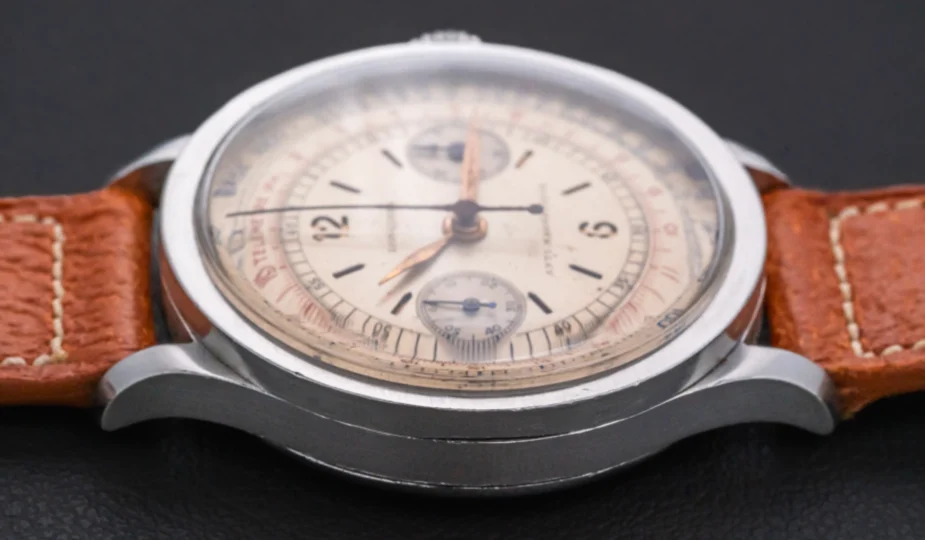
Before the ticking of time echoed from a gentleman’s waistcoat or a lady’s glove, time itself was marked by shadow and sun. The sundial, the hourglass, and the water clock once reigned until the ingenuity of medieval artisans gave rise to mechanical horology. The journey of the luxury watch from clumsy early prototypes to exquisite treasures worn on the wrist mirrors not only technological refinement but also shifting codes of elegance, gender, and class.
Time as Ornament: The Early Pocket Watch
By the sixteenth century, personal timepieces began to emerge in the form of egg-shaped watches, often worn around the neck or attached to a belt.
These "Nuremberg eggs" were not precise by modern standards, yet they dazzled with ornate casing, pierced silverwork, and miniature enamel scenes that revealed their owner's wealth and sophistication.
In the hands of the nobility, watches were as much a talisman as a tool.
A well-engraved watch might contain religious iconography, astrological symbols, or even secret compartments. These were not silent machines of timekeeping, but lively accessories steeped in symbolism.

They hinted at learning, piety, and prestige: a glimpse into the wearer’s intellectual and social world.
The Eighteenth-Century Gentleman and His Fob
As tailoring evolved, so too did the watch's role in dress. By the Enlightenment, the pocket watch had become a staple of the gentleman’s ensemble. Worn with a fob chain and stored in a waistcoat pocket, the timepiece served as both a practical device and a mark of refined taste. Dials were often crafted in enamel, hands in blue steel, and cases in chased gold. The craftsmanship was precise, the decoration meticulous, and the movement increasingly complex.
To open one’s watch was to reveal not only the hour, but the cultural sensibilities of a period that prized precision, classical proportion, and scientific curiosity.
Ladies’ Watches: Elegance Disguised in Jewels
Though long overlooked in standard horological histories, women wore timepieces as early as their male counterparts. However, the form differed. Women’s watches were frequently disguised as lockets, pendants, or chatelaines. Tucked into the folds of a skirt or pinned discreetly to a bodice, the timepiece became both adornment and utility.
In the Victorian era, Queen Victoria herself popularised the bracelet watch, commissioning Patek Philippe to create a dainty wristlet with a tiny dial. These watches did not merely tell time. They told of a woman’s access to luxury, modernity, and a private sense of rhythm in a world still governed by public clocks and patriarchal structures.
From War to Wrist: The Rise of the Modern Watch
Though wristwatches appeared here and there in the 19th century, their true ascendance began in the early 20th. Soldiers in the First World War needed quick access to time. A watch on the wrist, rather than in the pocket, proved more practical in battle. When the war ended, men returned home still wearing these new styles, and fashion followed function.
By the 1920s, brands like Cartier introduced iconic models such as the “Tank,” whose rectangular shape reflected the military vehicle of the same name. The Jaeger-LeCoultre Reverso, introduced in 1931, catered to polo players who required a protective case for their timepieces. These early luxury wristwatches blended sport, status, and modernist design in a way that suited the streamlined tastes of the Art Deco era.
The Golden Age: Watches in the Postwar World
The post-war period brought economic optimism and cinematic glamour. Luxury watches adorned the wrists of silver screen legends and political leaders alike. A Rolex Datejust, with its fluted bezel and date magnifier, became a symbol of achievement. Patek Philippe was whispered about in auction houses and elite clubs. Omega timed the Olympics. Audemars Piguet experimented with bolder forms.
As fashion moved from the tailoring of the 1950s to the revolution of the 1960s and 70s, so too did the watch adapt. The Royal Oak, introduced in 1972 by Audemars Piguet, redefined the watch as a bold, sporty statement. Crafted in steel yet priced as a luxury item, it challenged traditional ideas of elegance and ushered in a new age of casual wealth.
Quartz and Controversy: The 1980s and Beyond
In the 1980s, quartz movements threatened the mechanical heart of luxury watchmaking. These battery-powered innovations offered unprecedented accuracy at a fraction of the cost. Many feared that traditional watchmaking was under siege. Yet paradoxically, the threat of obsolescence sparked a revival. Mechanical watches came to represent not just timekeeping, but heritage.
Owning a hand-finished timepiece became a sign of connoisseurship. Collectors began to seek out vintage models, delighting in their patina, provenance, and imperfection. A well-aged Submariner or a rare Calatrava became as prized as a vintage Hermès handbag or a first edition book. Value was now tethered to story as much as to function.
Today’s Timepieces: Legacy on the Wrist
In the 21st century, a luxury watch serves multiple purposes. It is an investment, an heirloom, a daily companion, and a talking point. It stands quietly in contrast to the glowing screens that dominate most of our hours. It rewards patience. It requires care for after-sales service carried out by Exquisite timepieces. It signifies a respect for detail and the passage of time itself.
The modern watch buyer might choose a sculptural Richard Mille, a diamond-set Hublot, or a minimalist Lange & Söhne. Some opt for sustainability and artisanal revival. Others seek out vintage Cartier or a Rolex passed down through generations. All, however, are participating in a lineage that stretches back to those first egg-shaped trinkets of sixteenth-century Europe.
Like a corset or a crown, a luxury watch is never just about function. It is about what it means about who wears it, why they wear it, and what they choose to say about time.
Iconic Watches by Era
A brief survey of timepieces that shaped fashion, taste, and status.
16th–17th Century: The Ornamental Pendant Watch
Nuremberg Egg (Germany, c. 1550–1600)
These early watches, shaped like plump ovals, were more jewel than chronometer. Often suspended from chains and worn around the neck, they announced wealth and Renaissance ingenuity. The cases were richly engraved, yet accuracy remained a secondary concern. Time, after all, was a privilege not yet democratized.
18th Century: The Gentleman’s Pocket Companion
Breguet No. 5 (Paris, 1794)
Abraham-Louis Breguet elevated watchmaking to high art with innovations in precision and elegance.
His pieces, including the famed No. 5 with its guilloché dial and slim case, were worn by Napoleon and Queen Marie-Antoinette. These pocket watches were often gifted, prized, and passed down like titles: vessels of legacy as much as of hours.
To the right: BREGUET, RETAILED BY RECORDON, LONDON, A HIGHLY IMPORTANT GOLD FOUR MINUTE TOURBILLON WATCH OF ROYAL PROVENANCE WITH ROBIN ESCAPEMENT, THERMOMETER AND STOP SLIDE FOR TIMING THE SECONDS 1808, NO. 1297. Estimate: £700,000–1,000,000.

19th Century: The Ladies’ Secret Timekeeper
Patek Philippe Women’s Pendant Watch (Geneva, 1868)
With miniature dials hidden inside lockets, brooches, or bracelets, these dainty watches aligned with Victorian ideals of femininity: modest, decorative, and discreet. When Queen Victoria wore a Patek Philippe timepiece at the 1851 Great Exhibition, she helped place watches firmly within the domain of courtly fashion.
Early 20th Century: From Pocket to Wrist
Cartier “Santos” (Paris, 1904)
One of the first modern wristwatches, the Santos was created for aviator Alberto Santos-Dumont. Its square dial and exposed screws marked a break from pocket-watch gentility. As women embraced wristwatches first for their elegance, men soon followed for practicality. This shift laid the foundation for a new visual language of time.
1920s–30s: Art Deco Precision
Jaeger-LeCoultre “Reverso” (Switzerland, 1931)
Designed for polo players, the Reverso featured a clever rotating case to protect its dial from damage. Its geometric form and understated dial epitomised Art Deco restraint. At once utilitarian and elegant, it symbolised interwar design values: streamlined, clever, and full of potential.
1950s–60s: Tools for Gentlemen
Rolex Submariner (Switzerland, 1953)
Developed for deep-sea divers, the Submariner fused sport with status. Its rotating bezel and waterproof case soon transitioned from naval expeditions to Hollywood red carpets. When Sean Connery wore it in Dr. No, it cemented the tool-watch as a masculine fashion staple. Here, utility no longer excluded glamour.
1970s: Steel Takes the Stage
Audemars Piguet Royal Oak (Switzerland, 1972)
Designed by Gérald Genta, the Royal Oak was a disruptive force. Made in steel but priced like gold, it featured an octagonal bezel and exposed screws. Its boldness suited the era of disco, sports cars, and high-stakes business. It proved that casual luxury could still command reverence.
1980s–90s: Quartz and Corporate Chic
TAG Heuer Formula 1 (Switzerland, 1986)
Bright, sporty, and quartz-powered, the Formula 1 reflected a new age of affordability and accessibility. As watches became part of the power-dressing arsenal, quartz movements allowed slimmer cases, bold colours, and wider reach. Style was no longer bound by heritage alone.
2000s–Present: Revival, Rarity, and Statement
Richard Mille RM 07-01 (Switzerland, 2014)
In a new century driven by engineering and spectacle, Richard Mille emerged with futuristic materials, skeletonised movements, and sky-high price tags. The RM 07-01, often worn by women in Formula 1 paddocks and fashion front rows, bridges haute horlogerie with celebrity culture. It is not discreet; it is a declaration.
Patek Philippe Nautilus (Switzerland, originally 1976, revived in demand post-2015)
Though born in the 70s, the Nautilus saw an explosive revival in the age of Instagram. Slim, elegant, and unobtainable, it became a visual metaphor for quiet wealth. Its popularity rests as much on its history as on the subtle message it sends: this wearer knows the difference.


