Hair has served as one of fashion's most powerful tools for self-expression throughout recorded history. From the elaborate coiffures of ancient civilizations to the transformative styles seen on contemporary runways, the desire to augment and enhance natural hair has remained a constant thread in the story of human adornment. Hair extensions, far from being a modern invention, represent centuries of innovation in beauty and fashion, evolving from rudimentary techniques into the sophisticated methods available today.
Ancient Origins: Hair as Status and Symbol
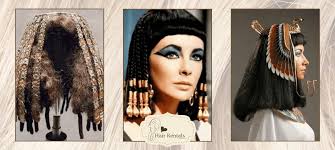
The practice of using hair extensions dates back thousands of years, with archaeological evidence revealing their use across multiple ancient civilizations. In ancient Egypt, around 3400 BCE, both men and women wore elaborate wigs and hair extensions made from human hair, sheep's wool, or vegetable fibers.
These additions served multiple purposes: they protected the scalp from the intense desert sun, indicated social status, and created the elaborate hairstyles depicted in Egyptian art and hieroglyphics.

Image credit to World History Encyclopedia
According to research published by the Totnes Fashion & Textiles Museum, wealthy Egyptians would shave their heads for hygiene purposes and don wigs for social occasions, while those of lesser means might add extensions to their natural hair to achieve fashionable styles. The quality and intricacy of these hairpieces directly corresponded to social standing, with royalty and nobles wearing the most elaborate creations adorned with gold thread, beads, and other precious materials.
The ancient Romans similarly embraced hair augmentation as a fashion statement. Roman women, particularly during the Imperial period (27 BCE to 476 CE), wore increasingly complex hairstyles that often required supplemental hair. Blonde hair, rare among native Romans, became highly prized, leading to a thriving trade in hair imported from Germanic territories.
Historical texts from Ovid and other Roman writers reference the use of hairpieces and the dyeing of hair to achieve fashionable colors, demonstrating that hair enhancement was an established practice in Roman society.
Medieval and Renaissance Fashions: Hair Concealed and Revealed
The Middle Ages presented a paradox in hair fashion. Christian doctrine often required married women to cover their hair completely, yet elaborate headdresses and veils created opportunities for hair augmentation beneath these coverings. Hairpieces made from flax, silk, or human hair helped achieve the high foreheads considered beautiful during this period, with women often plucking their hairlines and adding false hair at the crown to create the desired silhouette.
The Renaissance brought renewed interest in displaying natural beauty, though "natural" often required considerable artificial enhancement. Italian women of the 15th and 16th centuries famously spent hours bleaching their hair in the sun, and when nature failed to cooperate, they turned to wigs and hairpieces. Portrait paintings from this era, such as those by Titian and Botticelli, depict women with abundant, flowing locks that often required supplemental hair to achieve.
The 17th and 18th Centuries: The Age of Monumental Coiffures
The baroque and rococo periods witnessed hair fashion reach unprecedented heights, quite literally. The French court under Louis XIV established elaborate wigs for men as essential fashion, with the periwig becoming a symbol of status and authority. These massive creations, often powdered white or gray, required substantial amounts of hair, creating a robust trade in human hair throughout Europe.
Women's hairstyles during the 1770s and 1780s achieved remarkable dimensions. The towering coiffures of Marie Antoinette's court, styled by legendary hairdresser Leonard Autie, incorporated wire frames, padding, false hair, and decorative elements including model ships, bird cages, and garden scenes.
According to fashion historians, these creations could measure three feet in height and took hours to construct, remaining in place for weeks at a time. The elaborate styles required so much supplemental hair that a significant hair trade developed, with women of lesser means selling their hair to supply the fashion demands of the wealthy.

Image from Bloshka
Victorian Sensibilities and Hair Art
The 19th century brought new attitudes toward hair and its collection. The Victorian era saw hair take on deeply sentimental value, with locks of hair exchanged between loved ones and incorporated into jewelry. This reverence for hair extended to fashion, where the ideal of long, luxuriant tresses led women to carefully preserve every strand lost during brushing.
Victorian women saved their "combings" in special receivers on their dressing tables. This collected hair could be fashioned into "rats" or padding that helped create the elaborate pompadour styles popular during the late Victorian and Edwardian periods. Switches, braids, and other hairpieces became common accessories, with respectable establishments selling carefully graded human hair in various colors and textures.
Early 20th Century: From Transformation to Simplicity
The first decades of the 20th century continued the Victorian fascination with abundant hair. Edwardian women employed various devices including the "pompadour frame" and "transformation," a half-wig that could be pinned over one's natural hair to create fashionable volume. These were openly advertised in fashion magazines and department store catalogs, indicating their accepted place in fashion.
The revolutionary change came in the 1920s when women began cutting their hair into bobs and crops. This dramatic shift, symbolizing women's changing social roles following World War I, temporarily reduced the demand for hair extensions.
However, even during this period of short hair, evening wear often incorporated decorative hairpieces, and women who could not commit to cutting their long hair might tuck it up and wear a short wig for fashionable occasions.
Mid-Century Glamour and Hollywood Influence
The golden age of Hollywood in the 1930s through the 1950s brought renewed appreciation for luxurious hair. Movie stars like Veronica Lake, Rita Hayworth, and Ava Gardner became famous for their glossy, cascading locks. While some stars possessed naturally abundant hair, studio hairstylists regularly employed falls, wiglets, and other extensions to create the camera-ready perfection audiences expected.
The 1960s witnessed a return to elaborate hairstyling with the rise of the bouffant and beehive. These voluminous styles, popularized by figures like First Lady Jacqueline Kennedy and actress Brigitte Bardot, often required supplemental hair to achieve the desired height and fullness. According to Vidal Sassoon's memoir, professional salons of this era maintained extensive inventories of hairpieces in various colors to accommodate clients seeking these dramatic looks.
The late 1960s and 1970s brought additional diversity to hair fashion, with both long, straight styles and large, natural afros becoming popular. Hair extensions found new applications across different hair textures, though the quality and attachment methods remained relatively unsophisticated by modern standards.
The 1980s and 1990s: Technology Meets Vanity
The 1980s obsession with volume, exemplified by styles ranging from Madonna's teased blonde locks to the glamorous waves of supermodels like Cindy Crawford and Claudia Schiffer, created sustained demand for hair extensions.
However, the methods available during this period often proved damaging to natural hair. Early bonding techniques using harsh adhesives and heat could cause significant breakage, giving extensions a somewhat controversial reputation.
The 1990s brought important technological advances. The development of keratin bonding, pioneered by hairdresser Simon Forbes in 1991, revolutionized the extension industry.
This method, which used a protein-based polymer similar to the natural keratin in hair, allowed for more secure, natural-looking attachments that caused less damage than previous techniques. As Forbes explained in industry publications, the keratin bonds could last several months and moved naturally with the hair, making them virtually undetectable.
Simultaneously, the micro-ring or micro-bead method emerged, offering a heat-free alternative that clamped small sections of extension hair to natural strands using tiny metal rings. These innovations, combined with improved sourcing of high-quality human hair, transformed extensions from occasional theatrical tools into viable options for everyday wear.
21st Century: Extensions Enter the Mainstream
The new millennium saw hair extensions transition from professional secret to openly discussed beauty enhancement. Celebrity culture, amplified by social media, played a significant role in this normalization. When stars like Jennifer Lopez, Beyoncé, and Kim Kardashian began openly crediting extensions for their signature looks, public perception shifted dramatically. Hair care accessories also evolved during this period, with protective styling tools gaining recognition not just for maintenance but as fashion statements themselves. Products like the best durag for men transitioned from functional necessities to style accessories, complementing the overall approach to hair as an expression of personal identity.
The development of tape-in extensions around 2004 provided another breakthrough. These pre-taped wefts of hair could be applied quickly and lay flat against the scalp, making them particularly suitable for adding volume to fine hair. The method's relatively gentle application and ability to be reused after maintenance appointments made extensions more accessible to average consumers rather than just celebrities and models.
Clip-in extensions, while existing in simpler forms for decades, were refined with improved clips and better quality hair, allowing them to blend seamlessly for temporary enhancement. This option appealed to consumers who wanted versatility without the commitment of semi-permanent methods.
The Science of Modern Hair Extensions
Contemporary hair extensions represent sophisticated engineering as much as artistry, benefiting from advances in materials science and manufacturing processes. The best quality extensions use 100% Remy human hair, a term indicating that all the hair's cuticles face the same direction and remain intact. This alignment prevents tangling and maintains the hair's natural shine and movement.
Modern attachment methods have been refined to minimize damage to natural hair through improved understanding of hair biology and mechanical stress. Keratin bonds now use lower temperatures and improved formulations that distribute weight more evenly.
Tape-in extensions employ medical-grade adhesives originally developed for theatrical and medical applications. Even traditional sew-in methods have evolved with gentler braiding techniques that reduce tension on the scalp. The sourcing of extension hair has also become more sophisticated and transparent, with quality suppliers providing detailed information about hair origin and processing. This addresses previous concerns about exploitation in the hair trade while meeting consumer demand for ethical products.
Hair Extensions in Contemporary Fashion
Today's fashion landscape treats hair as an integral element of overall style rather than a separate consideration. Runway shows regularly feature dramatic hair moments, from the blunt, colorful bobs at Marc Jacobs to the romantic, waist-length waves at Etro. These editorial looks, once achievable only with extensive styling and professional hairpieces, have become accessible to a broader audience through quality extensions.
The rise of "hair contouring," analogous to facial contouring with makeup, uses strategically placed highlights and lowlights to frame the face. Extensions make this technique more versatile, allowing for dimensional color without the commitment or damage of bleaching natural hair. Fashion-forward consumers can experiment with the balayage and ombre effects seen in glossy magazines without permanent alteration of their own hair.
Extensions have also enabled the revival of vintage hairstyles. The finger waves of the 1920s, victory rolls of the 1940s, and beehives of the 1960s all find new life among contemporary fashion enthusiasts. Historical costume recreations benefit tremendously from modern extensions that can be styled, set, and manipulated like natural hair while providing the volume and length period styles often required.
How to Choose the Right Extension Method
Selecting appropriate hair extensions depends on multiple factors including natural hair type, desired outcome, lifestyle, and maintenance commitment. For those seeking long-term, architectural volume and length, keratin fusion extensions offer durability and natural movement. The individual strand application allows for precise placement and works well with various updos and styling options.
Tape-in extensions provide an excellent middle ground, offering significant transformation with relatively quick application and gentle attachment. These work particularly well for individuals with fine hair who need added density without weight strain on their natural strands. The ability to remove and reuse tape-ins makes them cost-effective over time despite higher initial investment.
Clip-in extensions suit those who prefer occasional enhancement or want to experiment with dramatic changes without commitment. Modern clip-ins, when made from quality hair and properly matched to natural color, can look remarkably convincing for events, photoshoots, or simply days when extra glamour feels appropriate.
For textured and curly hair types, sew-in weaves remain popular and effective when applied correctly. Modern techniques distribute tension more evenly and use lighter wefts that do not stress the natural hair. Micro-link extensions also work well for many hair textures, providing secure attachment without heat or adhesives.
The Future of Hair Extensions
Innovation in hair extension technology continues to advance. Research into improved bonding materials seeks to create even gentler attachment methods. Some companies are exploring bio-based adhesives and bonds that would be more environmentally friendly than current options. Digital color-matching technology helps ensure perfect matches between natural hair and extensions, reducing the guesswork that could lead to visible differences.
Sustainability concerns are also shaping the industry's future. As consumers become more conscious of ethical sourcing and environmental impact, extension suppliers face pressure to ensure transparent, fair supply chains. Some companies are investigating synthetic alternatives that could mimic natural hair's properties without relying on human hair donations, though current synthetic options cannot yet match the quality and versatility of human hair.
The social acceptance of hair extensions has reached a point where they are viewed simply as another beauty tool, no different than makeup or skincare products. This normalization allows for more open discussion about techniques, maintenance, and realistic expectations. Social media platforms provide spaces where users share their extension experiences, creating informed communities rather than perpetuating unrealistic standards about "perfect" natural hair.
How to Care Your Hair Extensions
Quality hair extensions represent an investment that requires appropriate care to maintain their appearance and longevity. Unlike natural hair, which receives nutrients from the scalp, extensions depend entirely on external care. Sulfate-free shampoos preserve the hair's moisture and prevent premature drying. Deep conditioning treatments, applied from mid-shaft to ends while avoiding the bonds or tape, keep extensions soft and manageable.
Heat styling should be minimized when possible, though quality human hair extensions can withstand moderate heat when heat protectant products are used. The same principle applies as with natural hair: excessive heat causes damage over time. When heat styling is necessary, lower temperatures and proper technique help preserve the hair's integrity.
Brushing technique matters significantly with extensions. Starting from the ends and working upward in sections prevents pulling on attachment points and reduces breakage. Special extension brushes with looped bristles or widely spaced teeth work best, gliding through hair without catching on bonds, beads, or tape.
Professional maintenance appointments ensure extensions remain secure and comfortable. Tape-ins typically need repositioning every six to eight weeks as natural hair grows. Keratin bonds can last three to four months before requiring maintenance. During these appointments, stylists can check the condition of both the extensions and natural hair, addressing any issues before they become problems.
Conclusion: Hair Extensions as Fashion Heritage
The history of hair extensions reveals much about fashion's evolving relationship with beauty, identity, and self-expression. From ancient Egypt's wool-and-fiber wigs to contemporary keratin bonds, humans have consistently sought ways to transcend natural limitations and achieve idealized aesthetic visions. What has changed is not the desire for beautiful hair, but rather the methods available to achieve it and society's willingness to openly discuss these enhancements.
Modern hair extensions represent the culmination of thousands of years of experimentation and refinement. Today's options offer unprecedented quality, versatility, and accessibility. Whether seeking subtle volume, dramatic length, or experimental color, contemporary consumers can find solutions that align with their needs and values. The industry continues to evolve, with improvements in technique, quality, and ethical practices making extensions an increasingly viable choice for those seeking to enhance their natural beauty.
For those interested in exploring professional options, specialists like LYA Hair offering premium hair extensions in Miami and other fashion-forward cities provide expert consultations to help determine the best approach for individual needs and hair types.
Frequently Asked Questions About Hair Extensions
How much are hair extensions?
Hair extension costs vary significantly based on method, quality, and amount needed. Clip-in sets typically range from $100 to $500. Professional installations range from $200 to $600 for tape-ins, $1,000 to $3,000 for keratin fusion, and $1,500 to $4,000 for hand-tied or sew-in methods. Quality Remy human hair costs more than synthetic options but lasts longer and looks more natural. Maintenance appointments every 6-8 weeks add $75-$200 to ongoing costs.
How do hair extensions work?
Hair extensions add length, volume, or color by attaching supplemental hair to your natural strands. Tape-in extensions sandwich hair between adhesive wefts. Keratin fusion bonds individual strands using heat-activated protein. Micro-link extensions clamp sections without heat or glue. Sew-in weaves attach wefts to braided natural hair. Clip-ins provide temporary enhancement with pressure clips. Each method secures extension hair close to the scalp, blending naturally with your own hair.
How long do hair extensions last?
Extension longevity depends on method, quality, and maintenance. Clip-ins last one to two years with proper care. Tape-ins last six to eight weeks before repositioning, with hair reusable for six to twelve months. Keratin fusion and micro-link extensions remain secure for three to four months between maintenance, lasting six months to a year total. Sew-in weaves need tightening every six to eight weeks. All methods require proper care including gentle washing and minimal heat styling.
Do hair extensions ruin your hair?
Hair extensions do not inherently damage hair when properly applied and maintained by trained professionals. Damage occurs from improper installation, inadequate care, or leaving extensions in too long. Extensions too heavy for fine hair can cause tension and breakage. Following professional care instructions, attending regular maintenance appointments, and choosing appropriate methods for your hair type prevent damage and maintain healthy natural hair.
How to put hair clips on extensions?
Section hair horizontally where you want added volume, clipping upper layers away. Tease roots slightly for grip. Hold the clip-in weft with clips open, position against your scalp, then snap clips closed firmly. Start with the widest weft at the back, working forward with narrower pieces. Release top layers to cover clips. For temple areas, use smaller one-clip pieces at natural part lines. Gently blend by running fingers through combined hair.