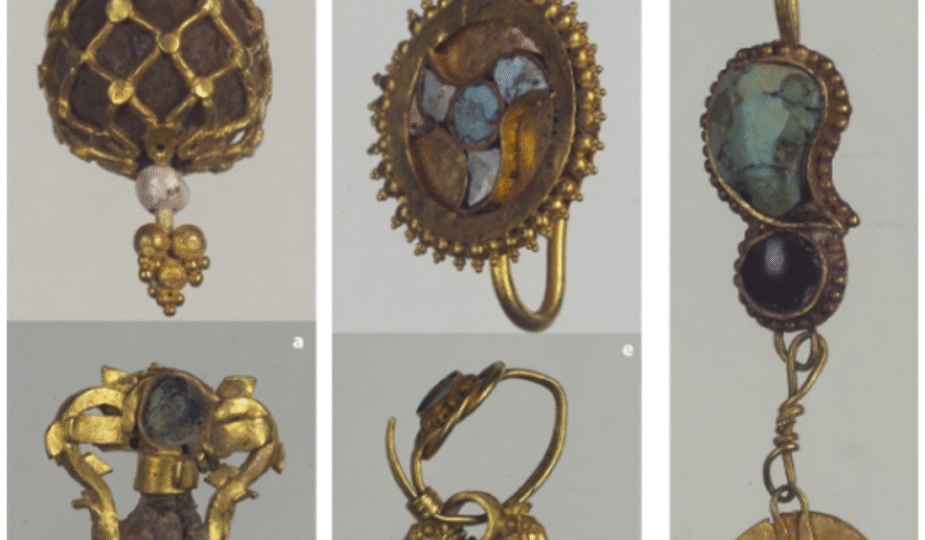
Gold has captivated humanity for over 6,000 years, shaping economies, inspiring artists, and symbolizing wealth across every civilization. From the gleaming burial mask of Tutankhamun to the microchips in modern smartphones, this precious metal has maintained its allure through millennia of human history. Unlike other metals that tarnish or corrode, gold's natural luster and malleability made it ideal for both practical applications and decorative purposes. This article traces the remarkable journey of gold from its initial discovery in prehistoric riverbeds to its current role in contemporary technology and sustainable jewelry. Understanding gold's history reveals not just the story of a metal, but the evolution of human craftsmanship, trade, and cultural values across continents and centuries.
The Dawn of Gold: Prehistoric and Ancient Discoveries (4000-3000 BCE)
The earliest evidence of gold use dates to approximately 4000 BCE in Eastern Europe, where archaeological discoveries at the Varna Necropolis in modern-day Bulgaria revealed sophisticated gold artifacts in burial sites. These prehistoric communities extracted gold from riverbeds using simple panning techniques, valuing the metal for its distinctive yellow luster rather than any monetary worth.
Ancient Egypt elevated gold to divine status, associating it with the sun god Ra and the concept of eternal life. The Egyptians developed advanced goldsmithing techniques, including hammering, cloisonné, and granulation. The famous funerary mask of Tutankhamun (c. 1336-1327 BCE) represents the pinnacle of ancient Egyptian gold craftsmanship, demonstrating their mastery of working with this precious metal. The Metropolitan Museum of Art notes that hieroglyphs for gold appeared as early as Egypt's First Dynasty, indicating the metal's significance from civilization's earliest records.
In Mesopotamia around 3000 BCE, the Sumerians created intricate gold jewelry, often combining gold with lapis lazuli in necklaces and ceremonial objects. The Royal Tombs of Ur, dating to approximately 2600 BCE, contained elaborate gold headdresses, daggers, and drinking vessels that showcased the metalworkers' sophisticated techniques. These early goldsmithing methods gradually spread westward, influencing cultures throughout the ancient Mediterranean world.
Classical Civilizations and Gold's Expanding Role (1500 BCE-500 CE)
Ancient Greece transformed gold from purely ceremonial use into a symbol of athletic and heroic achievement. Greek artisans perfected techniques such as filigree, granulation, and repoussé to create delicate gold wreaths for Olympic victors and ornate jewelry for the wealthy. Gold carried sacred significance, appearing in temple dedications and as offerings to the gods.
The Roman Empire revolutionized gold extraction through industrial-scale mining operations. Las Médulas in northwestern Spain, recognized by UNESCO as a World Heritage Site, exemplifies Roman engineering prowess. The Romans used sophisticated hydraulic mining techniques, diverting entire rivers to wash away mountainsides and extract gold ore. This industrial approach enabled Rome to accumulate vast gold reserves, which it standardized into coinage that facilitated trade across its empire.
In ancient India, gold held profound religious significance. Temple jewelry and wedding ornaments were not merely decorative but carried spiritual meaning. The Kolar Gold Fields in Karnataka, among the world's deepest ancient gold mines, supplied gold for intricate pieces created using granulation and lost-wax casting techniques. Indian goldsmiths developed unique alloying methods that created distinctive colors and properties in their finished works.
Ancient China similarly valued gold, though primarily for decorative rather than monetary purposes. Chinese artisans excelled at creating gold leaf for architectural embellishment and developed sophisticated techniques for combining gold with jade, the culture's most prized material.

Medieval Gold: Faith, Power, and Prestige (500-1500 CE)
During the Middle Ages, gold became inseparable from religious expression and political authority. The Byzantine Empire used gold extensively in religious iconography, creating glittering mosaics, icon covers, and reliquaries that literally brought divine light into churches. The gold solidus coin, introduced by Constantine, remained the standard currency for Mediterranean trade for over 700 years, demonstrating gold's economic stability.
In medieval Europe, gold craftsmanship centered on ecclesiastical objects. Skilled goldsmiths, organized into powerful guilds, created elaborate chalices, crosses, and reliquaries that housed sacred relics. The Sutton Hoo ship burial (c. 620 CE), discovered in England, revealed stunning Anglo-Saxon gold and garnet jewelry that showcased the technical sophistication of early medieval craftsmen.
The Islamic Golden Age produced distinctive gold artistry, with craftsmen in Baghdad, Cairo, and Cordoba creating intricate filigree jewelry and incorporating gold into illuminated manuscripts. Islamic metalworkers perfected techniques for creating delicate gold wire and applying gold leaf to architectural surfaces, achieving effects that influenced European craftsmen during the Crusades.
Viking goldsmiths, though working with limited supplies, created remarkable pieces using gold acquired through trade and raiding. Their jewelry combined gold with silver in twisted wire patterns that reflected Norse artistic traditions. In Asia, Chinese goldsmiths continued refining techniques for creating gold leaf so thin it appeared translucent, while Japanese artisans developed kintsugi, the practice of repairing broken pottery with gold lacquer, transforming damage into beauty.
Renaissance to Enlightenment: Artistic Revival and Global Expansion (1500-1800 CE)
The Renaissance marked a rebirth of classical ideals in goldsmithing, with artists viewing jewelry as miniature sculpture. Benvenuto Cellini, whose 1568 treatises on metalworking became foundational texts, exemplified the artist-goldsmith who combined technical mastery with creative vision. Renaissance goldsmiths revived ancient techniques like enameling and cameo carving while developing new approaches to gem setting that showcased both gold and precious stones.
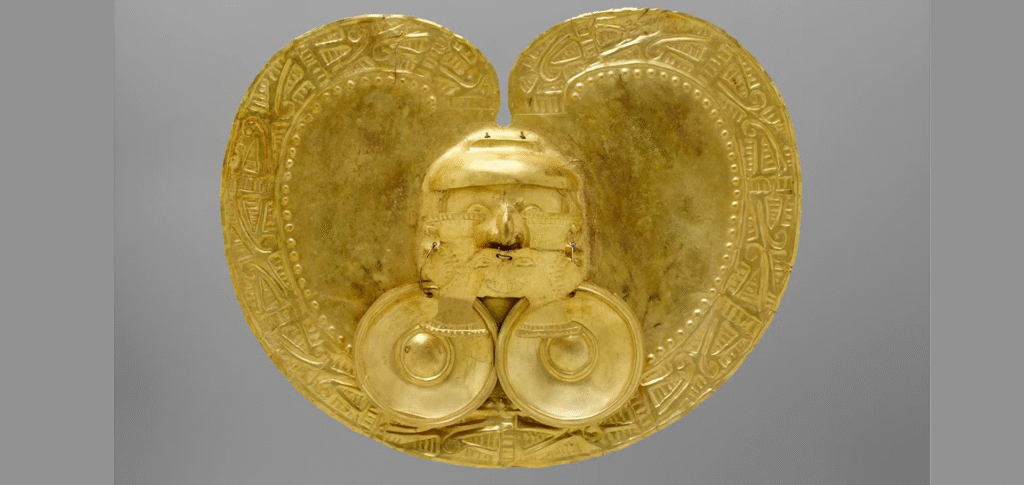
The Age of Exploration fundamentally altered gold's global distribution and economic impact. Spanish conquistadors' plunder of South American gold, particularly from the Aztec and Inca empires, flooded European markets with unprecedented quantities of the metal. This influx of New World gold transformed European economies, contributing to inflation while funding ambitious building projects and military campaigns. The establishment of gold trade routes connected continents in ways previously impossible, making gold a truly global commodity.
The Baroque period embraced gold's potential for extravagance. Court jewelers to Louis XIV created elaborate pieces that combined gold with diamonds and colored gemstones in designs meant to dazzle and impress. Techniques like repoussé allowed goldsmiths to create three-dimensional sculptural effects, while advances in gem cutting made diamonds more brilliant, encouraging designs that used gold as a setting rather than the primary decorative element.
During the Enlightenment, scientific inquiry began explaining gold's properties. The transition from alchemy to chemistry revealed gold's elemental nature and unique characteristics: its resistance to corrosion, excellent conductivity, and extreme malleability. These discoveries laid the groundwork for gold's later technological applications.
Industrial Revolution and Gold Rushes (1800-1900 CE)
The Industrial Revolution mechanized gold production, making jewelry accessible beyond aristocratic circles. The development of electroplating in the 1840s allowed manufacturers to coat base metals with thin gold layers, creating affordable "gold-filled" jewelry for the growing middle class. Rolling mills and stamping machines enabled mass production while maintaining quality, democratizing gold ownership in ways previously unimaginable.
The mid-19th-century gold rushes transformed societies and economies worldwide. California's Gold Rush, beginning in 1848, drew approximately 300,000 prospectors and fundamentally reshaped the American West. Australia's gold discoveries in 1851 similarly sparked economic boom and immigration, while South Africa's Witwatersrand gold discovery in 1886 established what would become the world's most productive gold mining region.
Victorian England standardized gold purity marks, establishing the karat system still used today. British jewelry commonly appeared in 9, 12, 15, and 18 karat gold, with higher karats reserved for finer pieces. Victorian sentimentality found perfect expression in gold jewelry; lockets containing photographs or hair, mourning brooches, and acrostic rings spelling words through gemstone initials became treasured keepsakes that combined precious materials with personal meaning.
Modern Era: Design Movements and Economic Shifts (1900-1950 CE)
The early 20th century witnessed a dramatic artistic reimagining of gold jewelry. Art Nouveau designers like René Lalique rejected Victorian sentimentality for organic, flowing forms inspired by nature. These artisans combined gold with unconventional materials including enamel, horn, and glass, valuing artistic vision over intrinsic material worth. The plique-à-jour enameling technique, which created translucent stained-glass effects in gold settings, exemplified Art Nouveau's technical innovation.
By the 1920s, Art Deco's geometric precision replaced Art Nouveau's curves. Prestigious houses like Cartier and Van Cleef & Arpels pioneered designs that combined gold with platinum and colorful gemstones in streamlined, architectural forms. White gold gained popularity during this period, offering a platinum-like appearance at a lower cost.
Economic turbulence marked gold's mid-century history. Both World Wars disrupted gold mining and trade, with governments restricting private gold ownership to support military financing. The Great Depression saw widespread gold hoarding as citizens lost faith in paper currency. In 1944, the Bretton Woods Agreement established a new international monetary system with the US dollar convertible to gold at $35 per ounce, making American gold reserves the foundation of global finance.
Hollywood's golden age influenced jewelry trends, with costume jewelry designed for films inspiring mass-market pieces. Stars adorned in gold on screen created aspirational styles that jewelers rushed to replicate for ordinary consumers, further democratizing access to gold fashion.
Contemporary Gold: Technology, Ethics, and Innovation (1950-Present)
The post-war era redefined gold's role in human society. President Nixon's 1971 decision to end the dollar's gold convertibility, effectively ending the Bretton Woods system, transformed gold from a monetary foundation into a traded commodity and investment vehicle. Today's gold market operates globally through electronic trading, with prices fluctuating based on economic conditions, geopolitical tensions, and investor sentiment.
Modern gold mining has become increasingly sophisticated and controversial. According to the World Gold Council, current major producers include China, Australia, Russia, and the United States, with annual global production exceeding 3,000 metric tons. However, environmental concerns about cyanide leaching, habitat destruction, and water contamination have prompted demands for more sustainable practices. The industry has responded with improved waste management, reduced chemical use, and restoration of mined lands.
Gold's technological applications expanded dramatically in recent decades. Its excellent electrical conductivity and corrosion resistance make it essential in electronics; most smartphones contain small quantities of gold in circuit boards and connectors. Medical applications include dental restorations and experimental cancer treatments using gold nanoparticles. Aerospace engineers use gold in satellite components and astronaut helmet visors for radiation protection and temperature control.
The ethical gold movement gained momentum in the 2000s. Fairtrade International introduced certified Fairtrade Gold in 2011, guaranteeing fair wages for miners and prohibiting child labor and mercury use. Recycled gold has become increasingly popular, with many jewelers now offering pieces made entirely from reclaimed metal. Contemporary jewelry trends embrace both minimalist designs and bold statement pieces, with rose gold experiencing particular popularity in the 2010s. Customization and personalization have become standard offerings as consumers seek unique pieces with personal meaning rather than mass-produced designs.
Gold's Cultural Legacy Across Continents
Gold's symbolic meanings have remained remarkably consistent across cultures and time periods. Virtually every civilization has associated gold with the sun, wealth, purity, and divine power. Wedding traditions worldwide incorporate gold, from Indian bridal jewelry where 22-karat gold signifies family wealth and blessings, to Western wedding bands symbolizing eternal commitment. Religious traditions continue to use gold in sacred objects, whether Christian chalices, Buddhist temple ornamentation, or Hindu deity statues.
Gold permeates language and cultural expression. We speak of "golden opportunities," celebrate "golden anniversaries" after 50 years of marriage, and award "gold medals" to top achievers. The metaphorical "Golden Age" describes any period of peace, prosperity, and cultural achievement. These linguistic traces reveal gold's deep embedding in human consciousness as the ultimate standard of value and excellence.
Regional preferences in gold jewelry reflect cultural aesthetics and traditions. In India, gold jewelry remains integral to weddings and festivals, with families investing significant portions of wealth in gold ornaments passed between generations. Chinese consumers have traditionally viewed gold as a store of value and symbol of prosperity, preferring 24-karat gold's deep yellow color over lower-karat alloys popular in the West. Western preferences have shifted over decades, from yellow gold's dominance in the mid-20th century to white gold and platinum's popularity in the 1990s, and rose gold's recent resurgence.
The practice of gold gifting maintains powerful cultural significance. In many Asian cultures, gold gifts mark important life milestones, including births, graduations, and marriages. These gifts serve simultaneously as jewelry, investment, and tangible expression of familial bonds and good wishes for the recipient's future prosperity. Today's consumers increasingly seek personalised and sentimental pieces that carry emotional meaning, whether through custom engraving, birthstones, or designs commemorating special moments.
Conclusion
Gold's 6,000-year journey from river-panned nuggets to sophisticated technological applications demonstrates this metal's unique position in human civilization. Its natural properties combined beauty with durability, making it ideal for purposes ranging from ancient Egyptian burial masks to modern medical devices. Each historical period reimagined gold according to contemporary values, whether as divine metal, monetary standard, artistic medium, or technological necessity.
Today's gold industry faces the challenge of balancing traditional desires for this beautiful metal with environmental responsibility and ethical sourcing. The rise of Fairtrade certification, recycled gold, and transparent supply chains suggests the industry is adapting to meet contemporary consumers' expectations. Innovation continues as designers explore new techniques and combinations, ensuring gold remains relevant to changing aesthetic preferences.
Gold's enduring appeal stems from its rare combination of practical utility, aesthetic beauty, and symbolic power. As long as humans value craftsmanship, beauty, and lasting worth, gold will likely maintain its special place in our material culture. From ancient pharaohs to modern couples exchanging wedding bands, gold continues telling the story of human aspiration, creativity, and our endless fascination with objects of rare and lasting beauty.