In the great sweep of fashion history, clothing has always served dual purposes: function and display. What we wear says as much about who we are as what we do. And few modern fashion phenomena illustrate this better than athleisure, a term that might be recent, but whose story is deeply entangled in decades of evolving lifestyles, health ideals, and gender expectations.
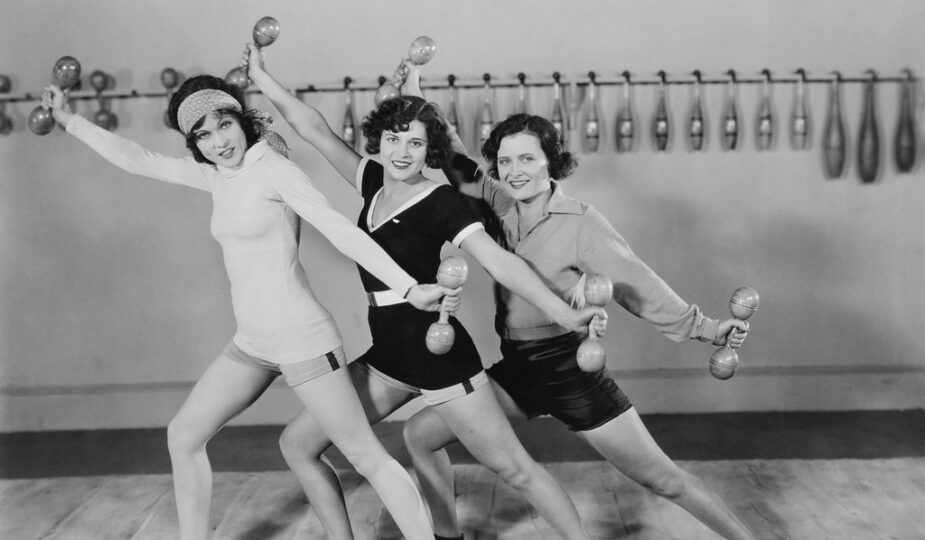
Just as the flappers of the 1920s traded corsetry for comfort in the name of liberation, so too has the 21st-century woman (and man) embraced Lycra and mesh for their own cultural rebellion. But this time, the cause is wellness, ease, and curated casualness.
Let us step back and trace the journey of athleisure, not only as clothing, but as a cultural signpost.
From Function to Fashion: The Early Threads of Athleisure

To speak of athleisure as a modern invention would be to overlook its earlier roots. By the 1930s, tennis dresses, beach pajamas, and ski suits had already begun to blend athletic function with visual flair. The interwar years saw Coco Chanel design leisurewear for the Riviera, while Hollywood films placed actresses in sportswear that balanced action with allure.
Yet it was not until the post-war boom, particularly in America, that sportswear emerged as a dominant fashion category. In the 1950s and 60s, Claire McCardell’s easy separates and Bonnie Cashin’s casual coats redefined what women could wear outside the domestic sphere. These were clothes for movement and for modernity. Women were now driving cars, pushing prams, and entering the workforce. Their wardrobes had to adapt.
The Aerobic Explosion of the 1980s

If the 50s and 60s laid the groundwork, the popular trends of the 80s turned up the volume literally and figuratively. The rise of aerobics culture (led by icons like Jane Fonda) introduced leotards, leggings, headbands, and other neon accouterments into public consciousness.
Exercise was no longer a private act. Women were encouraged to perform fitness, and with that performance came a visual uniform. Lycra and Spandex innovations in textile technology allowed for clothing that hugged, shaped, and stretched. Streetwear and hip-hop culture likewise co-opted tracksuits, trainers, and branded gear as both identity and protest. Comfort met cool.
1990s: Refinement, Minimalism, and Techwear
With the arrival of the 1990s came a counterbalance. Gone were the leg warmers and excesses of the 80s. Now, fashion leaned toward minimalism. The rise of Calvin Klein, Prada Sport, and Donna Karan’s “Seven Easy Pieces” gave sportswear an urbane polish.
Here, we see the seeds of modern athleisure: designs in neutral tones, breathable fabrics, and performance-inspired cuts that can slip seamlessly from studio to street. Fabrics like Gore-Tex and Coolmax began to appeal not just to athletes but to style-conscious city dwellers.
2000s–2010s: Wellness as Wardrobe
By the early 2000s, wellness had become a lifestyle and athleisure, its unofficial uniform. Yoga pants, once confined to studios, became staple streetwear.
The likes of Lululemon and Alo Yoga turned activewear into an aspiration. The rise of “It Girls” photographed leaving Pilates in $100 leggings only cemented the trend.
Social media played a crucial role.
Platforms like Instagram and Pinterest curated the illusion of effortlessness: a woman in sculpted leggings sipping green juice, or a man in a moisture-wicking hoodie running through a sunlit park. Athleisure wasn't just about looking good; it was about appearing disciplined, capable, and in control of one’s body and time.
Image on the right: Lululemon pushed for effortless athleisure.

The Pandemic Pivot: Loungewear Meets High Style
By the year 2020, as the world withdrew behind closed doors, a notable shift occurred not only in public life but also within the private rituals of dress. Gone were the tailored suits of office life and the polished attire once associated with public presentation. In their place came garments of comfort and quiet resilience: stretch trousers, ribbed jersey tops, and softly tailored sweatshirts, often rendered in neutral palettes and elevated fabrics.
Even established fashion houses such as Dior and Balenciaga turned their gaze inward, offering capsule collections of so-called "elevated basics," a nod to the new domestic uniform. This was not merely a matter of convenience.
Instead, it reflected fashion’s long-standing ability to adapt to the rhythms of daily life. In doing so, it erased the binary between activewear and regular clothing, producing a hybrid wardrobe in which jersey and fleece were no longer confined to the gym, but were instead embraced as sartorial symbols of a more flexible and introspective age.
What Athleisure Says About Us
Like the tea gowns of Edwardian England or the garçonne dresses of the Jazz Age, athleisure reflects the zeitgeist. It signals our current values: flexibility, mobility, self-care, and authenticity. Yet, it also reveals our anxieties, the pressure to be always “on,” always striving for optimization.
To wear athleisure is to straddle two worlds: one of comfort and one of performance. It is clothing that implies readiness for a workout, a meeting, or a moment on camera.
And while some critics bemoan the death of formality, fashion history tells us otherwise. Clothes, after all, do not lose meaning; they simply change context.
Conclusion: From Corsets to Crop Tops
In every century, garments once deemed scandalous became staples. The bikini shocked in the 1940s; today, it’s commonplace. So too with leggings and sneakers. What was once “lazy” is now luxury. What was once niche is now mainstream.
Athleisure, in its quiet way, has transformed the fashion landscape, not with fireworks, but with fibers. And perhaps that is its genius. It didn’t demand revolution. It simply crept in, garment by garment, until comfort became chic.
As we look to the future, one might wonder: what comes after athleisure? Or has it, like the little black dress and the trench coat, already earned its place in the annals of enduring style?