As 2025 draws to a close, the year has proven to be a fascinating study in fashion evolution, blending nostalgic references with forward-thinking innovation. Throughout the past twelve months, the fashion landscape has been shaped by a distinctive mix of tactile materials, aquatic inspirations, and reimagined sportswear that bridges the gap between athletic function and feminine elegance. This comprehensive review examines the key trends that have defined 2025, offering insights backed by industry data and runway analysis.
Table of Contents
- Suede Renaissance: Bohemian Sophistication Returns
- The Yellow Spectrum: From Vanilla to Saffron
- Hot Pants Revival: Gen Z Embraces Abbreviated Hemlines
- Aquatic Influences: Beyond Nautical Traditions
- Feminine Athleticism: The Sportswear Evolution
- The Polo Shirt Reimagined
- Animal Prints: Leopard and Tiger Dominance
- Conclusion
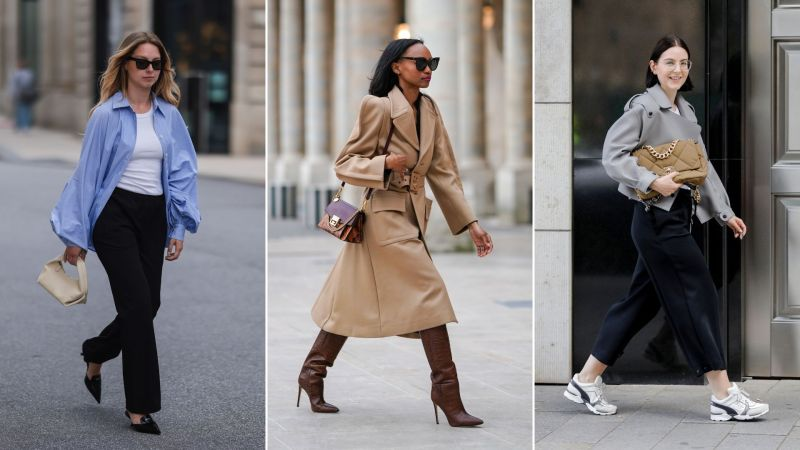
Image via DHgate.com
Suede Renaissance: Bohemian Sophistication Returns
The Spring/Summer 2025 collections showcased an unmistakable focus on suede, with this tactile material emerging as a cornerstone of contemporary wardrobe building. According to industry tracking data, suede appearances increased by 17% in women's ready-to-wear between July and September 2025 compared to the previous year, as reported by fashion forecasting services monitored by Vogue Business analysis.
The suede trend manifested across multiple garment categories, from structured blazers to flowing skirts and statement outerwear. Particularly noteworthy was the rise of coordinated suede ensembles, with matching sets experiencing a 13% increase on men's Spring/Summer 2025 runways, a trend that quickly crossed over into women's fashion. Major fashion houses including Isabel Marant and Chloé championed this aesthetic, presenting suede as the material embodiment of the relaxed bohemian attitude that characterized much of the year's fashion narrative.
The accessory category saw equally impressive growth, with suede loafers emerging as a particular favorite among fashion-forward consumers. Market analysis indicated a projected 30% increase in suede loafer sales during early 2025, with the style appealing especially to what industry analysts term the "edgy customer" demographic. Oversized suede bags became another signature piece of the year, offering both practicality and a luxurious tactile quality that resonated with consumers seeking investment pieces.
This suede resurgence connects to broader historical fashion cycles. The material's previous peak occurred during the early 1970s bohemian movement, when designers like Yves Saint Laurent incorporated suede into their collections as part of the era's embrace of natural materials and artisanal craftsmanship. The 2025 iteration, however, distinguished itself through more refined tailoring and unexpected color palettes, moving beyond the earth tones traditionally associated with suede to embrace jewel tones and pastels.
The Yellow Spectrum: From Vanilla to Saffron
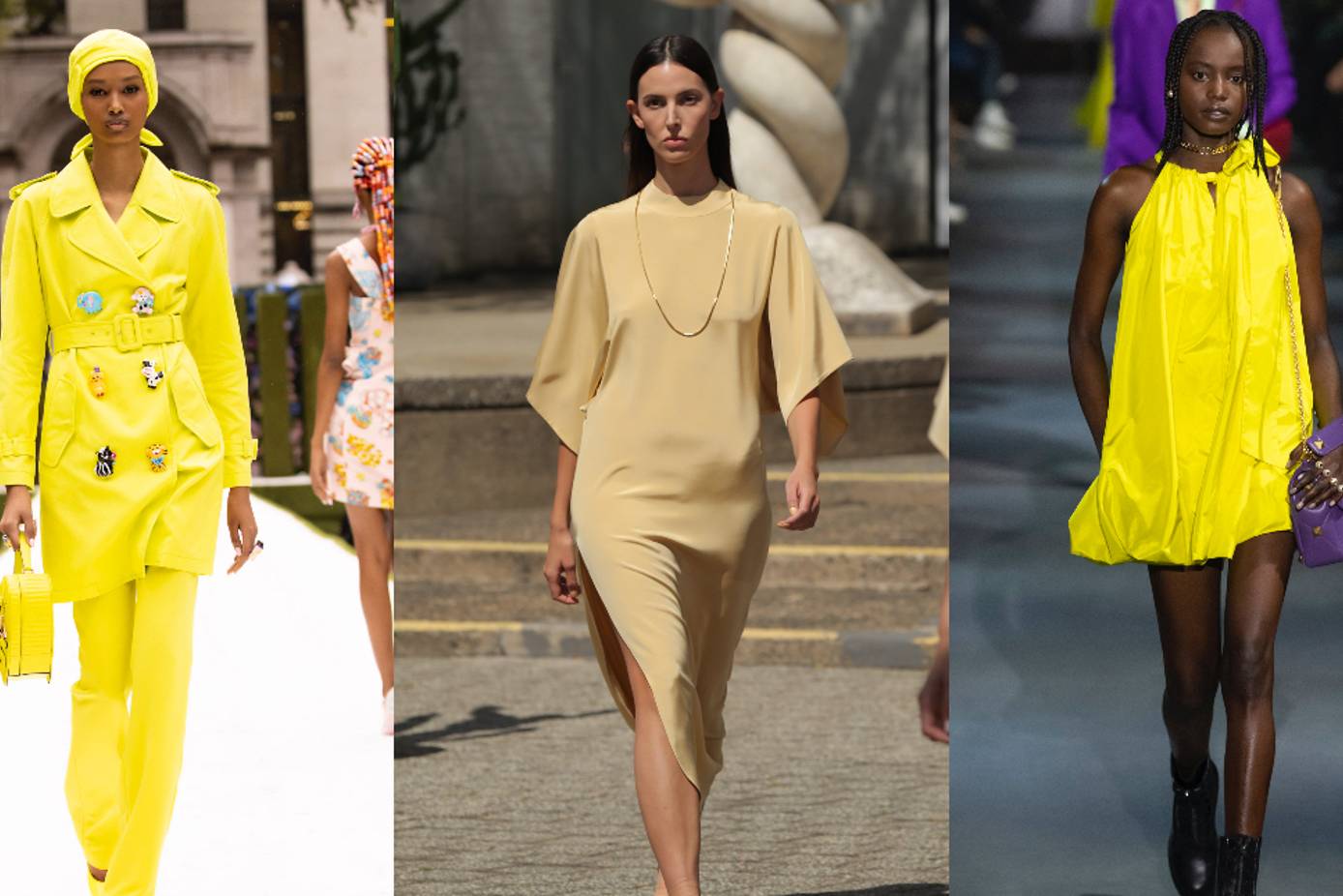
Color analysis throughout 2025 revealed yellow as one of the year's most significant chromatic trends, with the hue appearing in two distinct expressions: the soft, creamy notes of vanilla yellow and the deeper, more saturated tones of saffron. According to Heuritech forecasting, vanilla yellow experienced an 11% increase in runway appearances during the spring collections, while saffron yellow registered a 6% growth from April through June.
The vanilla yellow shade offered designers and consumers a subtle alternative to traditional neutrals. This delicate tone appeared predominantly in flowing fabrics such as silk charmeuse and lightweight cotton voiles, creating an ethereal quality particularly suited to warm-weather dressing. Brands like Jil Sander and The Row incorporated vanilla yellow into their minimalist aesthetic, demonstrating the color's versatility within both casual and elevated contexts.
Saffron yellow, by contrast, brought intensity and warmth to the 2025 palette. This richer hue drew inspiration from historical references including the golden tones favored during the 1970s, when designers like Halston employed saturated yellows in jersey gowns and tailored separates. In 2025, saffron appeared in structured pieces including tailored blazers, pencil skirts, and architectural coats, with houses such as Bottega Veneta and Loewe showcasing the color's sophisticated potential.
The prominence of yellow tones throughout 2025 represented a broader shift away from the muted, subdued palettes that dominated the early 2020s. Fashion psychologists noted that the embrace of yellow reflected a collective desire for optimism and energy following years of global uncertainty, as discussed in recent Business of Fashion trend analysis.
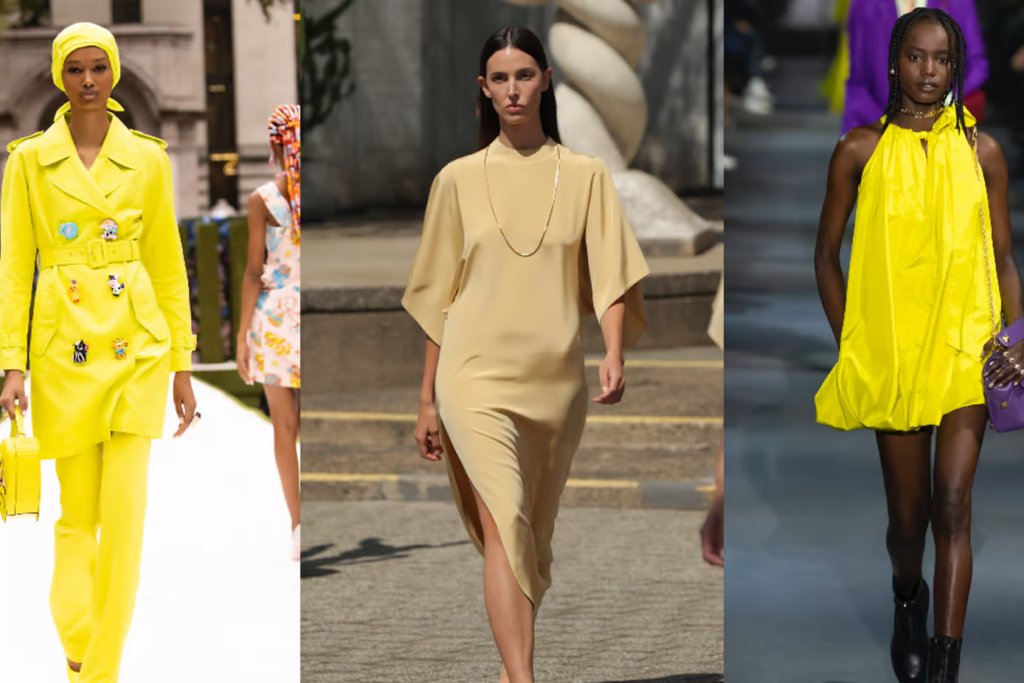
Image via fashionunited.com
Hot Pants Revival: Gen Z Embraces Abbreviated Hemlines
One of 2025's most notable silhouette trends involved the widespread return of hot pants, offering a fresh alternative to the mini skirt that had dominated recent seasons. This abbreviated bottom gained significant traction particularly among Gen Z consumers, with industry data showing a 7% increase in popularity from April to June 2025, followed by an even more substantial 14% rise from July through September.
The hot pants of 2025 distinguished themselves through material diversity and styling versatility. Runway presentations throughout the year showcased versions in materials ranging from traditional denim and leather to more unexpected fabrications including chunky knits, cotton twill, and sequined textiles. This variety allowed the garment to transition seamlessly between casual daytime contexts and evening occasions.
Styling approaches varied considerably throughout the year. Early spring collections paired hot pants with sheer hosiery, creating a look that nodded to 1960s mod fashion while maintaining contemporary proportions. As temperatures rose, bare legs became more prevalent, with the garment often styled with oversized blazers, cropped knit cardigans, or flowing blouses to create balanced silhouettes. Evening interpretations frequently featured sequined or metallic versions paired with structured party shirts, as seen in collections from Saint Laurent and Balmain.
The hot pants revival connects to cyclical fashion history, recalling the garment's original emergence in the early 1970s when designer Mary Quant popularized abbreviated hemlines as part of the youthquake movement. However, the 2025 iteration reflected different cultural contexts, with the style embraced not as a symbol of liberation but rather as a practical, body-positive option appealing to younger consumers comfortable with varied body exposures.
Aquatic Influences: Beyond Nautical Traditions
Throughout 2025, fashion drew inspiration from oceanic imagery in ways that transcended traditional nautical styling. Rather than relying on predictable sailor stripes and anchor motifs, designers explored more imaginative aquatic references including pool tile patterns, tropical blue gradations, shell formations, and mermaid mythology. This trend particularly resonated with fashion-forward consumers seeking distinctive, statement-making pieces.
Color analysis revealed turquoise as a key player in this aquatic narrative, with the shade experiencing an 8% increase in appearances compared to the previous year. The color appeared in both saturated and muted variations, from deep teal tones reminiscent of ocean depths to paler aquamarine shades suggesting Caribbean waters.
Mermaid-inspired styling emerged as a significant subset of this trend, with sequined embellishments increasing by 20% and fishtail maxi silhouettes rising by 17% throughout the summer season. Designers including Schiaparelli and Valentino created dramatic evening pieces featuring scaled textures, iridescent fabrics, and fluid silhouettes that evoked underwater movement. These fantastical interpretations offered consumers escapist fashion that prioritized imagination and theatricality.
The broader aquatic influence extended to fabric choices, with lustrous materials and metallic finishes gaining prominence. Lamé, holographic textiles, and fabrics with mother-of-pearl effects all contributed to the water-inspired aesthetic. Mainstream fashion retailers adapted these high-fashion concepts through more accessible interpretations, incorporating shades of blue, silver hardware details, and fluid silhouettes into everyday pieces.
This oceanic focus reflects fashion's ongoing fascination with natural world imagery, continuing a trajectory visible in previous seasons' botanical and desert landscape influences. The aquatic theme offered particular appeal during 2025 as climate consciousness shaped.
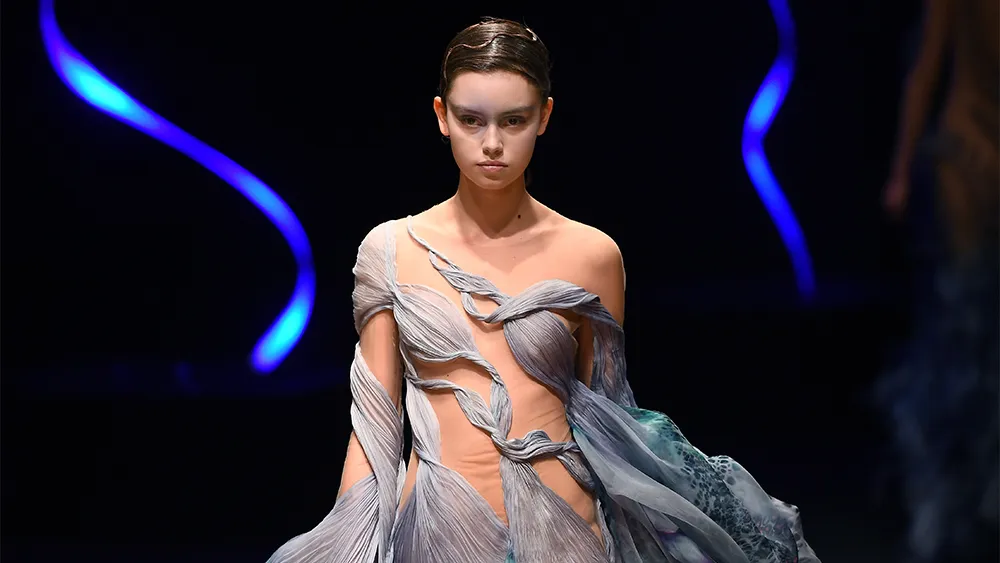
Image via wwd.com
Feminine Athleticism: The Sportswear Evolution
The relationship between fashion and sportswear underwent significant refinement throughout 2025, with designers focusing particularly on athletic disciplines associated with grace and flexibility rather than competitive intensity. Yoga, Pilates, and ballet emerged as primary inspirational sources, offering fashion a vocabulary of elegant movement and body awareness.
This shift represented a departure from the aggressive, performance-focused sportswear that dominated the late 2010s and early 2020s. Rather than emphasizing compression fabrics and bold logos, 2025's athletic-inspired fashion prioritized softer textures, refined color palettes, and subtle details. Luxury fashion houses including Casablanca and Salvatore Ferragamo led this reinterpretation, presenting collections that incorporated athletic elements while maintaining sophisticated aesthetics.
Sweatpants experienced particular evolution during 2025, with the garment transcending its casual origins to become a versatile wardrobe staple. Industry projections indicated a 25% increase in sweatpants sales for Spring 2025 compared to the previous year, driven by styling approaches that paired the relaxed bottoms with elevated pieces such as structured blazers, silk blouses, and designer handbags. When combined with heels rather than athletic footwear, sweatpants created an "on-the-go" aesthetic that balanced comfort with polish, appealing to consumers navigating varied daily activities.
The color palettes associated with this feminine sportswear trend leaned toward pastels, particularly soft pinks, lavenders, and mint greens that referenced ballet studio aesthetics. Fabrics moved beyond standard jersey constructions to include more luxurious options such as cashmere blends, silk-cotton mixes, and technical materials with subtle sheen. Details including grosgrain ribbon trim, delicate ruching, and wrap closures further emphasized the feminine reinterpretation of athletic wear.
This trend connects to broader fashion history, recalling the 1980s when designers including Norma Kamali and Donna Karan first elevated athletic wear into high fashion contexts.
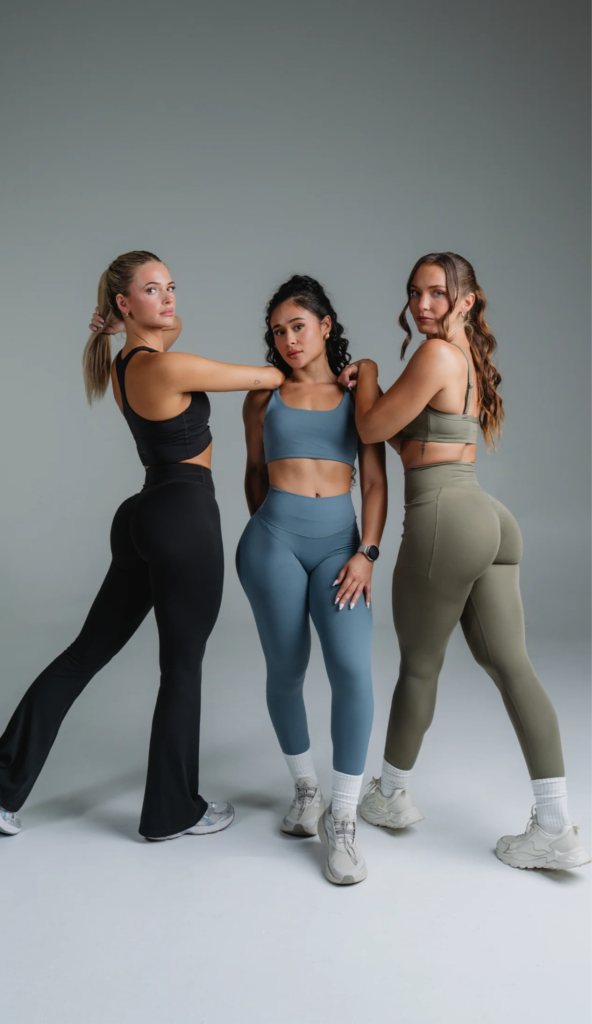
Image via paragonfitwear.com
The Polo Shirt Reimagined
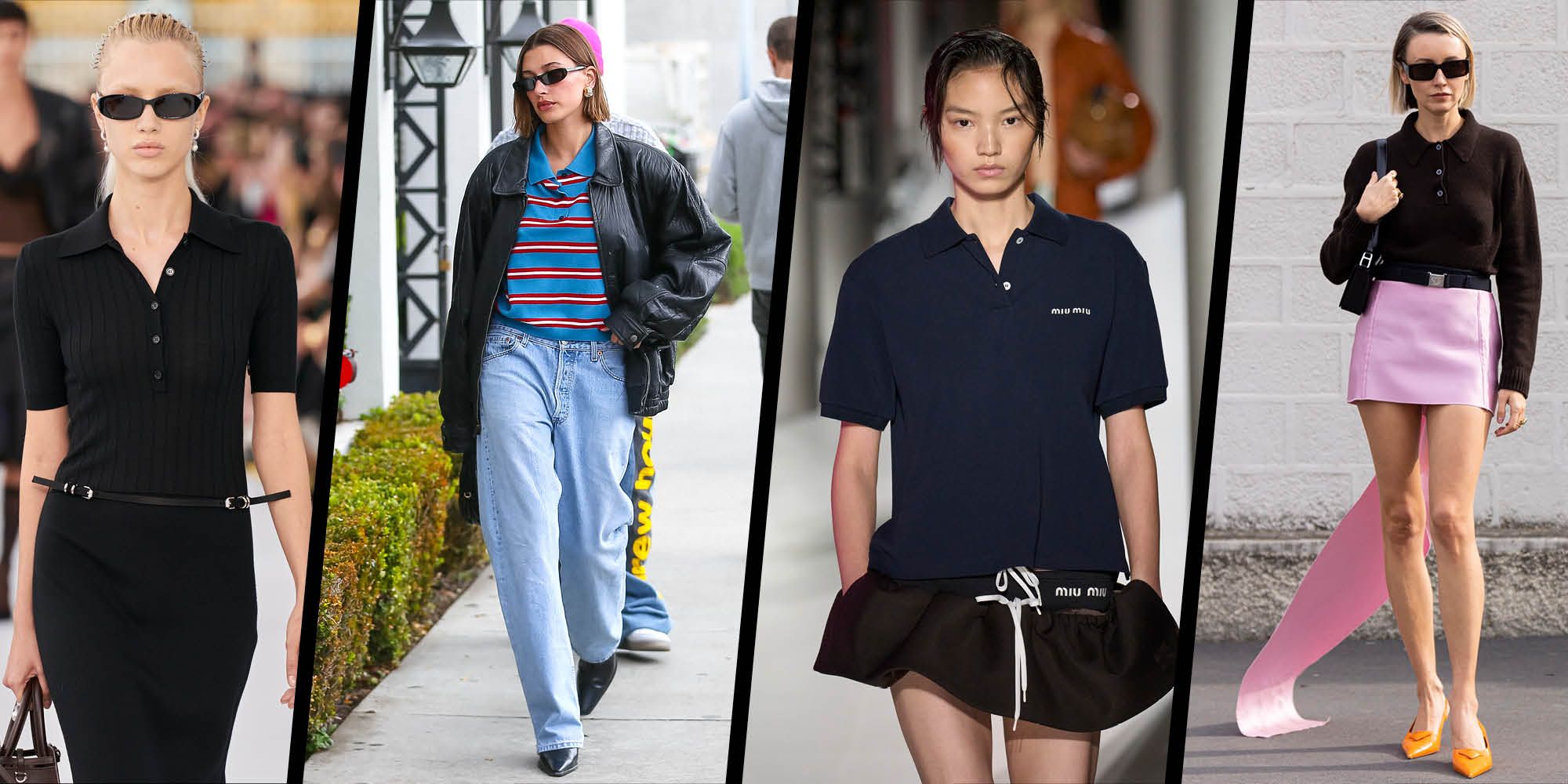
The classic polo shirt underwent substantial reinterpretation throughout 2025, with designers transforming this traditionally masculine garment into a distinctly feminine wardrobe essential. This evolution involved both silhouette modifications and contextual repositioning, moving the polo from its sporting origins into realms of refined everyday dressing and even occasion wear.
The 2025 polo shirt distinguished itself primarily through tailoring adjustments that emphasized the feminine form. Where traditional polos featured boxy, straight cuts, the new versions incorporated darting, princess seams, and strategic shaping to create fitted silhouettes that defined the waist and followed body contours. Sleeve lengths varied, with short sleeves remaining most prevalent, though three-quarter and long-sleeved versions also appeared in cooler weather collections.
Styling approaches throughout the year emphasized the polo's versatility. Buttoned fully to the collar, the garment conveyed preppy sophistication, often paired with tailored trousers or pleated skirts for professional contexts. Worn with several buttons undone and layered over camisoles, the same piece adopted a more relaxed, weekend aesthetic. Designer brands including Ralph Lauren and Lacoste presented polo shirts in elevated fabrications such as silk knit and merino wool, further expanding the garment's potential applications.
Color and pattern variations broadened the polo's appeal beyond its traditional solid-colored heritage. Striped versions in both classic and unexpected color combinations proved popular, as did polos featuring tonal embroidery, contrast collar treatments, and subtle metallic threads. These details transformed a utilitarian staple into a piece capable of carrying visual interest within minimalist ensembles.
The feminine polo's ascendance during 2025 reflected broader interest in borrowed-from-the-boys styling, a recurring theme throughout fashion history. Previous examples include the 1930s when Marlene Dietrich popularized menswear-inspired tailoring, and the 1980s power dressing era when designers like Giorgio Armani adapted masculine suiting for women. The 2025 iteration, however, emphasized adaptation rather than direct appropriation, creating pieces that acknowledged masculine origins while celebrating feminine form.
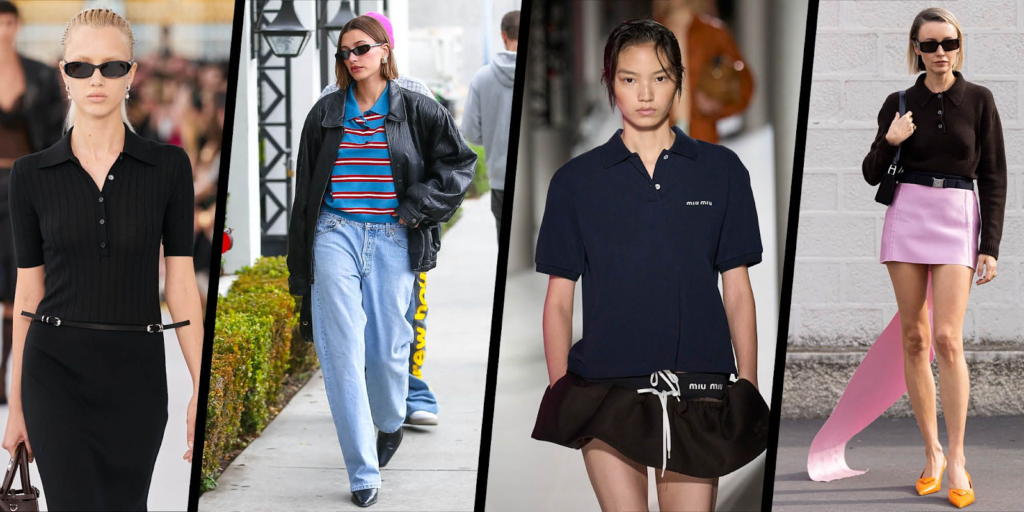
Image via harpersbazaar.com
Animal Prints: Leopard and Tiger Dominance
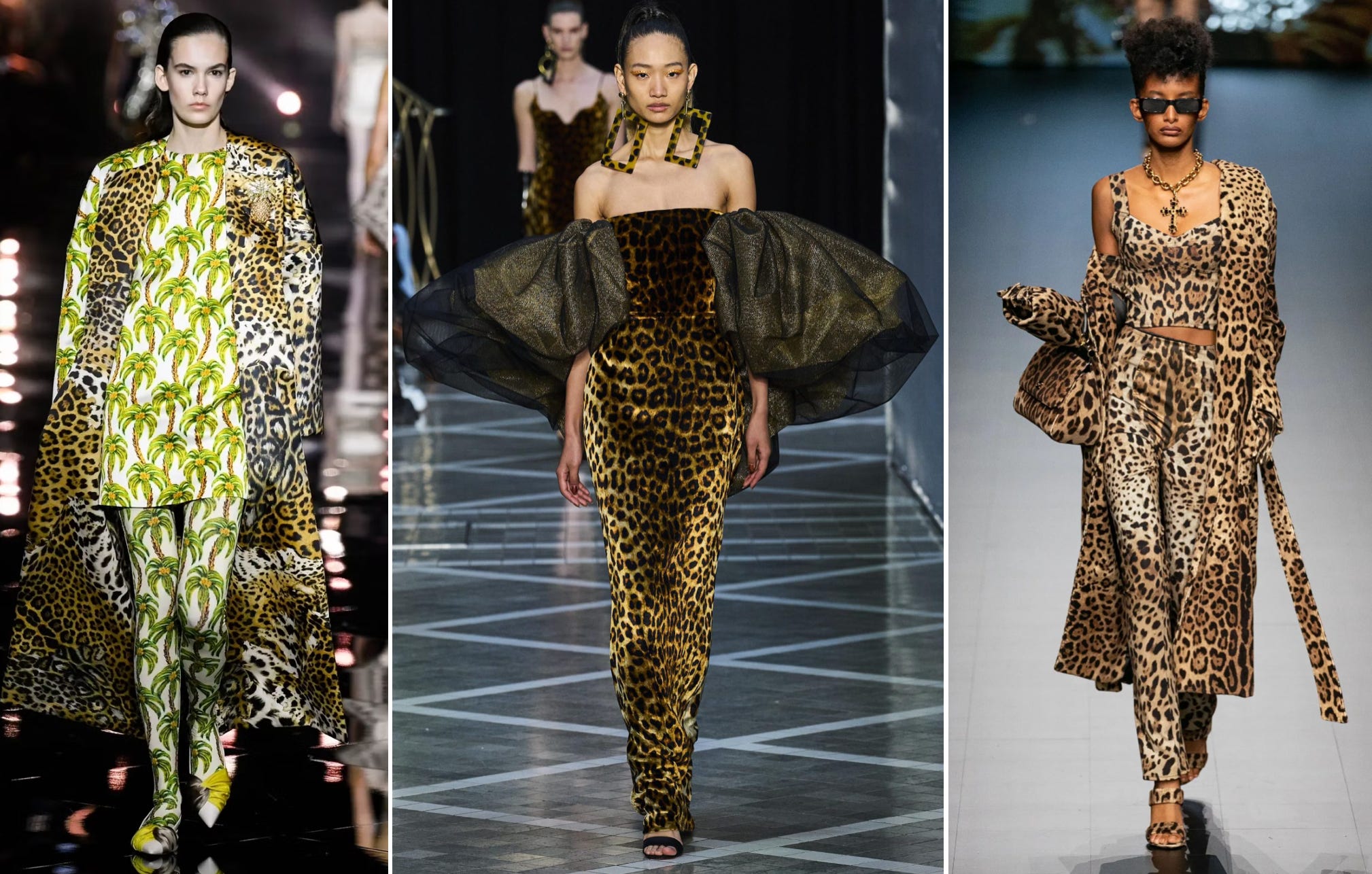
Animal prints maintained their position as fashion perennials throughout 2025, with leopard and tiger patterns experiencing particularly dramatic surges in popularity. Far from being relegated to accent pieces or occasional statement items, these prints achieved near-neutral status, appearing across entire ensembles and in unexpected applications from tailored suiting to delicate lingerie.
Industry data revealed the scale of this trend, with animal prints overall projected to increase by 92% from July to September 2025. Within this broader category, leopard print led with a striking 138% increase during the same period, while tiger print registered a more modest but still significant 16% rise. These figures, reported by fashion analytics firms tracked by InStyle, indicated animal prints' transition from niche trend to mainstream phenomenon.
Leopard print's dominance during 2025 represented the continuation of momentum building throughout 2024, when the pattern began appearing not only in fashion but also in interior design, beauty products, and lifestyle accessories. This saturation across categories contributed to the print's normalization, making it feel less costume-like and more integrated into everyday aesthetic choices. Designers from established houses including Dolce & Gabbana and Roberto Cavalli to contemporary brands such as Ganni and Rixo incorporated leopard print throughout their collections, validating its broad appeal.
Tiger print, while less ubiquitous than leopard, carved out its own niche during 2025. The bolder, more graphic quality of tiger stripes appealed particularly to consumers seeking drama and visual impact. Kenzo, historically associated with tiger imagery through its iconic logo, presented multiple tiger-print pieces throughout the year, while other designers incorporated the pattern more selectively as accent details on collars, cuffs, and accessories.
Styling approaches for animal prints during 2025 demonstrated sophistication, moving beyond the "one statement piece" formula that previously governed their use. Fashion influencers and editorial styling increasingly showcased mixed animal prints, pairing leopard with tiger or combining animal patterns with florals and geometrics. This bold approach reflected growing confidence among consumers in navigating pattern mixing, supported by guidance from fashion media and the democratization of styling knowledge through social platforms.
The historical context of animal prints in fashion extends back centuries, with leopard print particularly associated with status and luxury due to the rarity and expense of actual leopard fur. In the 20th century, designers including Christian Dior and Yves Saint Laurent helped establish animal prints as fashion staples rather than literal status symbols. The 2025 trend continued this trajectory, with animal prints serving as accessible tools for injecting personality and boldness into contemporary wardrobes.
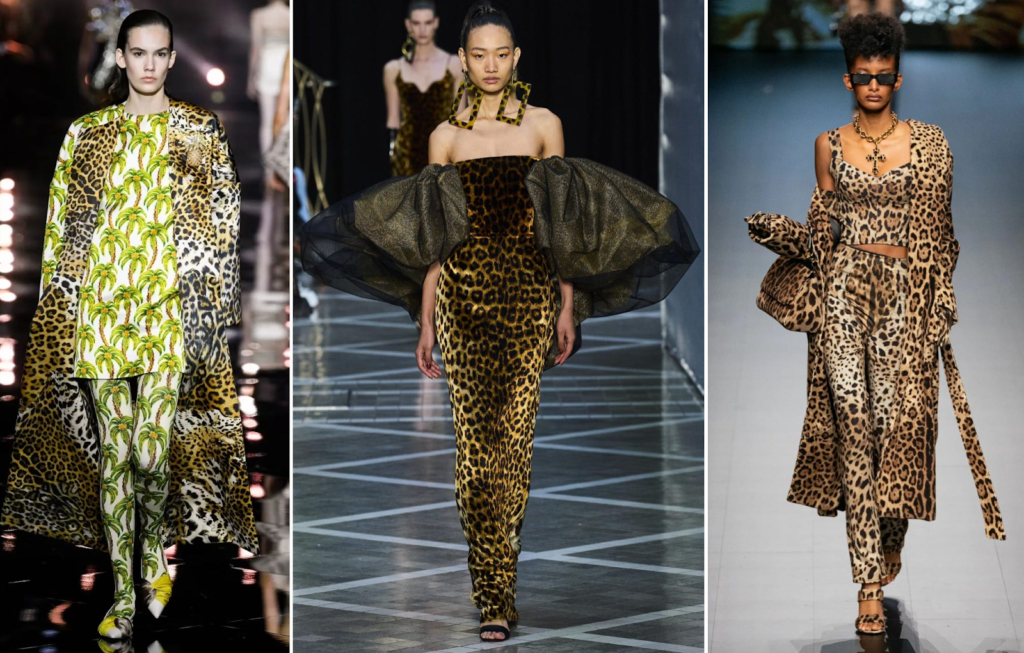
Image via leandramcohen.substack.com
Conclusion
As 2025 concludes, the year's fashion trends reveal a distinctive moment in style history characterized by tactile richness, color confidence, and the sophisticated reinterpretation of familiar elements. From the bohemian elegance of suede to the aquatic fantasies that captured imaginations, from reimagined sportswear to the omnipresent leopard print, the year demonstrated fashion's capacity for both nostalgia and innovation.
The trends that defined 2025 reflected broader cultural currents including the desire for comfort without sacrificing style, the embrace of optimistic color after years of neutral dominance, and the ongoing evolution of gender in fashion. These movements occurred against a backdrop of continued technological advancement in textile production, growing sustainability consciousness, and the persistent influence of social media on trend dissemination and adoption.
For fashion historians and enthusiasts, 2025 will likely be remembered as a year of synthesis, drawing from multiple decades of fashion history while creating something distinctly contemporary. The suede bohemia recalled the 1970s, hot pants nodded to both the 1960s and 1970s, aquatic influences suggested Art Nouveau's natural world fascination, and the feminine polo connected to 1980s borrowed-from-the-boys styling. Yet these references never felt derivative, instead serving as starting points for fresh interpretations suited to contemporary lifestyles and values.
As documented throughout this review, the fashion trends of 2025 offer valuable insights for understanding both current style and future directions. Whether embracing the year's key pieces or simply appreciating fashion's ongoing evolution, the trends of 2025 provide rich material for sartorial exploration and personal style development.