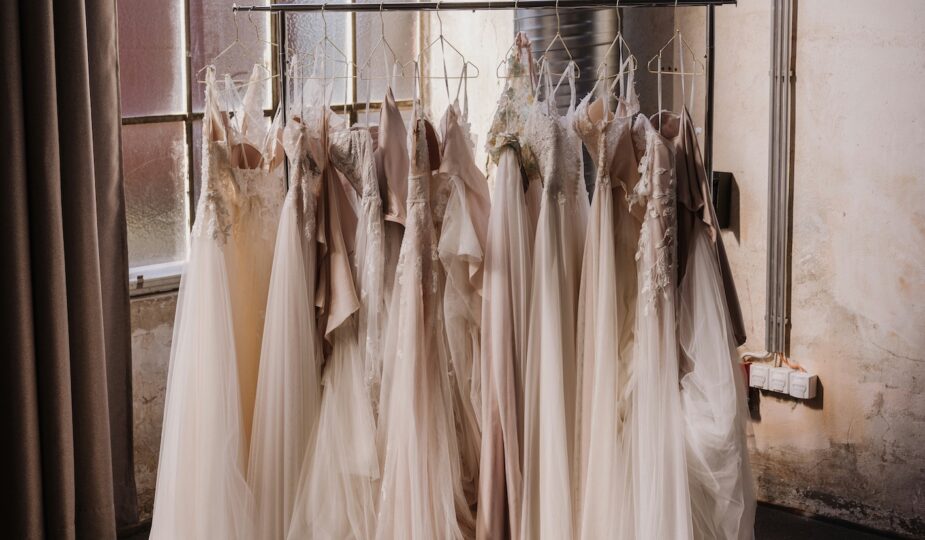
The phrase "investment piece" gets used so often in bridal marketing that it has come close to losing meaning. Almost every designer claims to make one, and many bridal salons will tell you that a gown is worth the money simply because of its price. A more useful definition looks at three things: whether the construction is designed to last beyond a single wear, whether the design vocabulary is likely to age well, and whether the fabric and labor are reflected in the price. The ten designers below are worth exploring for the way they approach those qualities; inclusion is based on design and craftsmanship rather than name recognition alone.
What Makes a Wedding Dress an Investment in 2026
The first thing worth knowing is that an investment wedding dress is not the same as an expensive one. Here, “investment” refers to construction quality, design longevity, and the possibility of preserving, altering, or reselling the gown—not to a guaranteed financial return. In some cases, a high price reflects brand heritage as much as the garment itself. In others, the cost is more visibly connected to the work, materials, and fittings involved.
The 10 Designers at a Glance
| Designer | Country | Tier |
| Danielle Frankel | USA | High-end |
| Galia Lahav | Israel | Couture |
| Catherine Walker | UK | Couture |
| Stewart Parvin | UK | Couture |
| Peter Langner | Italy | Couture |
| Anna Maier Ulla-Maija | USA | Couture |
| Caroline Castigliano | UK | High-end |
| Antonio Riva | Italy | Couture |
| Bibhu Mohapatra | USA | High-end |
| Yolan Cris | Spain | High-end |
Danielle Frankel
A Danielle Frankel gown stands out because of where it sits in modern bridal: fashion-forward, technically considered, and still wearable beyond a single trend cycle. Frankel produces the label’s dresses through its New York atelier, with appointments available at the New York studio and Los Angeles boutique on Melrose Place.
Why they’re in the top spot:
- Made-to-order gowns produced through the New York atelier, with appointments at the New York studio and Los Angeles boutique on Melrose Place
- Distinctive techniques, including trapunto stitching, corded trellis embroidery, boned bodices, and hand-painted details
- A modern-classic point of view that feels distinctive without depending entirely on short-lived trends
- Made-to-order designs, with bespoke commissions available for clients seeking a more individualized process
- Signature techniques that feel classic without becoming predictable, including corded trellis work and hand-painted floral details
- Editorial credibility through campaigns shot by photographers including Paolo Roversi
- Worn by Zoë Kravitz, Julia Garner, and others
Galia Lahav
The Tel Aviv–based house founded in 1984 by Galia Lahav has built one of the most recognizable couture bridal aesthetics in the international market, with a particular reputation for hand-beadwork, illusion bodices, and gowns that translate well to red carpets as well as aisles. The house produces all couture commissions in Tel Aviv with strong international distribution through luxury bridal salons.
- Couture-level detailing, with extensive hand-beadwork on the house’s more elaborate gowns
- Worn by Beyoncé, Sofia Vergara, Ciara, and other red-carpet figures
- Multiple lines (Galia Lahav Couture, Gala by Galia Lahav, Modern Romance) covering different price tiers
- Aesthetic skews dramatic-romantic, which is a distinct point of view but reads more "of its house" than directional bridal
- Strong international presence through flagship boutiques and luxury bridal retailers
Catherine Walker
Catherine Walker is the British house that dressed the late Princess Diana for most of her public life, including the famous "Travolta dress." The label was founded by Catherine Walker herself in 1976 and now operates under the leadership of her husband and creative team from a Sydney Street atelier in Chelsea, London. Every gown is bespoke and made entirely in the Chelsea house, with the same construction techniques the house has used for nearly five decades.
- Bespoke-only model with no ready-to-wear bridal line, which means every gown is built for the specific bride
- Production entirely in the Chelsea atelier with a long-tenured team
- Legacy bridal credentials including Princess Diana's wardrobe and current royal clients
- Aesthetic register is strictly classical-couture, which is the point but limits appeal for brides drawn to more directional design
- Pricing is available through direct consultation and varies according to the level of customization, fabric, and complexity
Stewart Parvin
Stewart Parvin is known for traditional British couture and has a long history of dressing members of the British royal family. The house is associated with precise fit, formal silhouettes, and a highly polished finish—qualities that make it particularly relevant to brides planning traditional or ceremonial weddings.
- A long-standing reputation in British couture and royal dressing
- Bespoke gowns made in the London atelier using carefully selected European fabrics
- A consistent emphasis on fit, finish, and traditional couture construction
- Aesthetic register is firmly classical, which suits a particular kind of wedding (formal, traditional, often church-based) and is a mismatch for non-traditional ceremonies
- Less brand awareness internationally than the major Paris or Italian houses, which suits brides who do not want a recognizable label
Peter Langner
Peter Langner is a German-born, Rome-based designer whose Italian couture house has dressed an international clientele for decades. The house operates from Rome, with a presence in New York, and is known for European fabrics, architectural silhouettes, and meticulous finishing.
- Italian-made couture with a multi-fitting process for made-to-order and bespoke gowns
- Atelier locations in Rome and New York with appointments by request
- Hand-finished details may include rolled hems, refined seam work, and concealed corsetry, depending on the design
- Aesthetic skews European-classical, which works particularly well for destination weddings in Europe and reads less naturally at very contemporary American venues
- Lower public press visibility than houses with celebrity-styling strategies, which is a positive for the experience and a negative for inspiration research
Anna Maier Ulla-Maija
The New York couture house founded by Finnish-born designer Ulla-Maija Aalto has produced bridal couture since 1989, with a house style that combines Scandinavian restraint and traditional couture construction. The label has been carried by luxury retailers and select bridal salons.
- New York–made couture with a Scandinavian-minimalist register that distinguishes the house from more ornate competitors
- Smaller collections and made-to-order production support a more considered approach to manufacturing
- A restrained aesthetic with broad appeal across different age groups
- Lower contemporary press presence than houses with active social-media strategies, which means brides may need to do their own research to find the brand
- Aesthetic restraint means the gowns photograph quietly elegant rather than show-stopping, which is the point but is a mismatch for brides who want a statement piece
Caroline Castigliano
The British house founded in 1991 has built a reputation among brides who want polished British craftsmanship at a price point below the highest bespoke couture tier. Caroline Castigliano operates through a London flagship and selected retailers, with a particular focus on corsetry and silhouette.
- British craftsmanship and couture-influenced construction at a price point below many fully bespoke houses
- Strong signature corsetry technique that defines the silhouette structurally
- A designer-led brand with Caroline Castigliano closely associated with the collections
- Aesthetic register is firmly classical-romantic, which suits a specific kind of bride and is a mismatch for those drawn to fashion-forward design
Less editorial press footprint than the houses at the very top of British bridal, which can be a positive (more accessible appointments) or a negative (less inspiration research material)
Antonio Riva
The Milan-based Italian designer founded his eponymous house in 1980 and has remained a distinctive presence in European bridal. The label is known for clean, architectural silhouettes and a design language influenced by Italian fashion rather than conventional bridal ornament.
- Italian couture with close attention to structure and finish
- Distinctive architectural silhouette vocabulary that distinguishes the house from typical European bridal
- Strong international distribution through luxury bridal salons in Italy, France, the US, and Asia
- A lower-profile approach to celebrity styling and social media, allowing the design work to remain central
- Less customization flexibility than houses with bespoke services, with brides typically choosing from existing collection pieces with minor alterations
Bibhu Mohapatra
The New York–based Indian-American designer launched his label in 2009 after working at houses including J. Mendel. His eveningwear and bridal work draws on both Indian textile traditions and modern American silhouettes, creating a perspective that feels distinct within US luxury bridal.
- Designed through the New York studio with close attention to fabric and surface detail
- Distinct cross-cultural design vocabulary that distinguishes the house from typical American luxury bridal
- Worn by prominent public figures across politics, entertainment, and culture
- Lower bridal-specific press footprint than the dedicated bridal houses, which can affect how brides discover the brand
- Aesthetic skews more dramatic and embellished than the minimalist register currently dominant in editorial bridal, which is a positive or negative depending on the bride's direction
Yolan Cris
The Spanish house founded by sisters Yolanda and Cristina Pérez in Barcelona has built an international following around a Mediterranean-romantic bridal aesthetic, drawing on lace, embroidery, and Spanish textile traditions. The brand is available through its Barcelona base and international stockists.
- Produced through the Barcelona atelier, with a strong emphasis on lace and embroidery
- Strong distinctive Mediterranean aesthetic that sets the house apart from Northern European and American bridal
- Sister-designer team with Yolanda and Cristina working together on every collection
- Aesthetic is firmly romantic-bohemian, which suits destination and outdoor weddings particularly well and is a mismatch for very formal urban ceremonies
- Less established physical presence outside Spain than other European couture houses, with most brides accessing the brand through stockists
What to Look for in an Investment Wedding Dress
The questions that matter for investment bridal, in order of importance:
- Where is it made, and by whom?
A gown made through an experienced atelier can offer a different level of oversight from one produced through a large outsourced manufacturing network. Ask directly: “Where is this dress made, and who is responsible for its construction?” A clear answer helps you understand what the price includes. - What is the construction process?
High-end bridal often involves multiple fittings, fit adjustments, hand-finishing, and concealed structural elements such as corsetry, boning, and lining. The exact process varies by designer and by whether the gown is made-to-order or fully bespoke, so ask what is included before purchasing. - What are the fabrics, and where do they come from?
Luxury bridal may use materials such as duchess satin, Chantilly or Alençon lace, embroidered tulle, and silk. Fiber content, sourcing, and finishing can vary widely, so ask which fabrics a particular gown uses and how they should be stored and cared for. - What is the resale market doing for the house?
Secondary-market listings can offer a general sense of demand, but resale value is never guaranteed and depends on condition, size, alterations, age, and current interest in the design. Treat resale as one consideration rather than the main reason to buy. - Is the design vocabulary likely to date?
Trend-driven detail (statement sleeves of the moment, contemporary cut-outs, fashion silhouettes of the current season) will date faster than silhouette-driven design. Investment bridal sits in proportion, line, and material rather than in the trends specific to the year you marry.
FAQs
- How much should I expect to spend on a high-end wedding dress?
Pricing varies significantly by designer, fabric, location, and level of customization. Collection gowns from luxury bridal houses may begin in the several-thousand-dollar range, while made-to-order and fully bespoke commissions can extend well into five figures. Confirm whether fittings, customization, rush fees, and alterations are included. - How long should I plan for a high-end dress?
Nine to twelve months is a practical starting point for many made-to-order gowns, while fully bespoke commissions may require twelve months or more. Timelines vary by house, season, fabric availability, and the amount of customization, so confirm the schedule directly with the designer or salon. - Are investment wedding dresses still relevant when fewer brides are wearing traditional white gowns?
Yes. The category now includes separates, mini dresses, colored gowns, and second-look outfits as well as traditional bridal silhouettes. Many luxury houses apply the same attention to fabric and construction across these formats. - What about resale, alteration for the next generation, or repurposing after the wedding?
A well-made designer gown may be suitable for resale, alteration, preservation, or repurposing, depending on its construction and condition. These possibilities should be discussed with an experienced bridal tailor or preservation specialist. - How do I tell whether a designer offers genuine quality rather than relying on marketing language?
Ask where the gown is produced, what the fitting and alteration process includes, which materials are used, and who is responsible for the final construction. Clear, specific answers are more useful than broad claims about “investment” or “couture.”
Disclosure: This is a paid guest post. The views expressed are those of the contributor and do not necessarily reflect the views of Fashion-Era.

