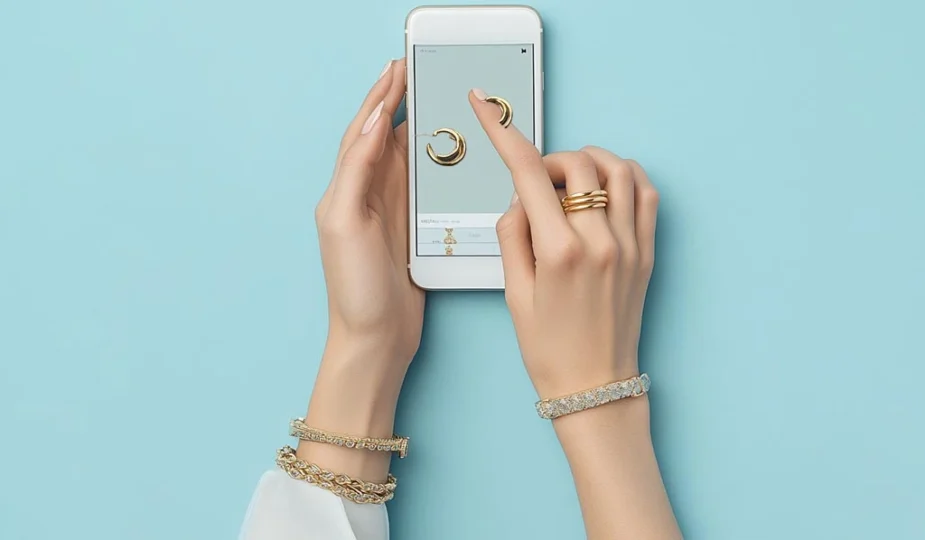
The emergence of digital commerce has reshaped the way we approach jewelry acquisition, inviting a new era in which collections once confined to the glass cases of Bond Street or Fifth Avenue may now be perused from the comfort of one’s armchair.
This shift offers unparalleled convenience, to be sure, yet it is not without its pitfalls. Without the tactile reassurance of weight, finish, and setting, the discerning eye must instead rely on knowledge. Understanding the hallmarks of fine craftsmanship, the precision of a claw setting, the clarity of a stone, and the consistency of hand-applied enameling have become essential. So too does a familiarity with authentic materials and the standards by which they are judged.
Understanding Jewelry Quality Standards Through Transparency
The foundation of jewelry quality assessment begins with transparency from the retailer. Reputable jewelers provide comprehensive information about their pieces, including metal composition, gemstone specifications, and relevant certifications. This transparency allows buyers to evaluate jewelry quality before committing to a purchase.
When examining an online jewelry retailer, look for detailed disclosure of materials. The seller should clearly state metal purity levels, gemstone characteristics, and any third-party verifications. Research into the company's history and customer feedback provides valuable insight into their standards. For instance, Ocarat Jewelry maintains comprehensive product documentation and customer reviews. Established jewelers with consistent positive reviews typically maintain higher jewelry quality standards than newer or less reviewed vendors.
Evaluating Jewelry Quality Through Product Specifications
Product descriptions serve as primary indicators of jewelry quality in online retail. Vague or incomplete information often suggests lower standards or attempts to obscure material facts. High-quality jewelry pieces come with thorough documentation.
Essential specifications to verify include metal purity expressed in karats for gold (such as 14K, 18K, or 24K), gemstone type with the four Cs (cut, carat, clarity, and color), maker or designer attribution, and origin of materials and manufacturing. Well-documented pieces demonstrate the seller's commitment to jewelry quality and customer education.
The precision of these descriptions reflects the retailer's expertise. Jewelers who maintain detailed records of their inventory typically source higher-quality materials and employ superior craftsmanship methods.
Jewelry Quality Verification: Certifications and Hallmarks
Authentic jewelry quality relies heavily on proper certification and marking. Fine jewelry should include documentation from recognized gemological institutions. The Gemological Institute of America and the International Gemological Institute provide independent verification of gemstone and metal quality.
Hallmarks engraved directly on pieces serve as permanent testimony to jewelry quality. Sterling silver bears the 925 mark, whilst 18K gold displays 750, indicating 75% pure gold content. These standardized marks have evolved over centuries as consumer protection measures. The British hallmarking system, established in 1300, represents one of the oldest forms of jewelry quality assurance still in use today.
When shopping online, request clear images of these hallmarks. Reputable retailers photograph their pieces to display these marks prominently, demonstrating their confidence in jewelry quality standards.
Visual Assessment of Jewelry Quality
Photography quality directly correlates with jewelry quality in online retail. Professional jewelers invest in high-resolution imagery that reveals craftsmanship details. Multiple angles, macro photography of settings and finishes, and accurate color representation all indicate serious attention to jewelry quality.
Examine finished work closely through enlarged images. Superior jewelry quality shows in seamless joins, smooth surfaces, and precise stone settings. Prongs should be uniform and secure. Metal surfaces should appear lustrous without pitting or irregularities.
Be cautious of listings using stock photography or images that appear across multiple unrelated websites. These often indicate dropshipping operations or counterfeit goods rather than genuine jewelry quality pieces.
The Economics of Jewelry Quality
Jewelry quality has intrinsic value based on materials and labor. Precious metals and gemstones command market prices that reflect their rarity and desirability. Whilst sales and promotions occur in legitimate retail, prices significantly below market rates warrant scrutiny.
The relationship between price and jewelry quality is complex. According to the World Gold Council, gold prices fluctuate based on global markets, affecting retail costs. Similarly, diamond prices follow established guidelines related to the four Cs (Cut, Carat, Clarity, Color). Reputable jewelers price their pieces in alignment with these market realities whilst accounting for craftsmanship and design.
Rather than seeking the lowest price, evaluate jewelry quality relative to cost. Consider the materials used, the complexity of design, and the reputation of the maker. Investment in genuine jewelry quality provides long-term value through durability and potential appreciation.
Jewelry Quality and Customer Protections
Established jewelers stand behind their jewelry quality through comprehensive customer service policies. Before purchasing, review policies regarding returns, exchanges, repairs, and warranties. These protections become particularly important for high-value pieces where jewelry quality must be guaranteed.
Clear return policies indicate confidence in jewelry quality. Lifetime warranties on craftsmanship demonstrate the maker's commitment to enduring standards. Repair services ensure pieces can be maintained throughout their lifetime.
Limited or unclear policies often signal lower jewelry quality standards or questionable business practices. Professional jewelers understand that supporting customers after purchase builds long-term relationships and protects their reputation for jewelry quality.
The Role of Craftsmanship in Jewelry Quality
Beyond materials, jewelry quality depends significantly on craftsmanship and design excellence. The jeweler's expertise in working with metals and stones determines the final piece's durability and beauty. Traditional techniques passed through generations often produce superior jewelry quality compared to mass manufacturing methods.
Look for information about the maker's background and training. Jewelers who apprenticed under master craftspeople or studied at recognized institutions typically maintain higher jewelry quality standards. Ethical sourcing of materials also reflects a commitment to overall jewelry quality, as responsibly obtained gems and metals support sustainable practices.
The history of jewelry demonstrates how craftsmanship defines jewelry quality. From the intricate granulation techniques of ancient Etruscans to the precise stone setting methods developed during the Renaissance, superior jewelry quality has always required both artistic vision and technical skill.
Making Informed Jewelry Quality Decisions
Assessing jewelry quality online requires knowledge, careful observation, and patience. Compare multiple pieces to understand how materials and craftsmanship affect overall quality. Study product specifications thoroughly. Research the seller's background and reputation within the industry.
Trust your instincts when something appears inconsistent. Unclear descriptions, evasive communication, or reluctance to provide documentation all suggest compromised jewelry quality. The investment in fine jewelry merits careful consideration and due diligence.
By understanding jewelry quality indicators and shopping with established, transparent retailers, you can build a collection of pieces that endure for generations. Quality jewelry represents both personal adornment and tangible investment, connecting contemporary wearers to centuries of artistic tradition.
Jewelry Quality Standards Since the 1950s
The post-war era transformed jewelry quality expectations through the influence of Hollywood glamour and technological advances. By the 1940s and 1950s, American culture dominated European fashion. Film stars set standards for jewelry style, and audiences sought replicas of pieces worn by screen idols. This democratization of style affected jewelry quality perceptions, as consumers believed Hollywood glamour could transfer through similar accessories.
The Second World War's metal rationing halted fine jewelry production in Europe. New estate type precious metal and gemstone pieces simply were not available. Quality costume jewelry, flourishing in America, became an acceptable alternative to fine pieces. Technical advances in production methods created a huge range of affordable styles from America. The market became dynamic and inventive, expanding jewelry quality standards to include well-crafted costume pieces alongside traditional fine jewelry.
The 1980s saw another significant shift in jewelry quality perception. Television soap operas Dynasty and Dallas, watched by 250 million viewers, sparked a revival of costume jewelry. Diamante pieces became everyday wear, and earrings reached enormous proportions. The 1990s brought reaction against this excess, as tiny diamond studs and fine pearl studs became fashionable. However, the fashion cognoscenti revived fabulous fakes again by 2000, particularly brooches. These shifting preferences demonstrate how jewelry trends influence perceptions of jewelry quality across different eras.
Contemporary jewelry quality encompasses both fine and costume pieces. Superb costume jewelry often features seven layers of 18 or 22 carat gold plating. Designers create versatile pieces with interchangeable elements, allowing wearers to vary looks affordably. Highest grade cubic zirconia set in precious metals offers quality nearly indistinguishable from diamonds at accessible prices. First grade Austrian Swarovski crystals represent the pinnacle of costume jewelry quality.
Well groomed individuals typically maintain at least one set of fine quality gold jewelry including necklace or torque and matching earrings, perhaps bracelet or bangle, plus a similar set in silver, white gold or platinum. This approach balances investment in genuine jewelry quality with the versatility costume pieces provide for special occasions.
Historical Context of Jewelry Quality Standards
Jewelry quality standards have evolved significantly over the centuries. Medieval guilds established early quality controls for gold and silver work. The Worshipful Company of Goldsmiths, chartered in London in 1327, developed systematic testing and marking procedures that influenced jewelry quality assessment worldwide.
During the Victorian era, the rise of middle-class wealth created demand for jewelry at various price points. This led to innovations in manufacturing and, unfortunately, increased prevalence of inferior materials marketed deceptively. The establishment of formal gemological education in the early 20th century provided scientific methods for determining jewelry quality objectively.
Understanding this historical context helps contemporary buyers appreciate why jewelry quality verification remains essential. The systems protecting consumers today developed through centuries of trade, innovation, and occasionally fraud, creating the comprehensive standards we rely upon for assessing jewelry quality in the modern marketplace.