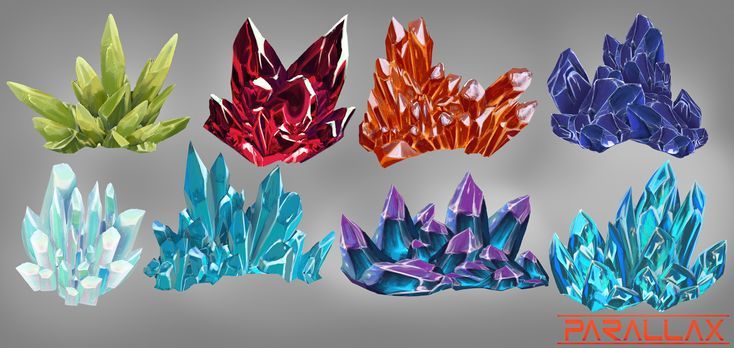
Crystals have long caught the imagination of designers, collectors, and craftspeople. Their brilliance has travelled through centuries, from the glittering courts of Europe to the workshops of modern makers. In the field of custom jewelry design, crystals continue to hold a special place, uniting the precision of craftsmanship with the allure of light itself. To work with them is to share in a tradition that values beauty, patience, and the quiet discipline of detail.

Image source from www.artstation.com
Understanding Crystal Types in Custom Jewelry Design
Before beginning any design, it is essential to know the nature of the materials. Crystals differ in composition, colour, and clarity, each lending a distinct character to the finished work. Natural crystals carry subtle inclusions that hint at their geological story, while synthetic crystals, such as those perfected by Swarovski, offer consistency and exceptional sparkle.
When selecting stones, consider not only their appearance but also their purpose. Some designers choose crystals for their reputed energies, others for the way they refract light. Among the versatile crystals for detailed designs, flatback varieties are especially valued. They may be attached to fabric, metal, or glass and are produced in a wide range of tones from soft pastels to deep jewel shades. These adaptable stones allow both new and experienced artisans to explore the art of fine embellishment.
Planning a Custom Jewelry Design
Every successful design begins with observation and intention. Before tools are lifted or threads prepared, it helps to visualise the finished piece. Many makers find a quick sketch invaluable for testing proportion and placement. Whether the aim is a delicate pendant, a sparkling brooch, or a statement necklace, clarity of purpose ensures that the design remains balanced and harmonious.
Colour selection is another quiet art. A well-chosen palette can transform a simple pattern into a piece of poetry. Cool shades suggest refinement; warm tones bring richness and life. The interplay between crystal and setting, be it gold, silver, silk, or glass, creates the atmosphere of the design. Those seeking inspiration may look to changing jewelry trends, which often mirror the spirit of the age while echoing historical elegance.
Texture also plays a subtle role. Smooth metal against the precision of a faceted crystal, or a soft velvet ground sparkling beneath scattered light, adds depth to even the simplest design. The thoughtful union of material and crystal is the point where technique meets artistry.
Techniques and Application in Jewelry Design
The application of crystals requires both accuracy and imagination. For many projects, a carefully chosen adhesive offers the simplest method. A clear, strong glue suited to the base material ensures security and longevity. Fabric glues work well for textiles, while more resilient formulas are ideal for rigid surfaces such as metal or wood.
Where a design demands greater permanence or intricate patterning, sewing each crystal individually can achieve a refined result. This method allows control over spacing and direction, catching light in rhythmic intervals. In custom jewelry design, such hand-worked detail often distinguishes fine craftsmanship from mere decoration.
Wire wrapping provides yet another avenue for expression. It can cradle a crystal in graceful spirals or bold geometric lines, making the stone both secure and central to the composition. This technique has roots in ancient adornment and continues to appear in modern collections of must-have jewelry.
Layering crystals of different sizes introduces a sense of movement and depth. Begin with larger stones to form the foundation and place smaller accents where the eye might naturally rest. When light travels across these surfaces, it creates the illusion of texture within the design itself, a subtle interplay that rewards close study.
Care and Maintenance
The care of crystal adornments deserves the same quiet attention as their making. A gentle polish with a soft cloth will keep the facets bright and free of dust. Strong cleansers or chemical solutions are best avoided, for they may dim the surface or loosen the delicate settings.
When not in use, crystal pieces should rest in a cool, dry place. A simple wrap of soft fabric will guard against scratches and moisture. Heat and sunlight, though flattering to their sparkle, can in time fade brilliance and weaken adhesives. A little forethought preserves both sheen and structure, allowing each design—whether modest or lavish—to retain its charm for many seasons to come.
The Spirit of Creation
To work with crystals is to enter a quiet conversation between imagination and craft. Each stone placed, each thread drawn through fabric, carries something of the maker’s temperament. The true designer seeks harmony but leaves space for individuality to speak.
Within the long story of custom jewelry design, crystals have held meanings beyond their physical beauty. They have stood for purity, luxury, and transformation—symbols that link the maker’s skill with the wearer’s delight. As the pages of jewelry history reveal, every generation reinterprets these glittering forms, blending old methods with fresh invention.
Even in the language of modern fashion, the fascination endures. Crystal embellishment bridges centuries of artistry, offering both continuity and renewal. For some, it is a quiet mirror of light and emotion; for others, a reminder of the pleasure found in shaping something beautiful by hand.
Quick Reference: Choosing Crystals for Jewelry Makers
If you're wondering which crystals to choose, here's what tends to work:
Clear crystals are your go-to for maximum sparkle and light reflection. Pale tones bring softness, think blush pinks and champagne shades. Want drama? Go for deep jewel tones that really pop.
Some colors just never go out of style: soft rose, sapphire blue, amethyst purple, and warm topaz look stunning in both gold and silver settings. These shades have that timeless quality that works whether you're going for vintage-inspired or contemporary clean.
The best part about custom jewelry design? You get to experiment. Mix and match, try new combinations, and don't be afraid to break a few rules. That's how you develop your own style and create pieces that people will treasure for years.