By Pauline Weston Thomas for Fashion-Era.com
This section looks at the Egyptian costume history. General trends in robes and other basic styles are examined. The costume history includes basic pattern guidelines and draping of costume instructions, to make costumes from the Land of the Pharaohs. Use the costumes for re-enactments, fancy dress, carnivals, pageants and dramas.
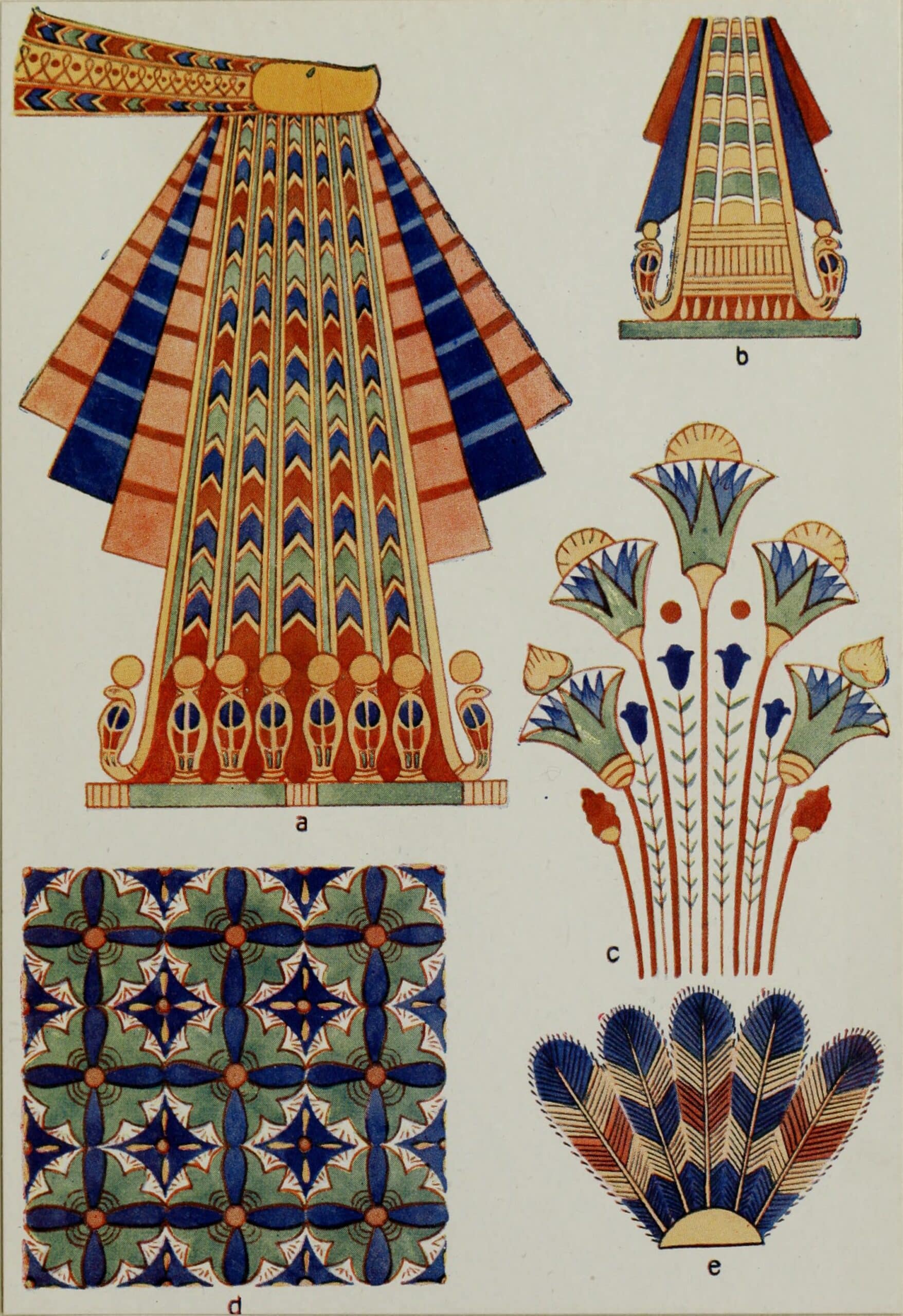
If after seeing the Tutankhamun exhibition in London, America or Egypt, you are inspired to organise a themed King Tut party, then these pages will guide you through some typical styles of robing, collars and colours and used in Ancient Egypt.

The colouring in sheets is suitable for school use.
Egyptian Costume - Egyptian Tunics with Braces
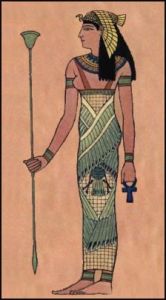
Land of the Pharaohs Egyptian Costume Plates with authentic historical pattern diagrams.
Costume instructions for wrapping fabrics for Egyptian based theatricals, plays, biblical stories and fancy dress. Suitable for men and women.
This page has ideas for accurate historical Egyptian costume, clothing and fashions for fancy dress.
Re-enactment, theatricals and fancy dress enthusiasts often opt for costumes based on the Land of the Pharaohs - the ancient Egyptians.
The most famous ancient Egyptians were Tutankhamun, Nefertiti and later Cleopatra. The enthusiasts wrap themselves in a bed sheet and become convinced that they really look like a Pharaoh.
In an effort to help you create a more authentic-looking image for a Christmas, New Year or carnival festival party, I want to share with you some Egyptian costume ideas. I have recently reviewed and revised the work of two 1920s costume writers and the initial source is listed at the bottom of the page.
The bed sheet idea is not so far-fetched, but with a little knowledge from these Egyptian costume web pages you can greatly improve the look of your fancy dress re-enactment costume. Follow me...
The shapes of ancient dress were primitive, but their very simplicity was what made them so effective in their era. Because of their ease of construction, the plain shapes have always been great for wardrobe departments of theatrical productions.
Many of the patterns are based on simple rectangles, which with a few trials at draping can be artfully arranged and topped off with an embellished Egyptian collar, thus creating a magnificent Egyptian costume robe. Quite a few styles can also be used as the basis for biblical costumes.
Ancient Egyptian Costume
If you are looking for an ancient Egyptian costume for fancy dress or pageantry re-enactment, then using these guide-line images you should be able to construct a simple costume. A shift when tied, draped or decorated can form the foundation of your fetching outfit.
In ancient Egypt, there were 4 basic types of costume. There is also Egyptian Military dress which adds one or two more styles. Decorative ornamental collars and eye make up complete the Egyptian picture.
- Egyptian tunics on this page
- Robes
- Skirts - petticoat skirt with or without shawl cape
- Garment drapery shawl/sari type
- Military dress/Warrior male costume
- Collars - ornamental collars to decorate all robe styles.
- Egyptian eye make-up
All these styles, collars and make-up were worn by BOTH male and female members of Egyptian society. In clothing the skirt settled on the hips for men, but mostly above the waist for women.
The very earliest Egyptian costumes were of the sleeveless tunic type. Then the robe and skirt followed and finally the draped shawl or sari type of garment evolved.
The earlier styles did not disappear from Egyptian society - there were just more styles as time passed.
Fancy Dress Tip - In the main, decoration on Egyptian dress was mostly devoted to removable accessories such as headwear, girdles (striking wrap sash belts), or collars. But if you need a wearable costume you have to make a basic body covering too.
Egyptian Costume - Tunics 700BC Egyptian Tunic & Braces Free Pattern Guide
To the above left we have a depiction of an Egyptian Goddess drawing from the time of 700 B.C.
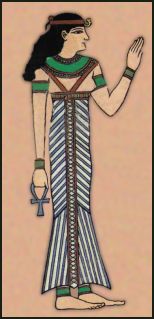
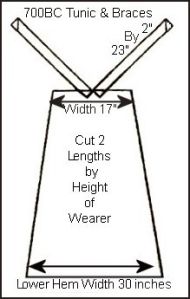
That high waist tunic with braces, shown on the right, looks quite easy to construct and the basic pattern is shown left.
Dependant on your inhibitions you may prefer to make the straps shorter and the bodice higher. (This may be a prudent move as you don't want to start any New Year arrested for causing an affray through your undress).
Please note this is a shape guide pattern only to give you an indication of the silhouette to follow. You may find you need longer, or shorter braces, or tunic. Adjust the pattern to your body.
Finding a print fabric that looks Egyptian presents more problems.
If you really want Egyptian looking printed fabric, then consider adding colour yourself. The fabric can be quite stiff coarse linen, fine batiste, old or new linen sheeting. Lighter weight cotton lawns, such as the gossamer fine muslin material used in the later Egyptian periods, might give extra softness for draped styles.
Adding Colour Speedily to Fabric
Make a stencil based on the images of decorative ornament. Try using a neutral-tone cotton fabric or white linen material for the base fabric of your decorative work. Either then stencil, print a design you make yourself, or freely paint fabric paints in an Egyptian stylised pattern.
Fast Fancy Dress Tip - Frightened about making a stencil?
There is a very easy way to paint on the fabric. Trace an Egyptian costume design outline through the dressmaker's carbon paper directly onto the fabric. Then simply and quickly fill in the carbon outline shapes with fabric paint.
Use no more than 3 bold colour combinations in one outfit. Try colour permutations such as golden orange with turquoise or teal blue; malachite green with ruby wine red, or gold with green. Use black as an outline to highlight and emphasise pattern shapes. Add a touch of gold where which would lift the final look of the item.
Still, frightened? Use Bondaweb with Egyptian-coloured fabrics, suede, leather or satin ribbons and press shapes directly to the fabric. See the instructions for doing this on Bondaweb craft packs available for a couple of pounds or dollars. Carefully used, one Bondaweb pack is probably enough to complete one pre-planned collar/headdress/cuffs.
Essential Essence - Egyptian Fancy Dress Tip Most of the planning of any Egyptian re-enactment outfit should go into making a headdress that you can get to stay on the head! Alternatively, make a collar that is as stunning as any worn by Tutankhamun!
This famous boy king whose tomb was discovered by Howard Carter in 1922, is also known as Tutankhamun or plain King Tut.
3 Easy Ancient Egyptian Costume - Tunic Style Pattern Guides
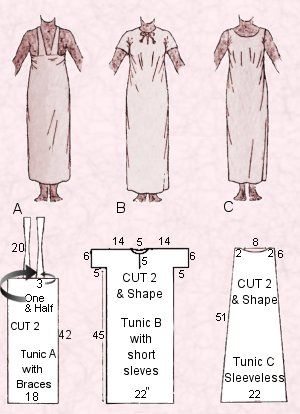
Figure B - 1500 B.C. - Egyptian Tunic with Short Sleeves
Figure C - 3700 B.C. - Egyptian Sleeveless Tunic
These tunic styles were the first great types of ancient Egyptian costume. The garment measurements will fit a slim figure.
Tunics B and C are pulled on over the head.
Tunic A is stepped into and pulled up to fit.
Making the Early Egyptian Tunics
Use the inch measurements on the pattern shapes as a guide alongside your own measurements in inches. This sort of pattern is easy to draw straight onto doubled fabric using tailor's chalk and an imperial ruler.
Tip - Remember that most pattern making involves symmetry - so for these styles lay the pattern on double fabric. Cut following the back neck and scoop out the front neck afterwards.
Never make a garment to your exact measurements. Always add seam and hem allowances, plus some wearing ease. This is usually about 3-4 inches ease to hips for walking/sitting, 5 inches to the chest measurement for bending the back and 2-3 inches to the waistline for comfort.
In loose, non shaped garments like these tunic styles, exact figures are less important.
For fancy dress purposes, or one night only pantomimes, religious and school plays you can keep the raw edge finishing simple. Try using bias binding pressed in and stitched down; create an even bound edge; or make fabric facings from the basic pattern.
If in a desperate hurry you could even use a fabric glue such as Copydex or PVA to stick decorative braids along the raw, zig zagged or overlocked edge. The braces could be made of braids, webbing or thick ribbons to save time. Use your imagination!
Fabric Choices for Egyptian Costumes
The original ancient Egyptian costumes were made from fairly thick linen.
Avoid obvious synthetics for your fabric base.
The fabric you choose may be quite stiff coarse linen, fine batiste, old or new linen sheeting, or lighter weight cotton lawns such as the material used in the later Egyptian periods.
You may even use old curtains or sheers if effect is more important than authenticity. Some of the modern permanently pre-wrinkled fabrics of today might be most suited to the pleated effect styles.
In every stage of making your costume use you imagination and adapt and invent whilst keeping the essence of the styles worn. Figure A probably began as a simple uncut piece of fabric made into a simple tube to fit the body. Weaving was a time consuming craft thousands of years ago, so keeping fabric as near to the original woven shape prevented waste of material.
(Please do not write for further pattern clarification. If you do not understand this simple free pattern guide method then you should purchase a ready prepared fancy dress pattern from a company like Simplicity or Butterick.
Alternatively, buy or hire an outfit from a costume company such as buycostumes.com or Recollections.)
Egyptian Collars
The next stage of making an ancient Egyptian simple tunic style costume, is making the collar.
Decorative ornament plates and collars are discussed on the collar page where you will find lots of tips for making Egyptian collars for fancy dress costumes.
Capture the essence of Egypt by adhering to typical ancient Egyptian colours. Add a great collar and fantastical headdress; lather on a bottle of fake tan too for an appealing bronze tone and you'll walk away with first prize!
Read more about Egyptian Ornament - You can see some decorative elements for Egyptian collars here.
Source
This page contains some costume plates sourced from the book Ancient Egyptian, Assyrian and Persian Costumes & Decorations by Mary G. Houston and Florence S. Hornblower. The book was published by A & C. Black of London in 1920. F. S. Hornblower coloured both the figures and Decorative Ornament plates where colour was needed.
Page Added 15 Nov 2007. Ref:- P658
Egyptian Costume - Early Egyptian Robes
- Rectangle Robe Guide Patterns and Tie Sash Instructions
- The Stitched Rectangle Egyptian Robe Guide Patterns
- The Open Egyptian Rectangle Robe With Sash
- Non-Sash Open Egyptian Robe
The Square Robe Guide Patterns
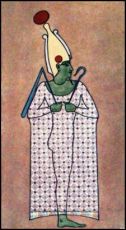
Fast Fancy Dress Tip Timesaver - If you want minimal sewing, select these robes as your fancy dress or theatrical costume choice.
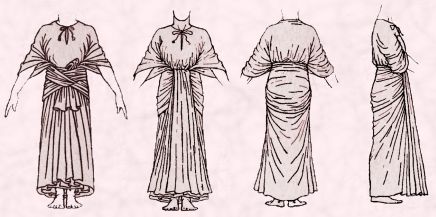
Style D) is the type of Egyptian clothing called The Robe. Draping instructions with pattern fabric guides are detailed below.
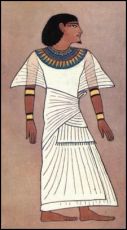
1. Here to the far right you see the God Osiris, he wears a side stitched robe. See how to make the Egyptian Rectangle robe costume below.
2. To the left the Scribe Ani wearing the same robe OPEN, without stitching up the sides, but arranged and tied with a long sash.
In this Egyptian Scribe costume plate, a typical waist sash measures 32" by 120". If you are taller you may need to adjust the sash length. You may already own a deep long shawl of the silky Pashmina or sheer/opaque variety which might translate as a decorative sash for dramatic purposes.
Rectangle Egyptian Robe Guide Patterns and Tie Sash Instructions - Egyptian Stitched Rectangle Robe
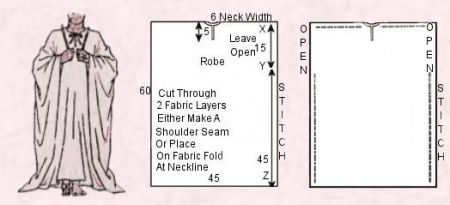
Style D) right is the type of Egyptian clothing called The Robe.
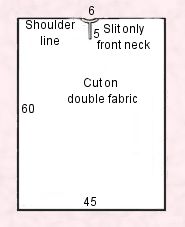
The rectangle robe is constructed on a very simple rectangle shape as shown here. Unlike the plate of Scribe Ani shown above right, this robe would have been stitched down the sides for 45 inches of its length.
Armholes were simply deep slits left unstitched for 15 inches. Curve the back neck out by cutting down about 11/2 inches with a tapered width of 6 inches. The front can be cut lower by about 3 inches with a centre front split. If the wearer intends to wear the garment for any length of time then face the neck and arm openings, otherwise, a simple binding will suffice.
To Bind - Bind the front slashed neck opening piece first - then apply the neck binding so that you have long ties each end to help hold the neck together when tied into a bow.
For the sleeve opening simply apply binding, or turn under the raw edge of the fabric twice, then stitch flat. If you have a neat selvedge on uncut fabric, that may be satisfactory for fast fancy dress purposes.
Use the exact same pattern to make the robe below. Play around with the sash until you reach the Egyptian look you like.
Egyptian Rectangle Open Robe With Sash
Fancy Egyptian Dress Costume Tip - For non-sewers this pattern right may be a wonderfully easy pattern choice.
This image right shows the same basic cut shape as the stitched robe above but fastened by drawing the fabric in place with a sash.
To achieve the alternative look, the pattern is cut exactly the same as before, but not sewn up the side. When on the body the open fabric at the front is taken up and drawn to the back and pinned at the back waist.
The main back fabric is drawn to the front and tied with a wide sash girdle or waist sash.
Make the waist sash measure 32" by 120" just like that of the Scribe Ani above right. If you are taller you may need to adjust the sash length.
It's that 32" of sash fabric width that gives extra cover. The sash should be pulled quite tightly to be figure hugging to define the posterior and thighs so that masses of fabric give good cover of the pelvic area.
When the sash drapes correctly at the front the drapery reaches the feet.
This is the robe arrangement that creates one of the Egyptian robe looks we have all seen in films.
Non-Sash Open Egyptian Robe
Right - In about 1450 B.C. an Egyptian woman would have worn a robe tied in this manner. This garment would be incredibly easy to achieve for fancy dress costume purposes.
NOTE - No sash has been used to create this style of robe. The front is left to hang, rather than be pinned at the back.
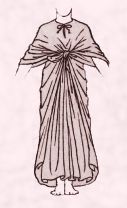
Then the back is drawn to the front enclosing the front sides when the back is tied in a knot under the bustline. This garment right is based on the rectangle pattern for the robe above and the pattern has been shown again.
When illustrated this way, it assumes you will stitch a shoulder seam or cut the piece on the double fabric.
Single Fabric Layout of Non-Sash Robe.
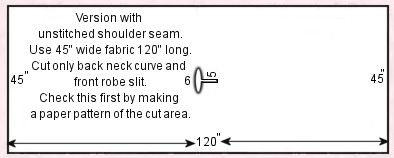
Fast Fancy Dress Tip - You could however omit a shoulder seam and lay the fabric out singly as in the layout image left.
It is safest to make a small paper pattern first of the curve and slit and try it on over your head before cutting into the fabric. This is especially important if you have small shoulders or a short body. If you make the cut area too large, you will spoil your fabric and the robe will fall off you. Tie the garment as suggested above.
Source
This page contains some costume plates sourced from the book Ancient Egyptian, Assyrian and Persian Costumes & Decorations by Mary G. Houston and Florence S. Hornblower. The book was published by A & C. Black of London in 1920. F. S. Hornblower coloured both the figures and Decorative Ornament plates where colour was needed.
Page Added 15 Nov 2007. Ref:-P659
You have been reading an original costume history article by Pauline Weston Thomas at www.fashion-era.com ©