By Pauline Weston Thomas for Fashion-Era.com
- Marzipan Fruits - The No-Cook Sweets
- Food Safe Colouring Powders
- Marzipan Fruits
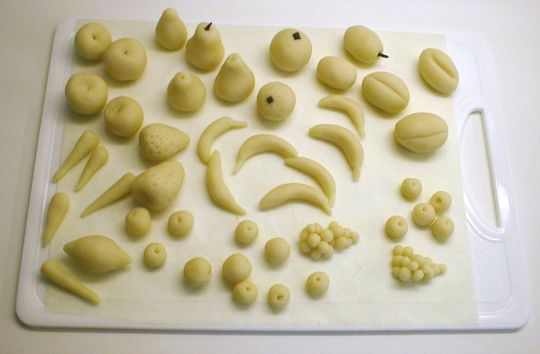
- Stage 1 Picture of Marzipan Fruits
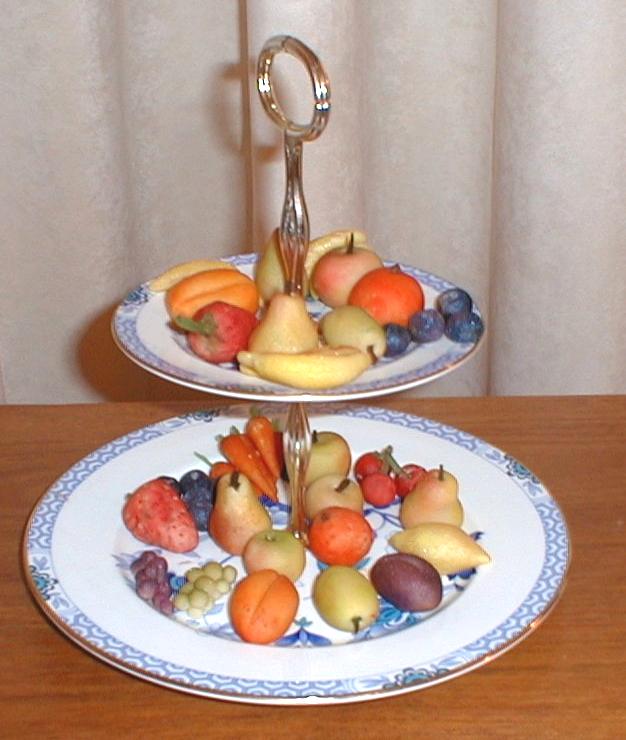
- Stage 2 The Finished Marzipan Fruits
- Marzipan Dates
- Simple Marzipan Cake Decoration
Marzipan Fruits - The No-Cook Sweets
By the time of Regency England, marchpane was an accepted product made into a variety of sweets for festive occasions such as Christmas. Marzipan items have always been thought of as special occasion foods for feasts and weddings, as sugar and nuts were once expensive as both were imported into Britain.
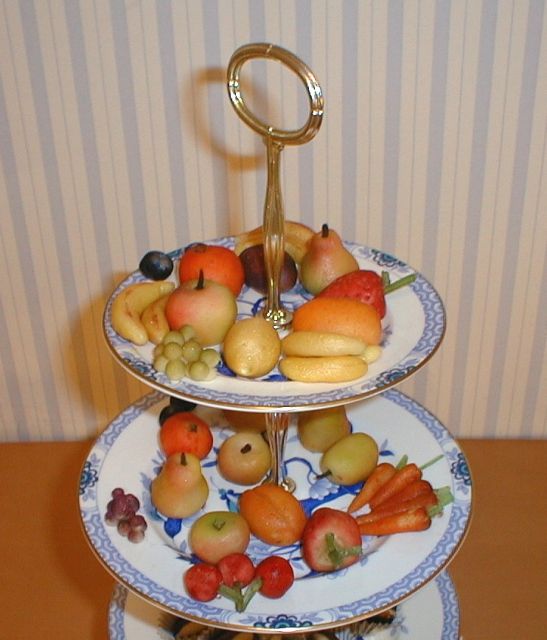
The Victorians loved these marzipan sweetmeats and in high society, they would be displayed on attractive 3 or 4-tiered stands. These recipes are fun to make and are easy to do because the marzipan moulds well into curved shapes. Children will love making these just as Victorian children would have liked joining in making and decorating them too.
There is a huge renewed interest in marzipan fruits and products made using marzipan, with items such as Stollen being a fashionable addition to the Christmas table at teatime or in the days after Xmas.
We used to make the marzipan fruits described here with the leftover trimmings from the almond paste for the Christmas cake, but the purchase of a pound of commercial quality marzipan will keep children amused for an hour on a rainy day and be as much fun for them as working with clay or bread dough and edible too!!
Food Safe Colouring Powders
Unlike in my childhood, today you can use convenient food colouring powders that are less mucky to work with than liquid food colours and far more subtle in effect than liquid colors.
You would need a very basic set of 5 Food Powder Colors which can each be bought separately. For this, I suggest lemon yellow, and a deep pink like cherry red, green, white and blue and you should be able to mix them to make other colours and pastels if you want to keep the budget low.
If you plan to do sugarcraft too you could purchase more variations such as violet and more subtle greens and pearlized powders. I have about 30 different food powder colours in my box and I used about 12 colours to achieve the results here. Useful colours are those with a pearl sheen.
In particular, pearlescence can add bloom to fruits such as marzipan blueberries or plums, giving a very realistic appearance. It is also possible to buy food felt marker pens which are good for adding spotting blemishes to fruits.
Marzipan can also be coloured with colour food pastes and simply moulded into shapes, but the finished effect of colour results is far cruder.
You are reading an original Marzipan Fruit Decorations food article by Pauline Weston Thomas at www.fashion-era.com ©.
Marzipan Fruits
Marzipan fruits are easy to make. They can be made with bought or homemade pale almond paste. Later they can be coloured with food dusting powders or painted by using wet food colours or by initially working color into the paste. The most realistic effects will be achieved with pure food powders. The food powder is applied and then passed over steam to set it. It's very easy to do and to use.
SAFETY
Children would need close supervision if using steam to set the food powders. One way would be to put some of the marzipan fruits into a sieve and hold them safely at arm's length in light steam of a kettle or saucepan of water. Another way would be to insert a skewer or cocktail stick and again at arm's length hold the fruit in the steam for about 10 seconds rotating it as you do so.
Shapes that are circular or oval make great marzipan fruits, but others like bananas are also easy to achieve, although are better if a bit larger than I have made here.
Choose from peaches, apples, oranges, cherries, blueberries, lemons, strawberries, plums, greengages and apricots. Carrots and grapes are also possible.
Use the size of your foil paper case as a guide for the finished product and divide a half-pound pack of marzipan into 4 pieces. Take out one quarter and work with that leaving the rest in the sealed-up bag until you are required to work it. Now break up the marzipan with a knife into cubes.
Shape as follows. About one pound of marzipan will make this number of fruits. A shop I visited sold just 6 in a box for £3.
Stage 1 of Marzipan Fruits
Marzipan Apples, Pears and Peaches
Shape small equal-sized pieces of marzipan into a pear from a cone shape and indent the base of it so it has a roundness. In the pear base, insert a clove to suggest a blossom. Make a hole with another clove at the top, but use the hole to add a small piece of green angelica or the point of a clove stick. You can do this at the very end after colouring as long as the indent is in position.
Paint a blush of pink on the pear, peaches and apples or for the best effect use food powders. Touch with green and lemon yellow on the pear and apple and also speckle the pear with brown food powder which you can make by mixing a little yellow, red and blue with more red in it.
For the apple add a dusting of russet or red mixed with yellow and also some pink pearl lustre, or red mixed with white.
Greens and colours similar to those used on the pear are suitable for the apples. For the peach, mix yellow and red powders to get a golden hue and brush all over the peach. Then add a blush of pink. Dust the peach over with a little icing sugar or pearlescent white powder for extra bloom.
Marzipan Apricots, Plums and Greengages
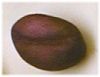
Take some balls of marzipan and shape them into egg-like plum shapes. Dent the side with the blunt side of a knife or a similar utensil. Try a few utensils to get the effect of indentation which is soft, but a noticeable mark running down the side of these fruits. Colour with the correct colour using food dusting powders or food paints. Create brown speckles on the apricots and greengages by flicking some damp brown colour onto them from a clean toothbrush or similar brush.
Or spot with a spice brown food colour pen.
Marzipan Strawberries
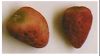
Shape small pieces into softly rounded cones then mould into strawberry shapes. Prick all over with a skewer or a clean bodkin needle. Colour with powders or use cochineal and paint it delicately red. Dab some green powder on the hull area. If liked roll in caster sugar for a frosted effect. If you like, make hulls of green marzipan or angelica and place them on the thick end of each strawberry, before inserting very tiny angelica stalks. The pips can be emphasised by pressing a spice brown pen over the coloured strawberry after first dusting with red food powders.
Marzipan Cherries Blueberries
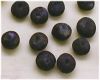
Shape small balls into cherries or blueberries. Hold each on a skewer and paint or dust, red or darkest blue black.
Gently add a bloom of white pearlescent powder to the blueberries.
Insert stalks of angelica into the cherries, or leave as is. Make angelica leaves if liked.
Marzipan Bananas
Shape rolls of marzipan into bananas tapering one end. Colour or dust yellow and add brown speckles and a browned stalk end. Use a spice brown pen sideways and rub it against the sides of each banana.
Marzipan Oranges
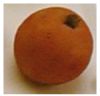
Shape into very rounded balls and insert a clove. Mark all over with a needle. Colour orange and add a hint of green at the stalk stump.
Marzipan Lemons
Marzipan lemons are just made into a lemon shape and pressed against a tea strainer. Colour lemon yellow, spot with spice brown and add a hint of green at one end.
Marzipan Grapes
Make bunches of grapes by rolling lots of tiny balls of marzipan arranging them into a bunch which is fat at the top and narrows toward the bottom. Make sure every ball touches another so it will stick together as a mass. Dust or colour with wine red and aubergine or green mixed with white and a dab of lemon.
Drying the Fruits
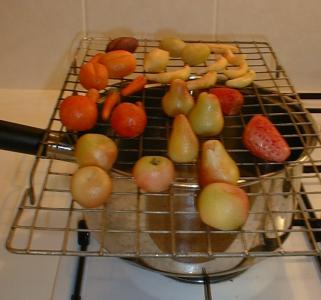
Allow all fruits to dry on greaseproof paper for 8 to 24 hours on an open cooling rack tray and cover at the top with more greaseproof paper, but with some air getting at the fruits. Don't leave them too long as a little tackiness to the marzipan makes the dry powders stick more easily, yet they are more likely to lose shape with handling. With experience, you will be able to judge which is best for you.
Setting the Food Powders with Steam
When ready to set the food powders boil a kettle and let an adult do this. Next put on leather or rubber gloves and hold the rack in the steam for a brief moment whilst the powders are set by the steam. You could use a saucepan of boiling water instead of a kettle and just briefly place the rack on top for 10 seconds or so. This is for seconds only and a sheen will appear on the fruits. You can also use a skewer or a sieve or cocktail sticks to help rotate the fruits. You will see the difference as a sheen appears.
I have found that the rack over a saucepan is the best method for me. Cherries are best done though singly on cocktail sticks. Avoid touching the steamed fruits until dry as the steamed powders will have turned into wet food paint and will come off on your fingers, or leave marks on the fruits.
The Finished Marzipan Fruits
Thumbnail picture of the marzipan fruits I've made
Marzipan Dates
Take some dates and split lengthwise on one side only. Remove the date stone. Take a small portion of marzipan, about half a teaspoon and make a short fat roll with it. Insert it into the date and close the date together so the marzipan bulges toward the top. Place on a pretty dish. Add an almond nut if you wish.
You are reading an original Marzipan Fruit Decorations food article by Pauline Weston Thomas at www.fashion-era.com ©.
Simple Marzipan Cake Decoration
These fruits can also be used to decorate a Xmas cake. The easiest way to do this is to cover your cake with marzipan and if liked then cover with plain commercial fondant.
At the same time cover a fine thin cake board with a layer of the same fondant icing and let it dry firm for 24 hours, but better when up to 3 days. Make some extra holly leaves and berries or ivy leaves using a cutter and wires if available.
Firm up and then colour shades of green and add red berries. Make a wreath of the holly leaves and place on the covered cake board. Next, let the marzipan fruits nestle in the holly leaves. Place the wreath decorated board on the firmed-ready iced cake.
You could also make just pears with ribbon loops or metal wires and do a Partridge in a Pear Tree theme for a cake, or for hanging as baubles on for example a golden tree.
You have been reading an original Marzipan Fruit Decorations food article by Pauline Weston Thomas at www.fashion-era.com ©.
Page Added October 2006