
By Pauline Weston Thomas for Fashion-Era.com
- Glamour Accessories of the 1950s
- Eyewear and Fifties Look Spectacles
- 1950s Hats
- Fifties Glamour With Cosmetics
- Bags
- 1950s Gloves
- Stiletto Heeled Pointed Toe - 1950s Shoes
Glamour Accessories of the 1950s
The pointed pre-formed conically stitched bra was actually a fashion accessory, as without one the sweater girl look was certainly not right. Fashionable accessories included popper beads and spectacles with enormous wings that arched upward in twirls that could be studded with rhinestones.
Eyewear and Fifties Look Spectacles

One unexpected facial accessory of 50s was spectacles. Frequently these were inlaid with diamante or scattered glitter dust. The exaggerated wings at the outer corners flared in the style of butterfly wings.
Think of the Australian entertainer Dame Edna Everage and you have the essence of the spectacles, although somewhat exaggerated. Here is a realistic example of 1950s spectacles and shown right. The pointy wings would be considered a health hazard.
1950s Hats
Hats added the final touch of 1950s glamour to a woman or girl's outfit, particularly in the early fifties. Last year's dress or suit could be updated easily with a new hat or a fresh ornament such as flowers, an autumnal bunch of acorns and leaves, or a bunch of cherries.


Corsage made of fruits. Similar items were used to trim hats
Balenciaga had first shown the pillbox and it became the hat of the fifties and later the hat of the sixties when it was greatly favoured by Jackie Kennedy. The pillbox often had veiling attached as shown in the header.
Neat pillbox style hat image left is courtesy of anothertimevintageapparel
In the mid-fifties glorious hat styles covered less in plumage and more in floral blooms appeared. Some designs consisted solely of bomb-like shapes covered with flower petals, almost like a more full-blown version of the swimming cap above. Later hats consisted of folds of tulle, organza, nets or swirls of georgette.
Other simple hats included neat beret varieties and also knitted beret hats with tassels or pom-pom.


The jester 4-cornered beret hat was made of felt and velvet available in a riot of glorious colours and was priced at one guinea or 21 shillings.
The head-hugging Baker Boy beret was in a fabric called suedeen and jersey for 22/-.
Generally, hats began to lose favour in the fifties as they were unsuitable for the new hairstyles. Women spent more time at the hair salon and the last thing they wanted to do was spoil their latest hairdo with a hat. Fashionable hairstyles began with simple ponytails and ended the decade with complex beehive arrangements.
Milliners could have designed hats more suitable for the new fuller bouffant hairstyles, but they failed to see the possibilities and designs continued as before and they lost the market for hats eventually.
Fifties Glamour with Cosmetics

In the 1950s, colour films made an enormous impact on cosmetics.
The huge cinema screens illuminated the unblemished appearance of stars and caused the make-up artist Max Factor to invent an everyday version of the foundation he used called "Pan Cake".
This was a 50s makeup to gloss over skin imperfections. He also brought out a range of eye shadows and lipsticks which helped create the 1950s glamour.
Later in the 50s titanium was added to tone down the brightness of products and this resulted in lips with a pale shimmering gleam.
Magazines taught step-by-step how to use recently introduced lip brushes and young girls began to blend and mix their own lip colours often having first blotted the lips out with Max Factor Pancake make-up.
The idea was extended to create frosted nail varnishes of pink, peach, silver and a host of other colours but in this 1955 image below you can see the colour to wear was red. The model below shows scarlet fingernails and lips and finishes off her outfit with a smart beret.
In the late 50s the make-up company Gala had introduced pale shimmering lipsticks with added titanium. Later Max Factor brought out a colour called Strawberry Meringue which was a pastel pearly pink. They really caught on in the late fifties and early sixties as young girls were frowned upon if they wore brazen red lips, so the softened pink and peach colours were acceptable initially to parents and then became a trend.
As the fifties ended, Vogue magazine had started to coordinate the colours of the season's latest clothes with those of the cosmetics on offer. Eventually, all the make-up houses followed, producing ranges that picked up colour changes.
1950s Gloves - The Order of the Day
Gloves were worn everywhere in the 1950s and completed a woman's grooming. Without gloves, she was not properly accessorised.
Clean gloves were also the hallmark of a lady and white or cream were the most favoured gloves.
Gloves worn in so many colors were usually made of cotton as this was more affordable than leather gloves or the newer nylon and they could be washed very easily.

Even so many women owned a special pair of leather gloves. You can see from the picture right, why they were sometimes referred to as 1950s Gauntlet Gloves.
Dents and Pittards were popular glove names, but women could also make their own gloves using a McCall's pattern such as this vintage pattern above from anothertimevintageapparel.
The formality of wearing gloves even continued into the sixties with interesting cutout peephole variations in the popular stretch nylon and designed almost like a golfing glove. By the 1970s gloves were more used functionally for keeping the hands warm than for any other reason.
Furs
Fur trimmings abounded and adorned collars and cuffs as well as being made into brooches. Stoles were worn on every occasion; they too could be of fur, but were just as likely to be of lace or a silky fabric. Classic fifties glamour.
1950s Bags

Bags in the 1950s were literally handbags and usually held by the hand or over the arm in the fashion followed by Grace Kelly who used her Hermes bag to hide her pregnancy. Many handbags had side pockets, or even grip clasps or rings for a woman to keep track of her gloves.
Larger bags to hold possessions were also popular when women travelled using public transport some distance into towns. They could keep all their essentials with them as very few women realistically had regular car access in those days in the UK.
Bucket bags and raffia bags were also useful accessories as winkle picker stiletto shoes were not so comfortable. Often a pair of flat shoes lurked in the bags out of necessity just in case entrance was forbidden.
The carpet was not universally used then in buildings and many floors of the period were linoleum or wood tiled and the stilettos indented the tiles easily.
Early 1950's Shoes
Early 1950's shoes were often very high, but with rounded or peep toes and low-cut front uppers and sometimes had sturdy Cuban heels.
Strapped sandals with finer heels were popular as were heavier thicker heels for lower shoes, but by the mid-fifties kitten heels and metal-tipped steel stiletto heels replaced styles that owed more to designs that had been brought out to compliment the New look of 1947.

Stiletto Heeled Pointed Toe 1950's Shoes

By the mid-1950s pointed toe shoes called winkle pickers with stiletto heels up to 5 inches were a common sight.
There is no doubt that the trademark of the fifties was the stiletto-heeled shoe, first seen in 1952 at a Dior fashion show.
Below is a picture of the spiked umbrella so popular in the 50s and 60s.
The long slim umbrella was available in many bright colors and priced at 28 shillings and sixpence.
Almost as if to match the spindly heel, umbrellas were elongated with 6-inch steel spikes and many a woman considered a furled umbrella as protection from attack when walking home late at night. Taxis were not only a rarity, but also a luxury in the fifties.
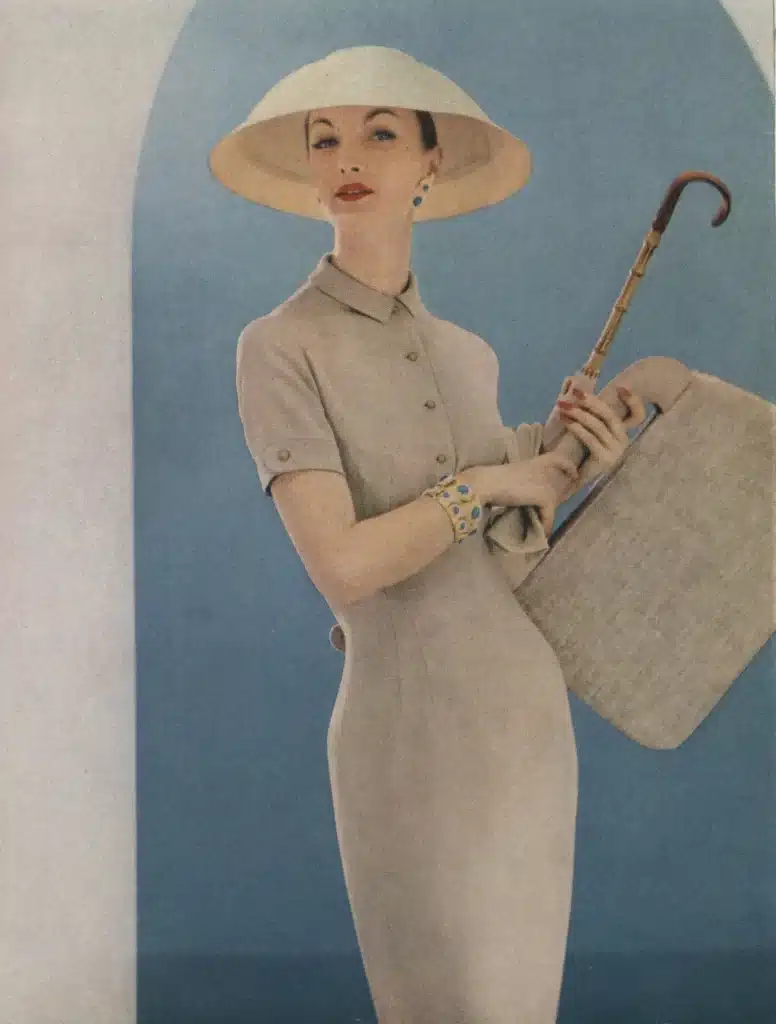

Many a floor was ruined by stilettos from shoes and umbrellas. The main problem was caused by the stilettos being metal tipped as still somewhat economy conscious after the war British wearers preferred the longer life of steel than rubber tips, despite the click-clacking irritating noise they made.
So stilettos became banned in many buildings and remain banned in National Trust properties and stately homes. So take your spare flat shoes if visiting such places, as the stiletto sandals and shoes of 2005 often bear a very similar look to 50's footwear.
Page Added 10 June 2005


