
C20th Fashion History 1930s
Below are image pages from the spring fashion issue of April 1930 Good Housekeeping magazine, with many I've cleaned of background clutter so you can really see the silhouette and fashion detailing. However you can still print off the original image layout right next to it. All thumbnail images enlarge into A4 size pages for personal use only printing and study.

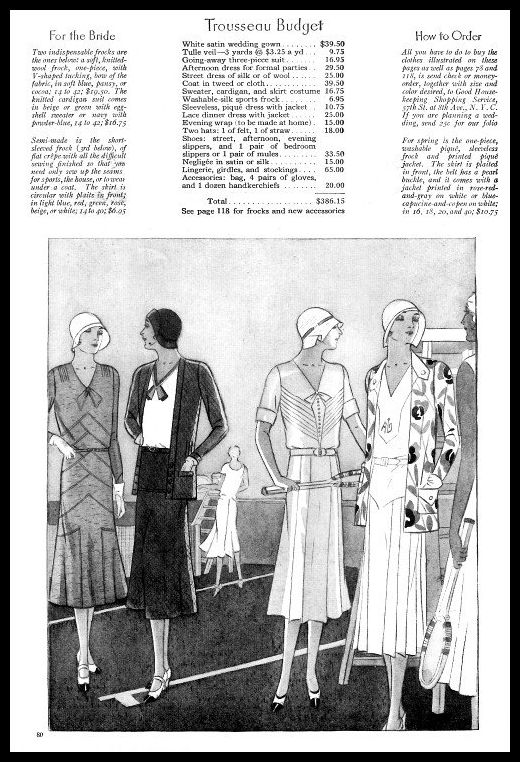
The page above left details the cost of a trousseau of the American bride of 1930 and explains how the items could be ordered. The end image is titled 'Paris Openings Confirm Silhouette of Higher, Normal Waist and Longer Skirt.'
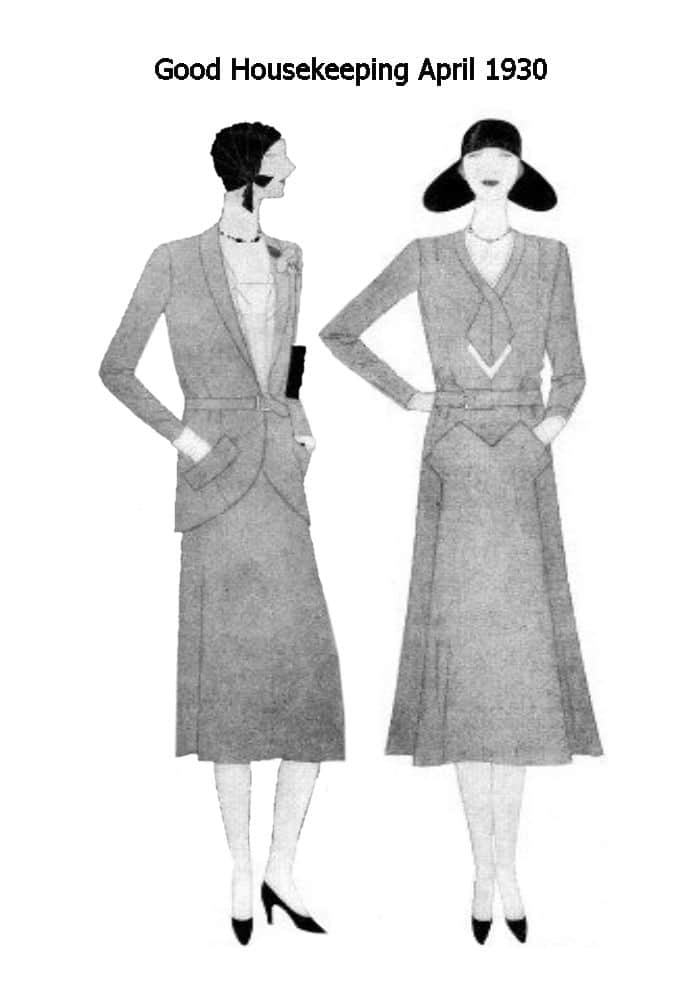
The 1930 magazine fashion article went on to explain the higher waist and longer skirt was definitely established and with the silhouette line tighter and straighter with fullness toward the hem with hems for day and sports now being even. Uneven hems were still suitable for evening. Day hems were 3 to 4 inches below the knee whilst evening dresses were 10 to 12 inches maximum from the floor for night time or ankle length.
This was a turning point in the fashion history silhouette happening right at the start of the decade. Fashions held this similar type of appearance for about 6 years and it was only in 1937 that quite a different look emerged and which we associate more with the lines of the war years.
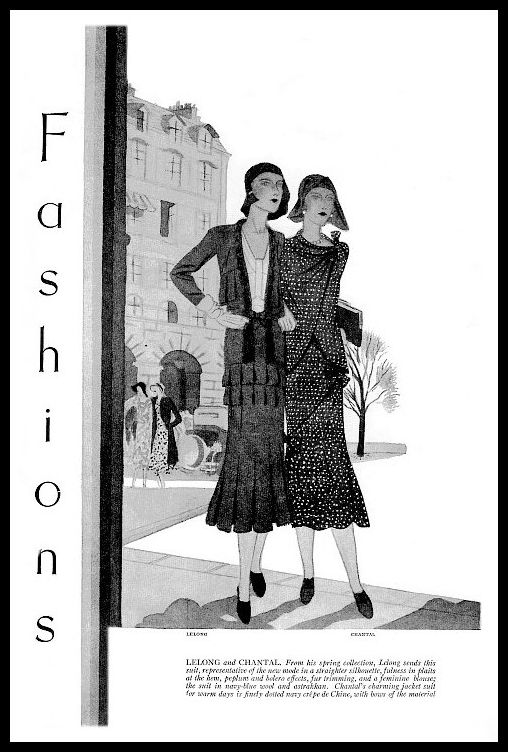
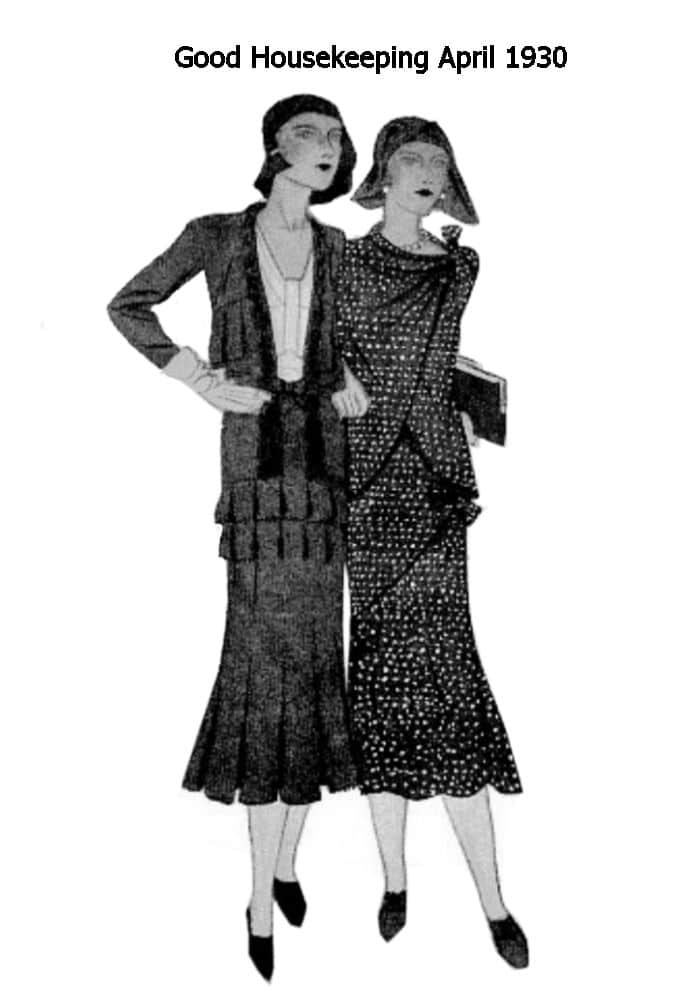
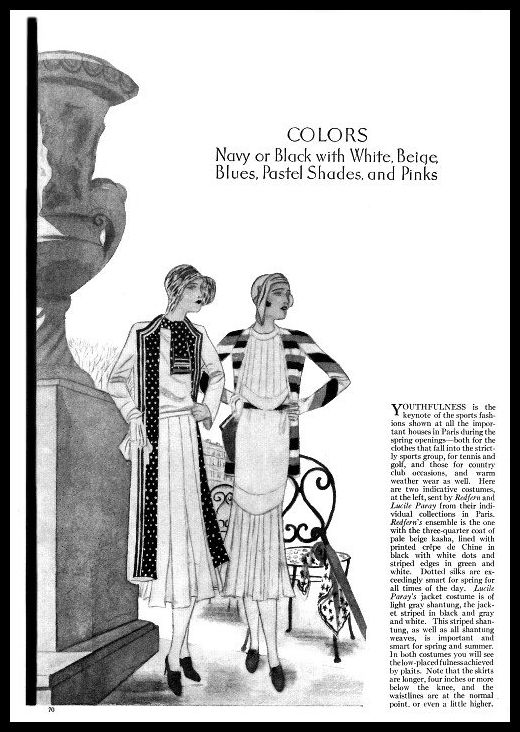
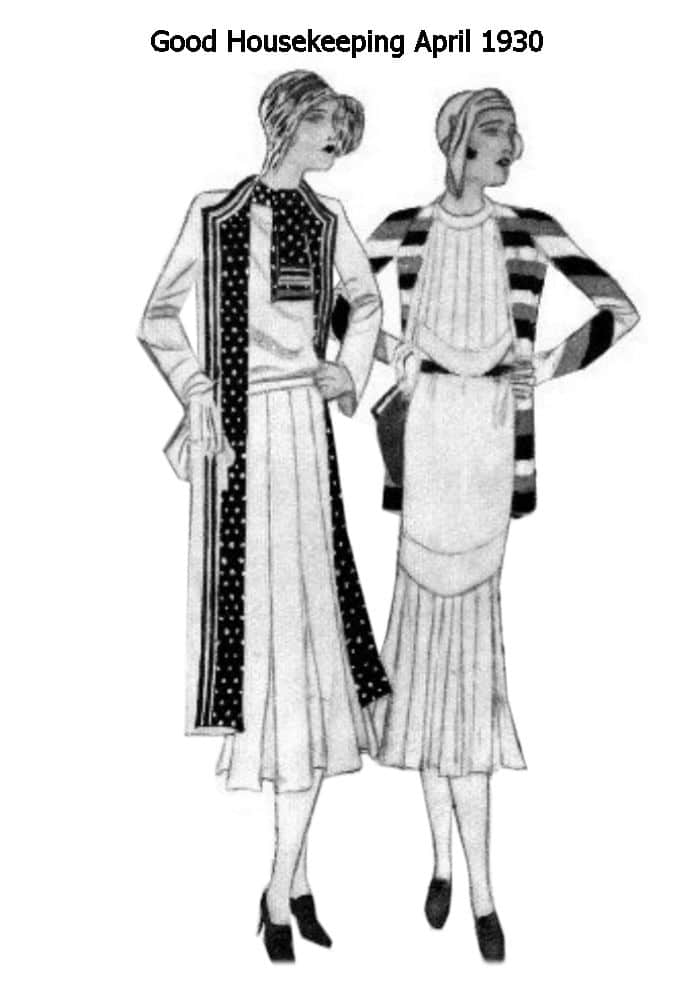
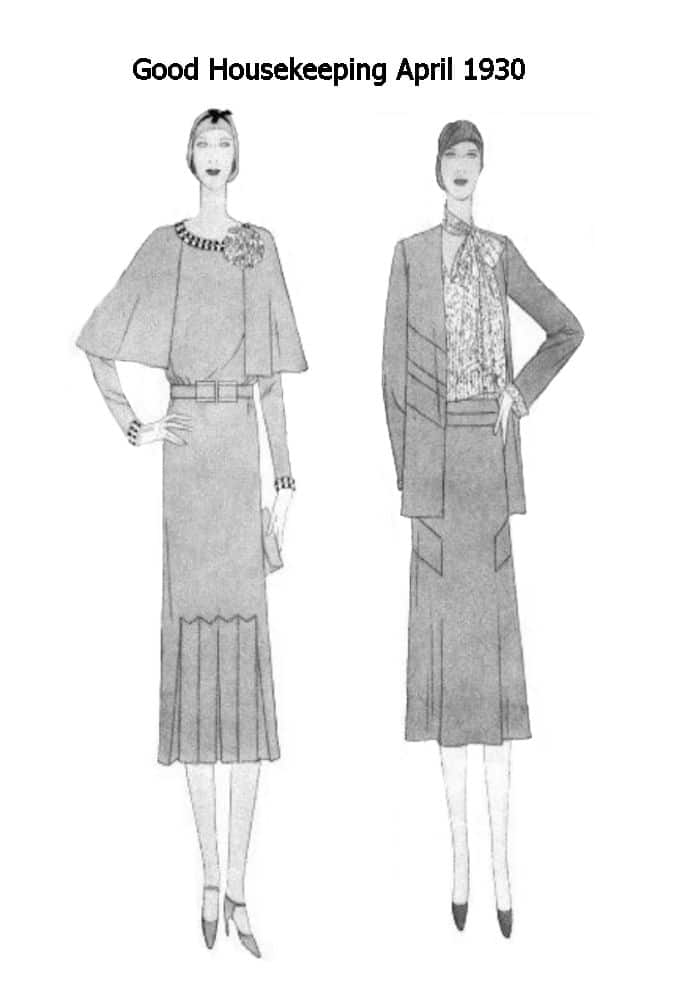
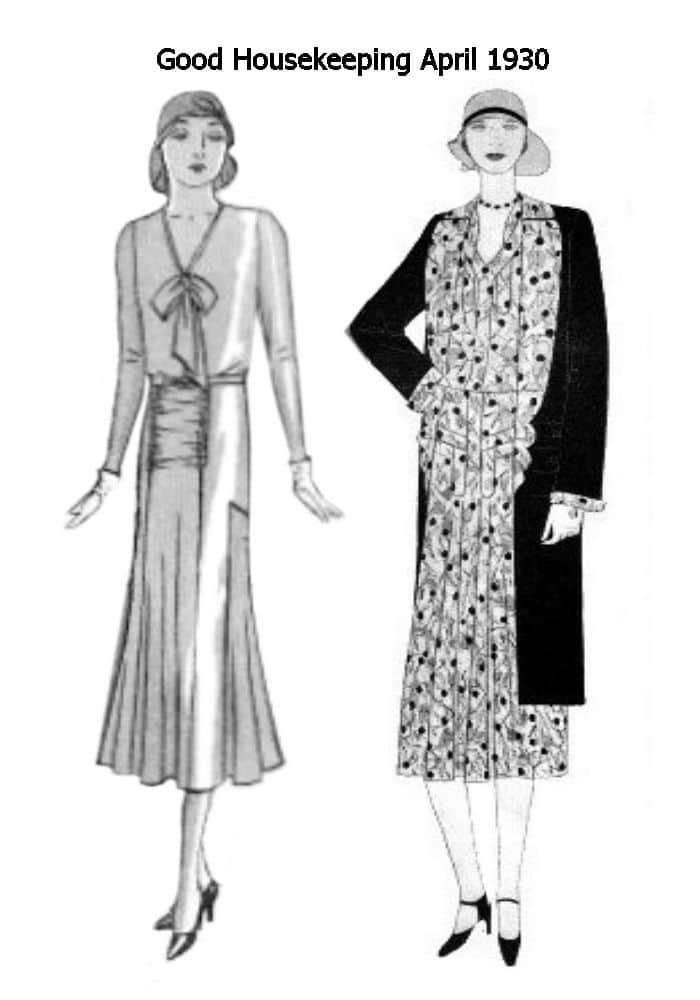
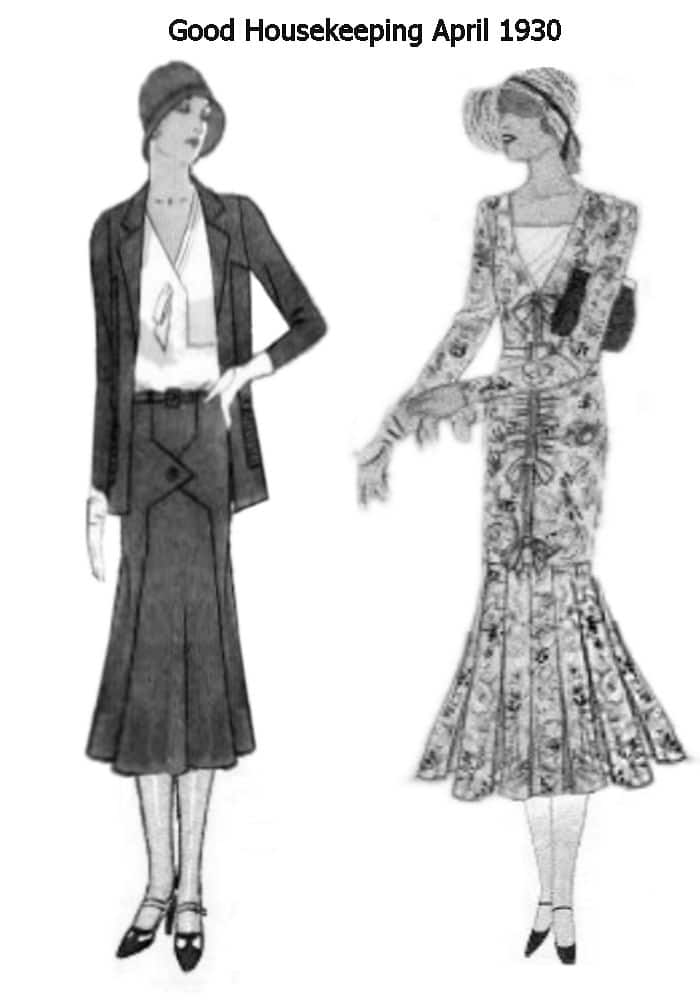
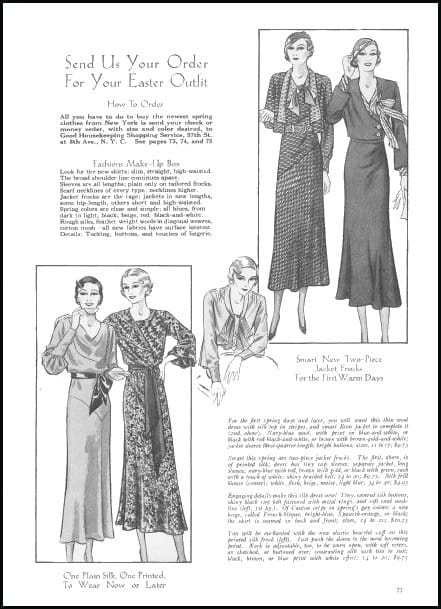
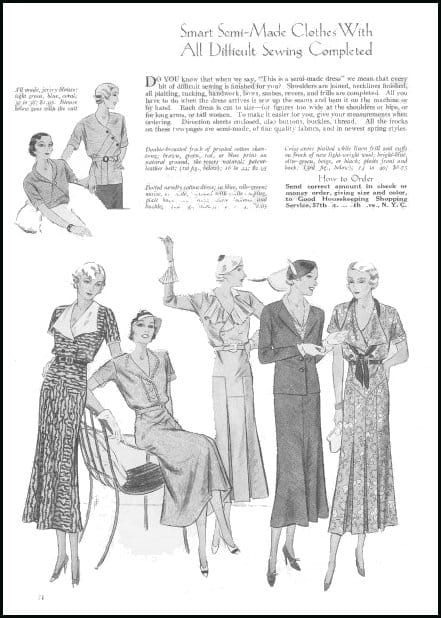
Fashion points highlighted the importance of the more feminine elements that could be used on female dress and referred to these fashion details as lingerie touches. Details included stitching, tucking, button trimming, shirring, ruffles, pleats, tied necks and bows. Peplums and peplum flounces would give form to the suit, dresses and gowns. Flares were still good, but pleats were back.
Jackets could be sleeved or sleeveless and there could be capes and capelets attached and detachable.
Important fashion colours for Spring 1930 were defined as 'blue shades, black, navy blue and white, pinks, greens, all the string and neutral shades (beige), all the pastel shades and grey....' The two outstanding fashionable fabrics mentioned were shantung and jacquard prints which sometimes were dotted or striped silks. Washable crepes and wools, handkerchief linen, printed chiffons and georgette all got mentioned.
This April 1930 fashion issue concentrated on advising the bride of all the latest fashionable styles from Paris and in particular the new silhouette and skirt length. The fashionable new length for the new thirties decade had dropped dramatically and was 4 inches below the knee. This issue also explained specific clothing items could be bought directly from that issue of Good Housekeeping. It also itemised the 1930 trousseau at a cost of $386.15. The fashionable 1930 trousseau included a satin wedding gown, a veil, a 3 piece going away suit and a suitcase of other items which amounted to more than 5 types of dresses, a full coat, jackets, lingerie and more sundry items.
----------------------------------part 2--------------------------------------
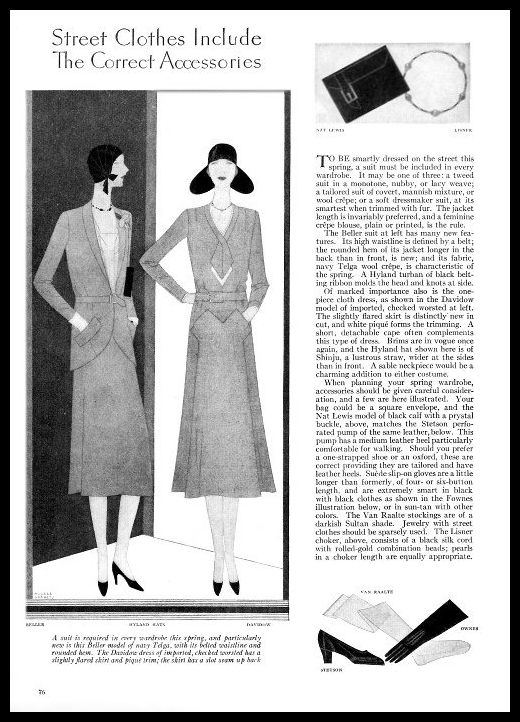
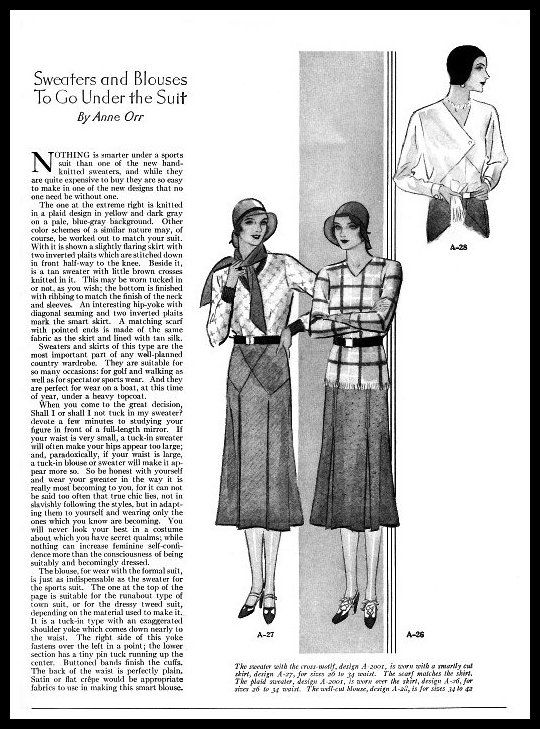
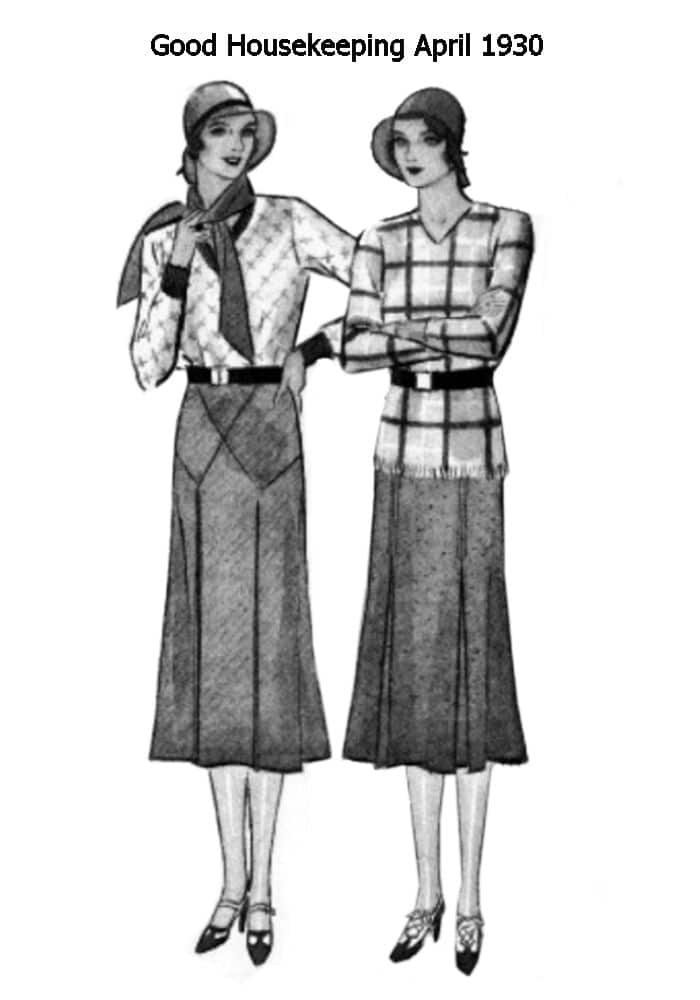
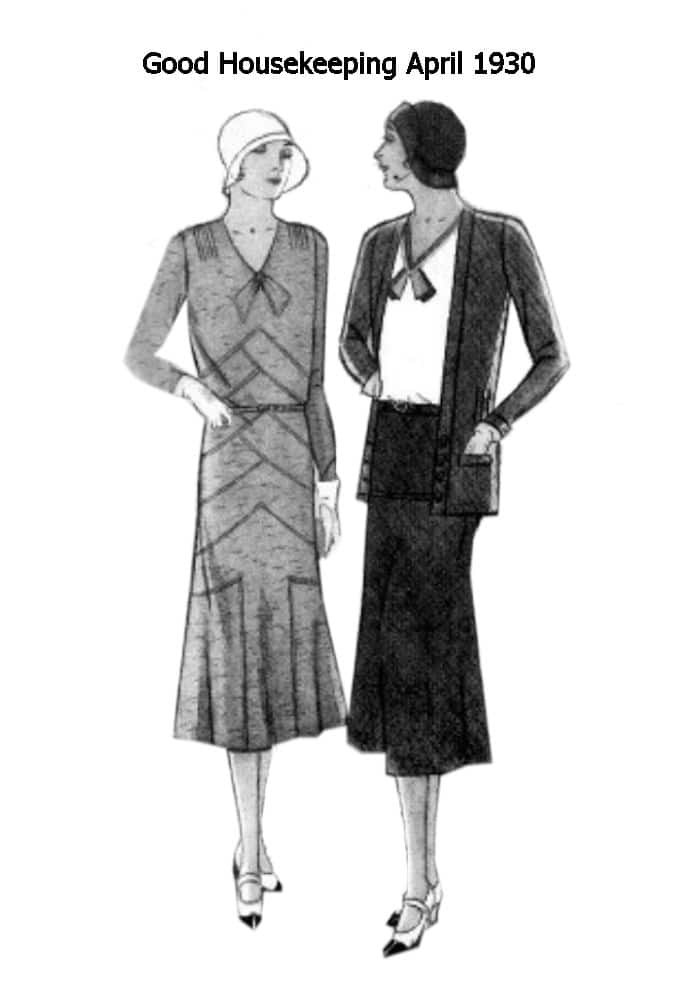
In 1930 nothing was considered smarter than the knitted plaid sports suit in yellow, dark grey and pale blue grey on the left. The 1930 Good Housekeeping magazine stated '... sweaters and skirts of this types are the most important part of any wardrobe. They are suitable for so many occasions: for golf and walking as well as for specialist sports wear'.
It advised readers to be honest with themselves about their figures only tucking in the jumper if they had a small, narrow waist. Suggested confidence boosting ideas for the larger waisted woman were a tuck in blouse with tiny decorative fashion pin tucks. The latter pin tuck detailed blouse later became the epitome of many 30's fashion images.
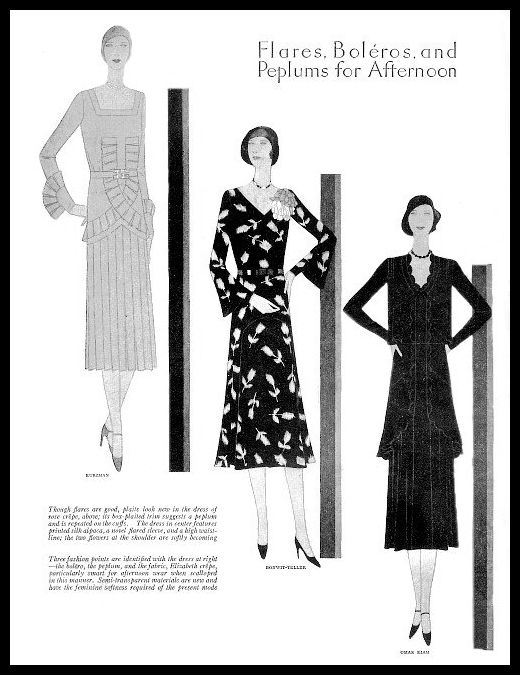
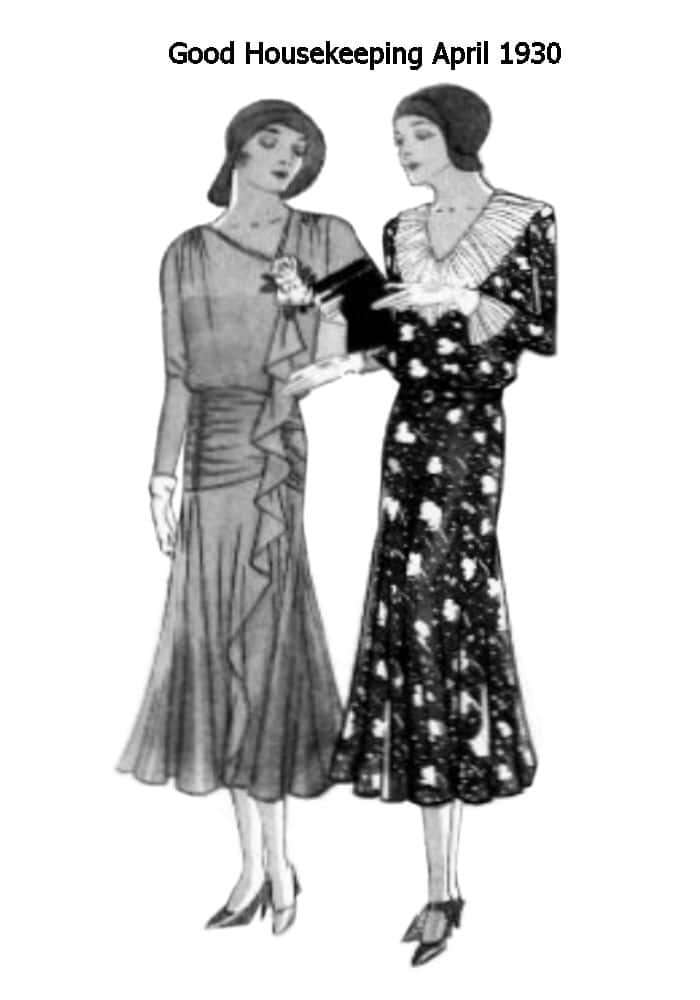
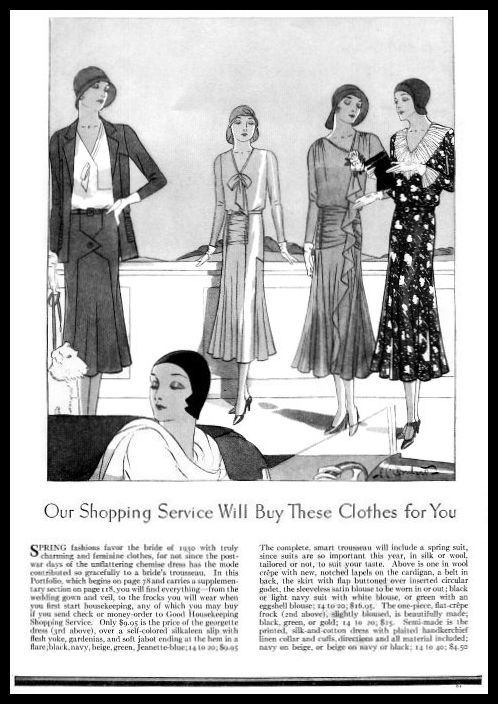
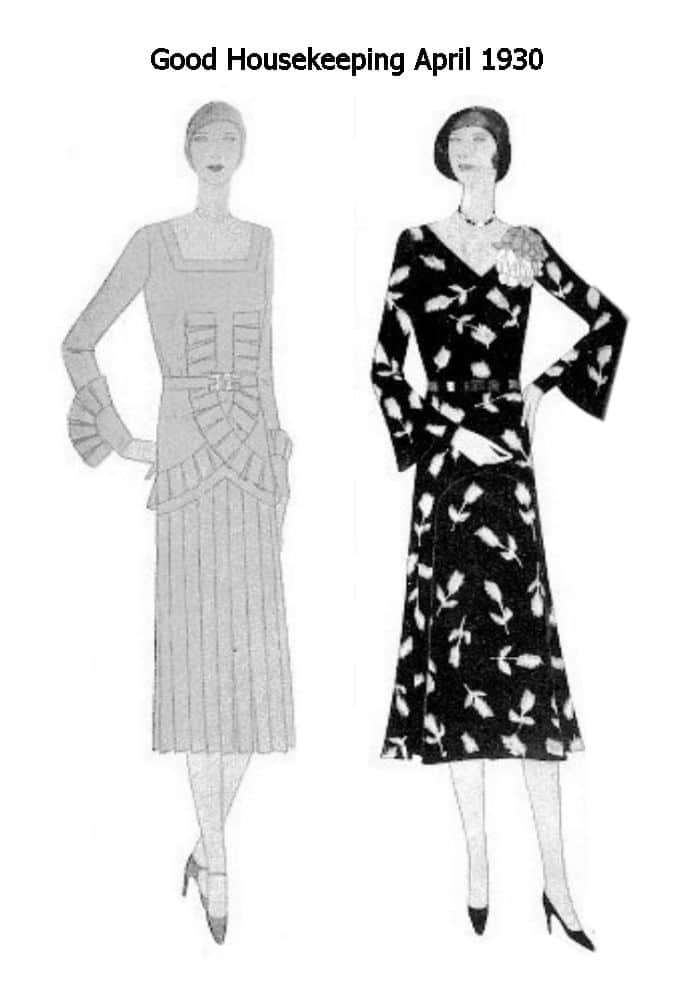
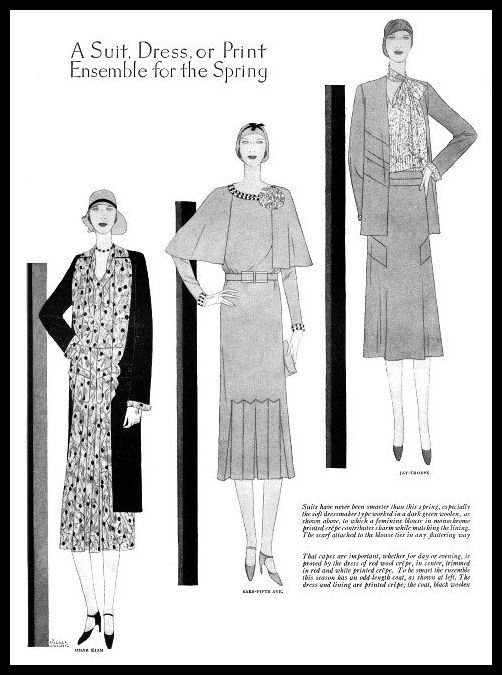
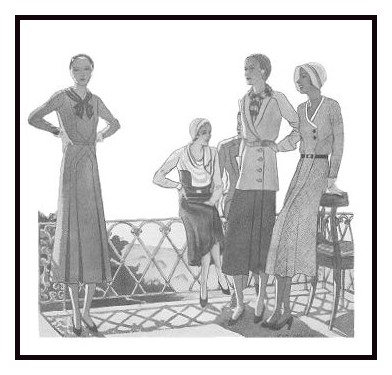
The one piece flat crepe frock was trousseau must, whilst Capes would be important for day or evening. It also stated that every type of bolero including bolero effects would be fashionable. You can see cape effect sleeves in the image below, plus a range of flared flutes and pleats arrangements. In general the lines are much much softer than in the 1920s.
To be smartly dress in Spring 1930 a woman was advised to have a suit in her wardrobe, perhaps a 'Beller' styled one with high waist highlighted by a belt.
Brimmed hats were also in fashion again and four or six button suede gloves the ideal accessory. The final advice was to use jewellery sparingly during the day and that chokers were very appropriate when jewellery was used.
----------------------------------part 3--------------------------------------
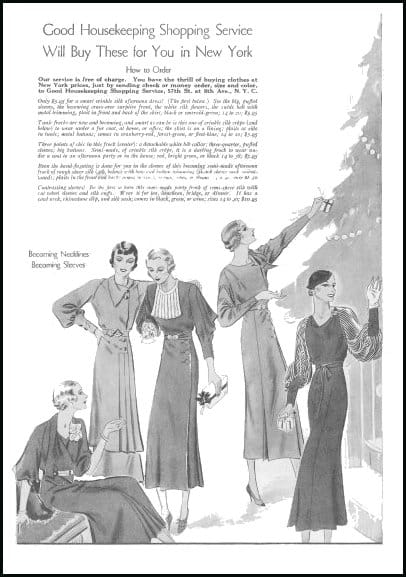
The Good Housekeeping magazine advised buying the fashionable 1930 trousseau in 'smart' New York shops, choosing suits or dresses of the latest styles and suitable for nothing more strenuous than a ladylike afternoon tea or bridge.
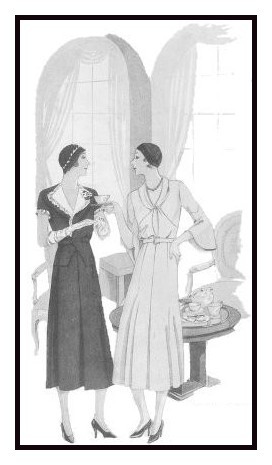
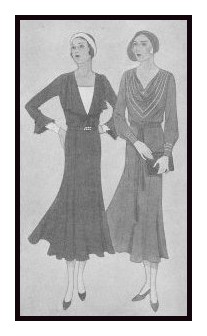
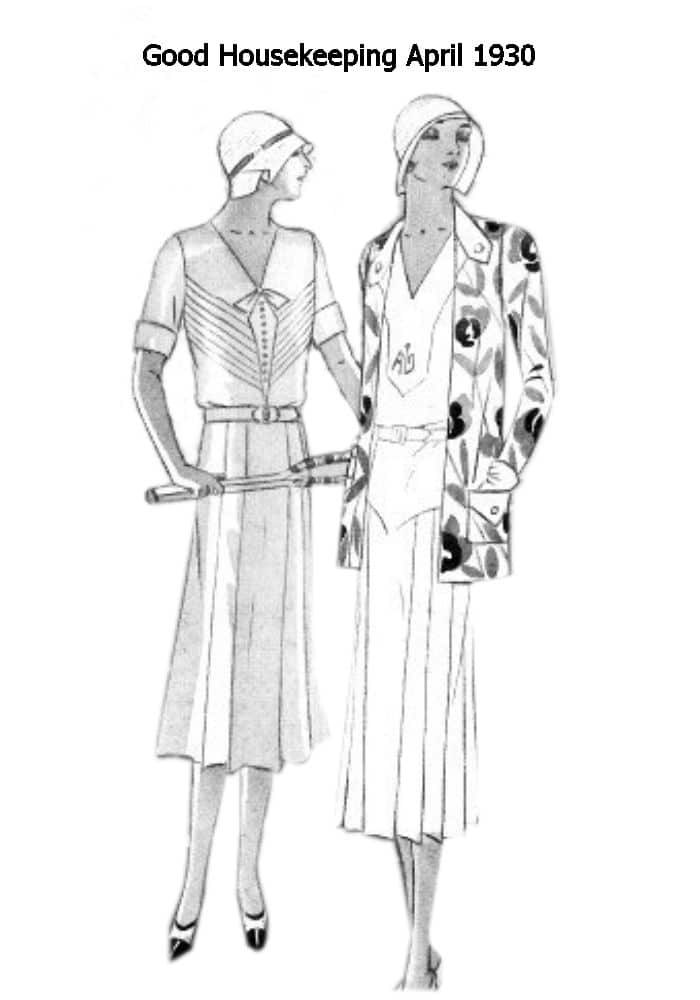
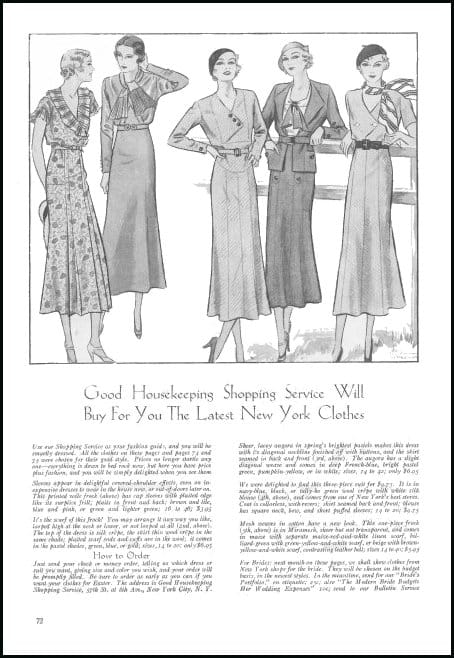
The 1930 magazine fashion article concentrated on defining the early 1930 sleeve styles and suggested choosing between the short sleeves or three quarter length sleeves shown far right. Bold contrasting smart colours like navy blue, red and white were typical colour schemes.
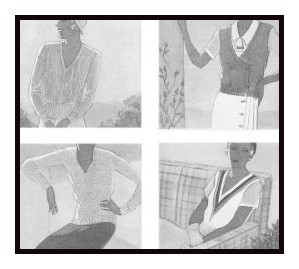
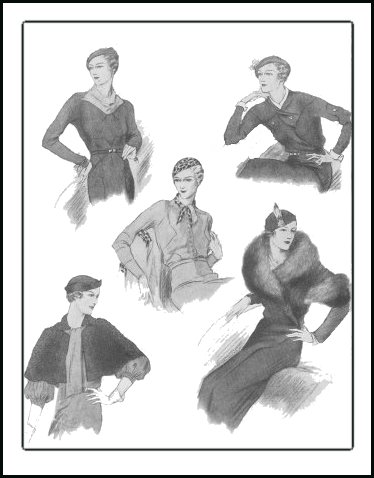
The influence of Coco Chanel is clear in the 2 images above. The relaxed and easy wrap cardigan jacket is stylish and simple in line whilst the knitwear tops are crisp and clean in cut with sporty trims of simple stripes a world away from the Edwardian era of 30 years before. The knitwear promoted here was hand knitted. Knitting reached fine art in the 1930s and was contoured and more fashioned to the body than in the 1920s.
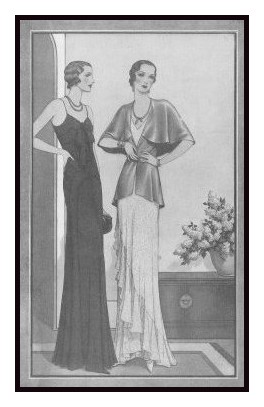
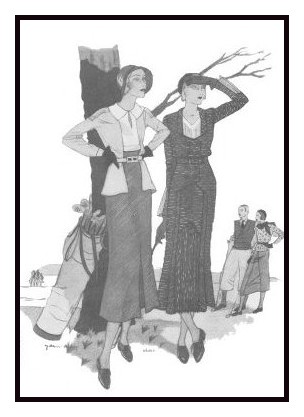
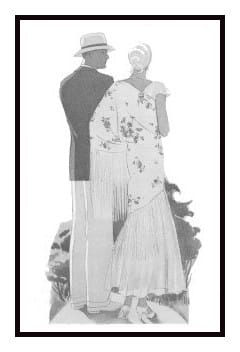
Every aspect of the the requirements of the 1930 trousseau was covered. From outfits for sports such as golf as both participants and as spectators watching a partner play. Romantic and very glamorous chic evening and cocktail dresses were intended to finish the day in the grand manner.
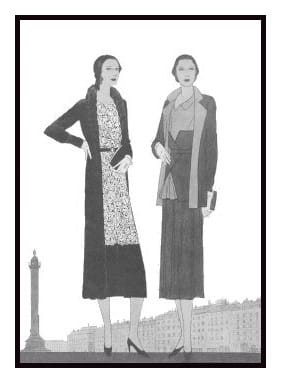
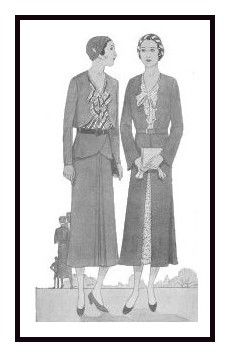
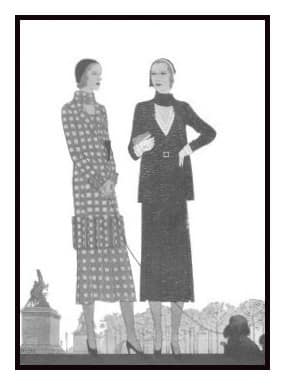
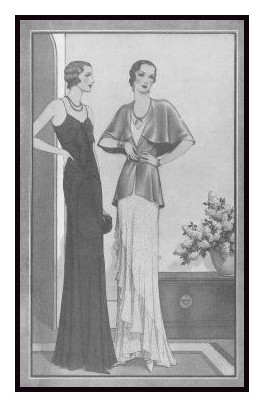
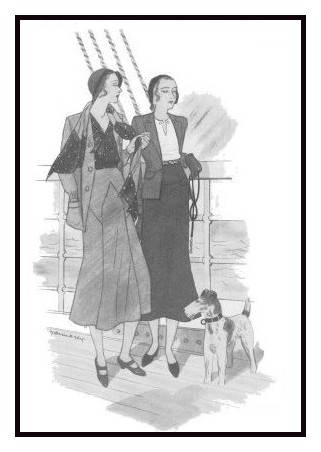
Practical go anywhere outfits like the suits and jackets above were useful outfits for many occasions. The woman of 1930 was to appear groomed and feminine whatever the occasion.
----------------------------------Oct 1930--------------------------------------
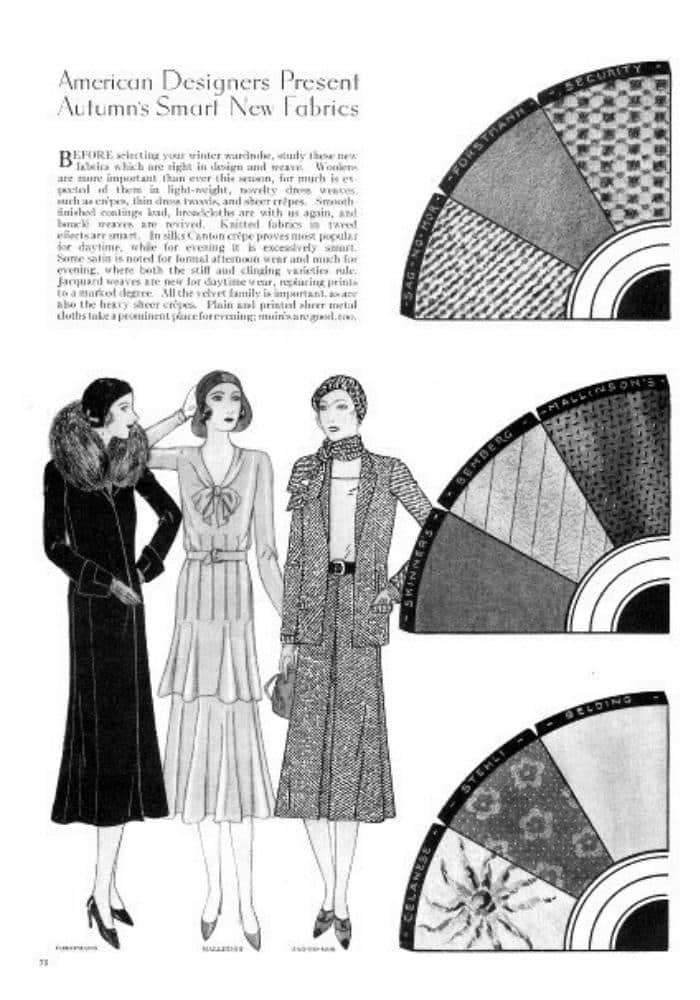
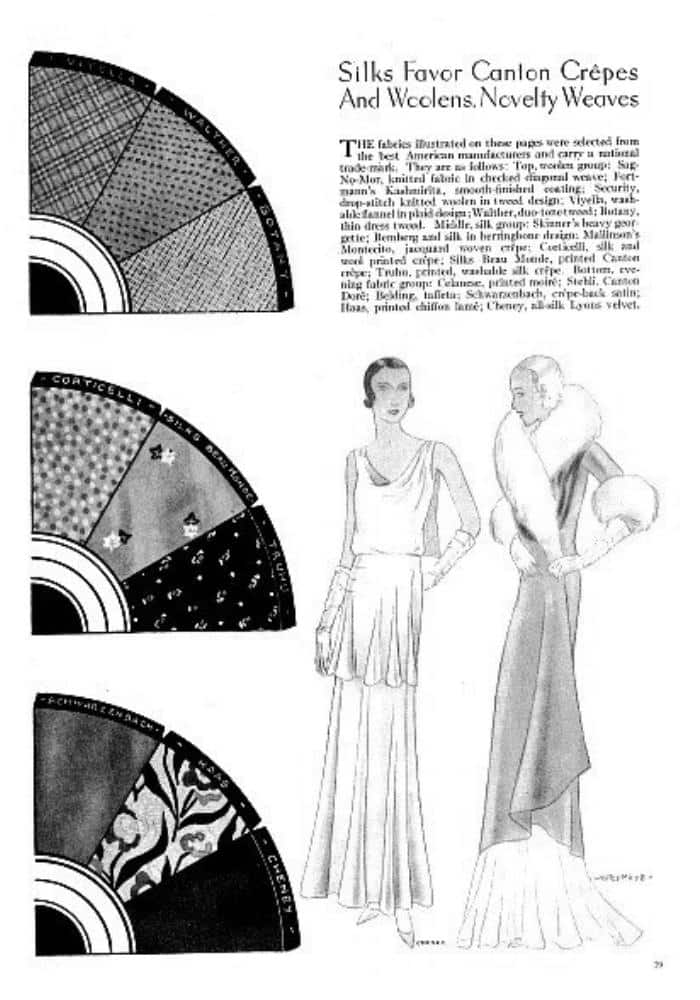
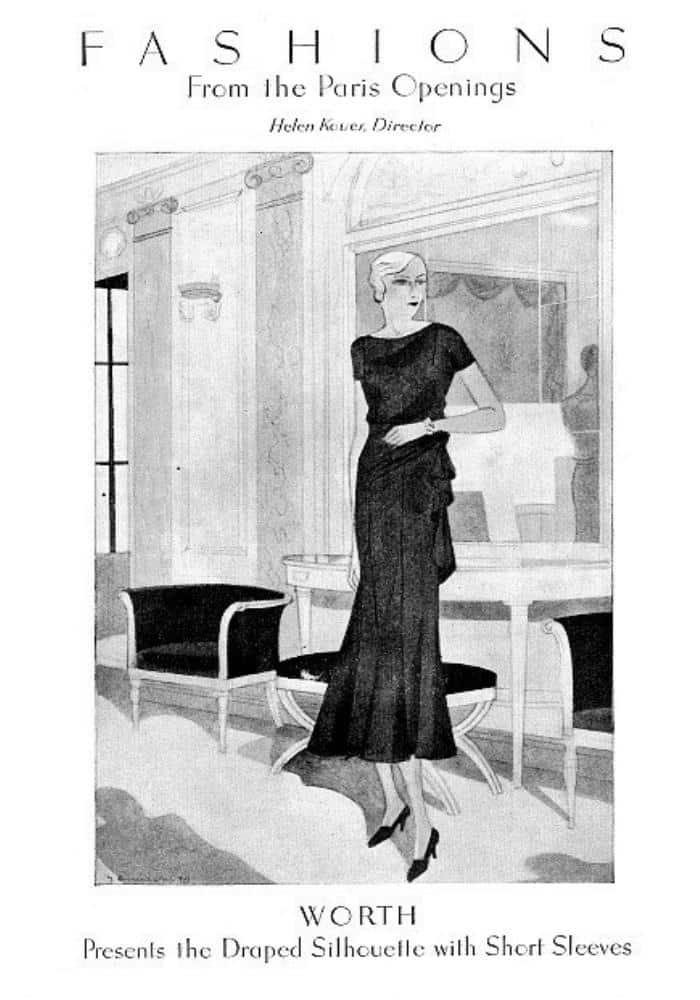
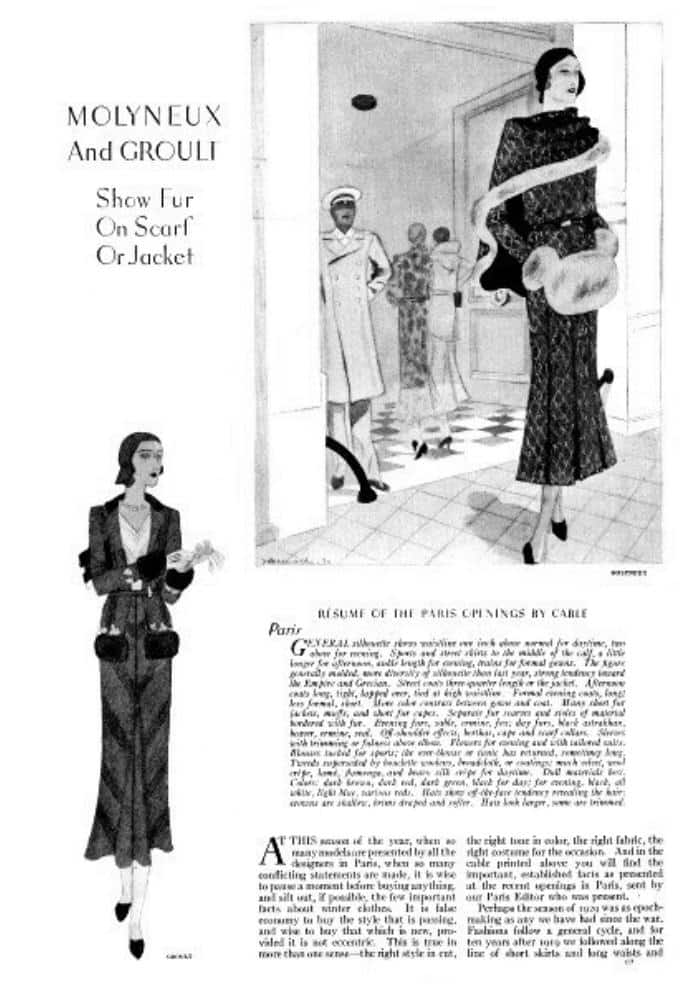
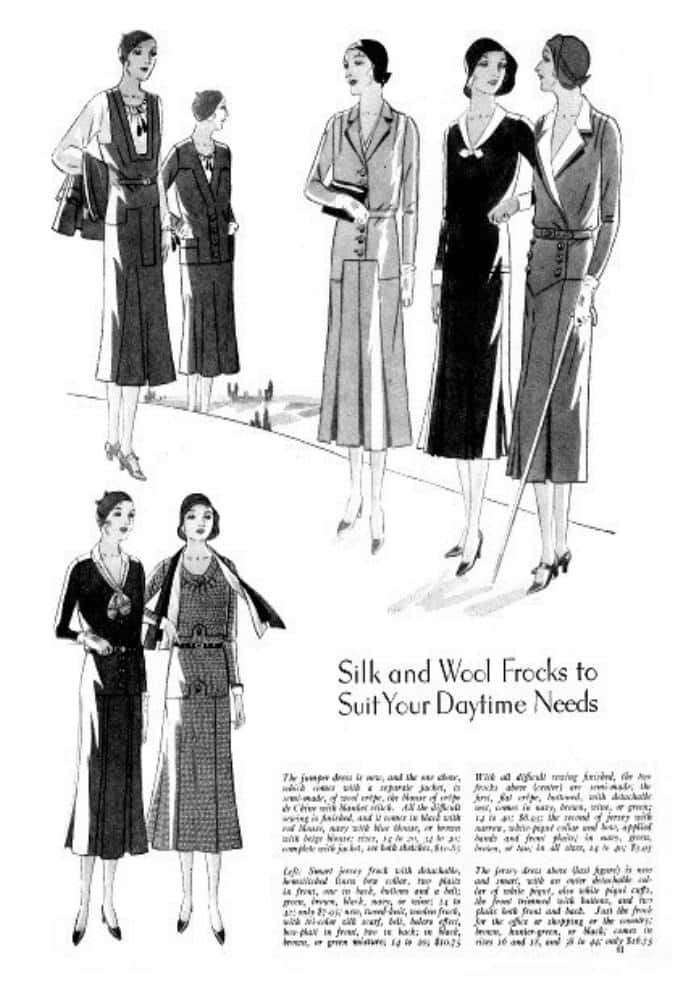
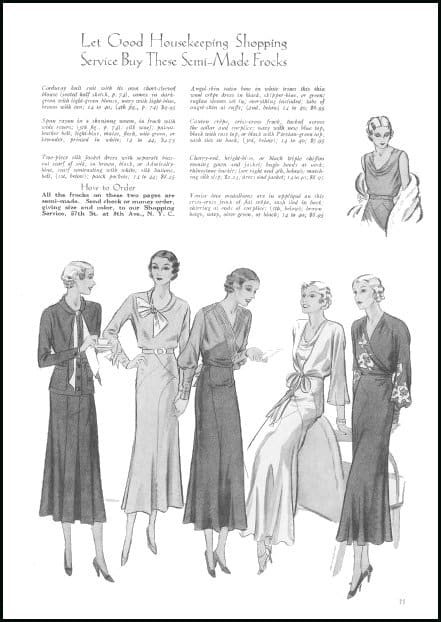
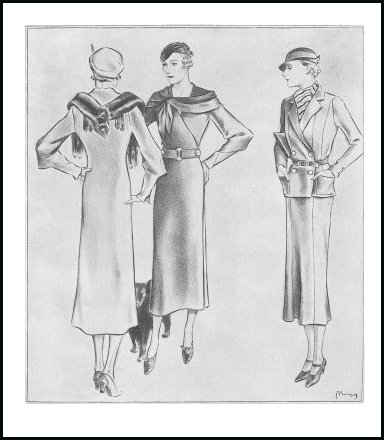
Intricately fashion designed close hip hugging true bias skirts, fur trims and white contrast collars and cuffs were a feature of female clothes of the 1930s.
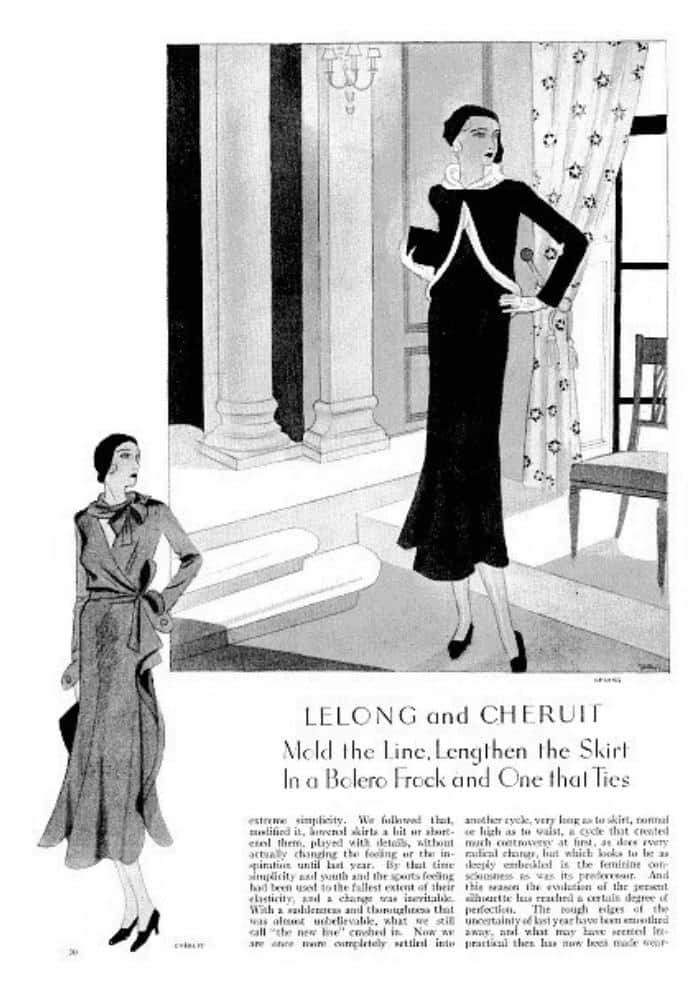
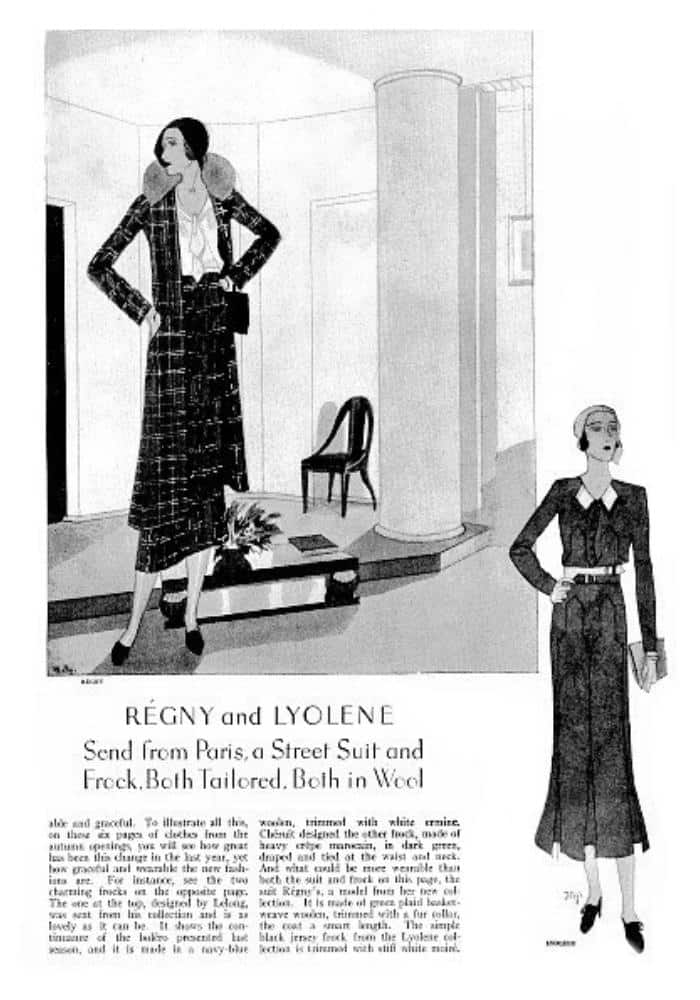
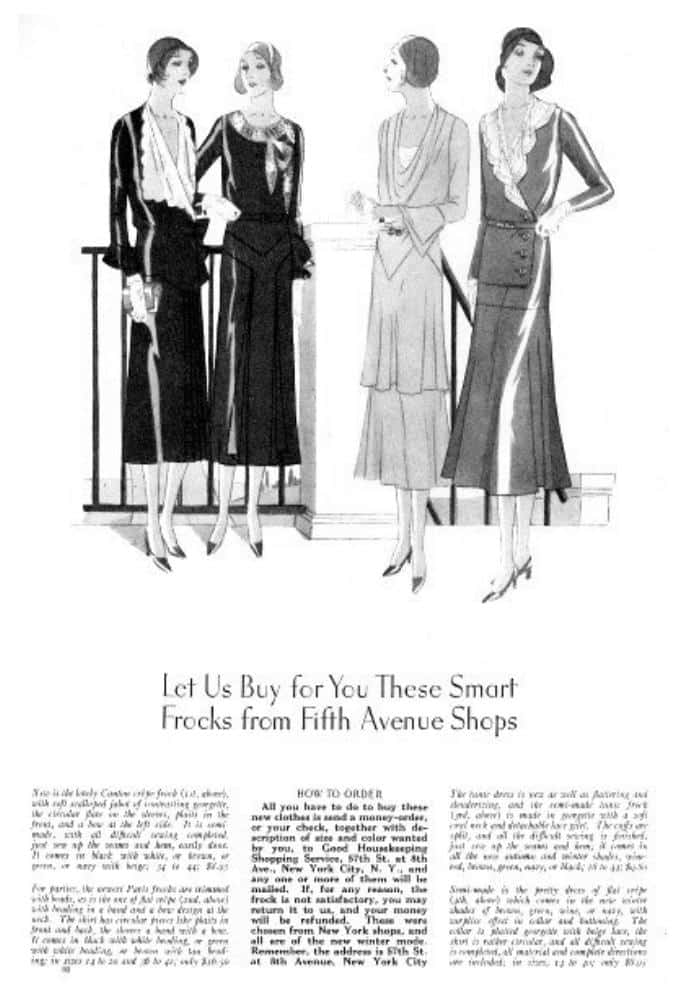
Parisian wool tailored street suits and dresses in heavy dark green crepe marocain (a crepe fabric with weft ribs) or green wool plaids and fur/ermine trimmings were though perfect for autumnal attire about town. The article confirmed the new silhouette as being longer in length and with the waist firmly in its correct position. The dithering of the 1920s waist had gone.
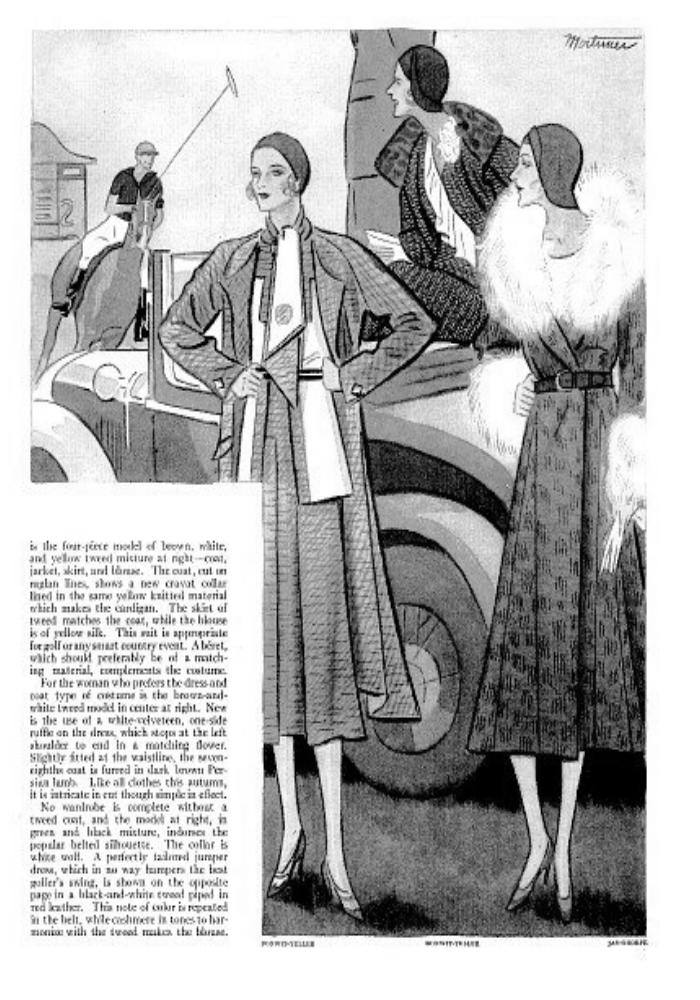
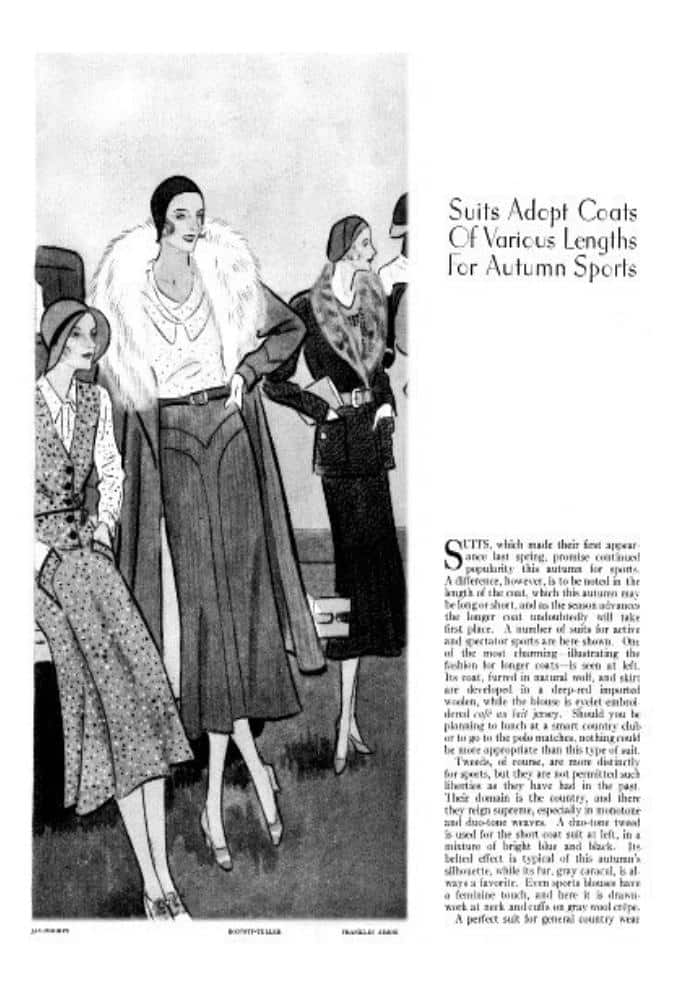
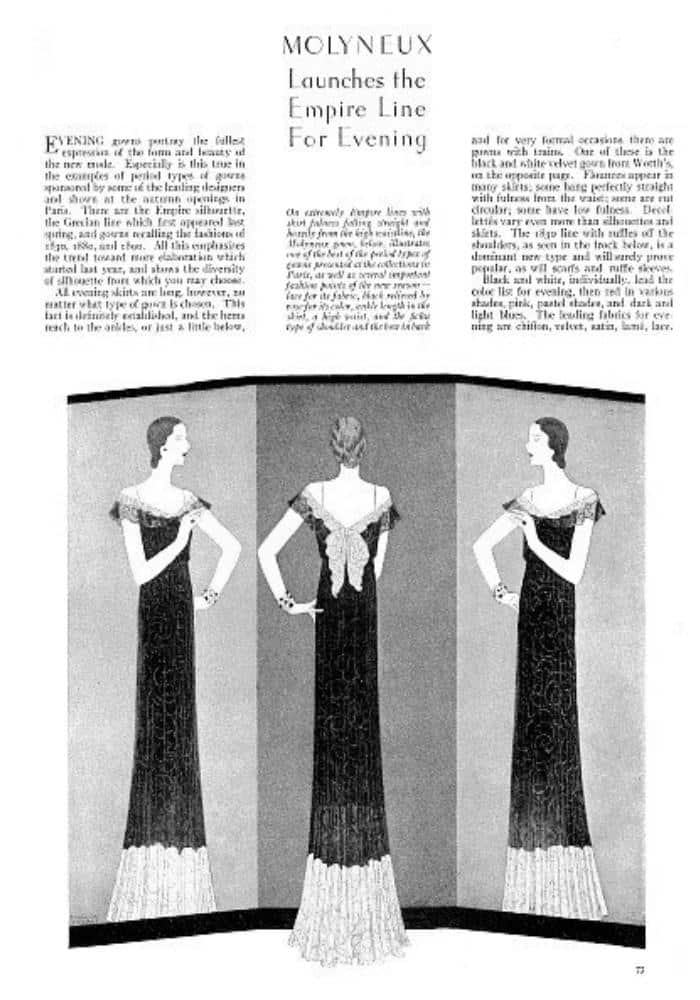
The pages above stated that suits adopt coats for various sports and that the coat could be longer or shorter, but that longer styles would probably be more stylish. These suits and coats were considered perfect for watching polo or lunching at the country club as were tweeds and duo toned wools with lilac, black and grey all mentioned. For evening the look was ankle length and empire line.
----------------------------------Dec 1932--------------------------------------
Easter 1932 to December 1932 - Good Housekeeping Fashion Design Images Fashion History 1930s
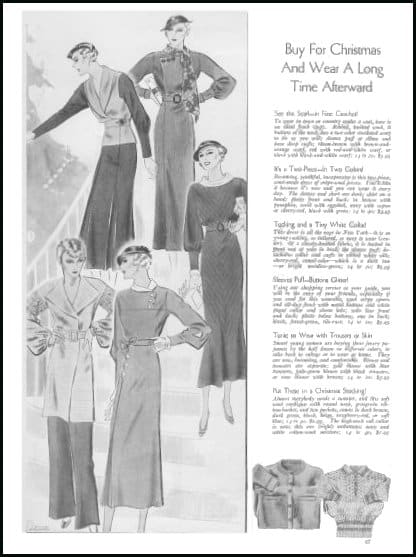
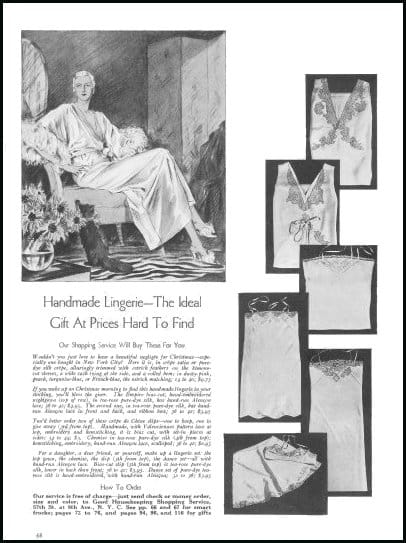
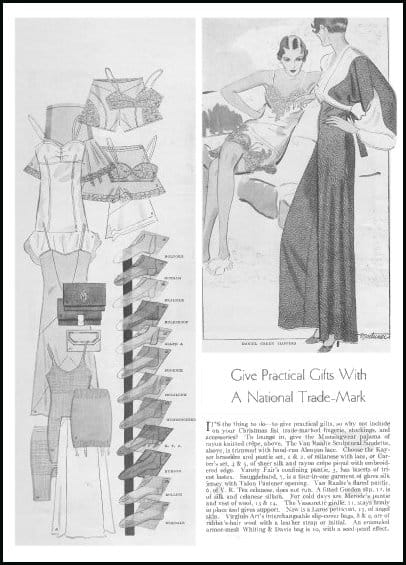
These images are from December 1932 winter fashion Xmas issue of Good Housekeeping magazine. All thumbnail images enlarge for personal use only printing and study.
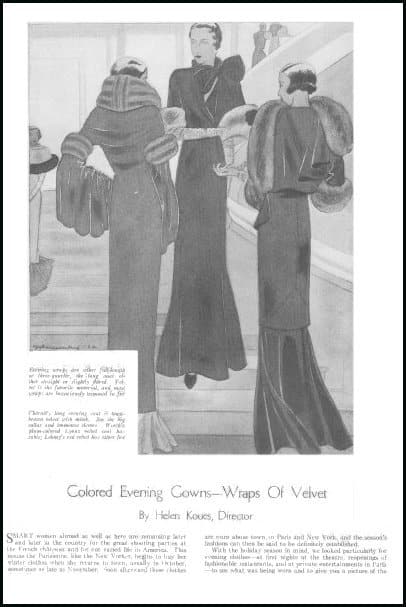
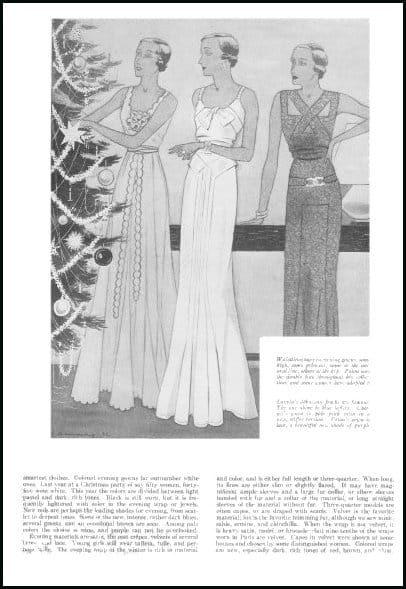
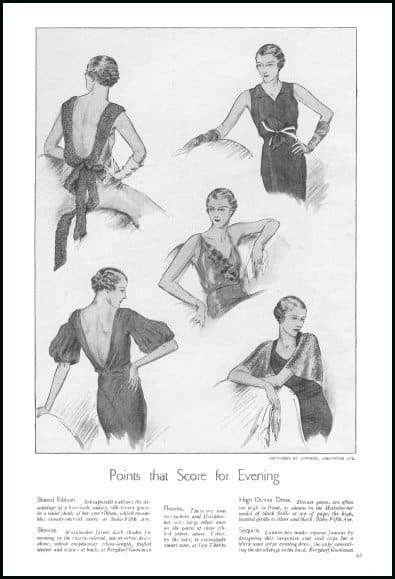
This December 1932 fashion issue concentrated on advising the reader of all the latest fashionable styles for Christmas activities and included everything from lingerie to eveningwear.
Low backs and velvet fabrics were strongly featured. To keep the half clothed wearer warm, cover up fur capes and velvet wraps were shown. This was such a glamorous look and one we associate with the the thirties movie stars. In the centre picture above the text stated that last year (1931) 45 out 50 women had worn white eveningwear. But that for December 1932, coloured pastels and rich colours were the order of the day, whilst black was to be worn with a lighter or brighter wrap or jewels. Nine tenths of wraps worn in Paris were velvet so it was clear to Good Housekeeping that wraps should be made from velvet first followed by satin, moiré or brocade as alternative choices. Shirred ribbons, sleeves, sequins and flowers were all highlighted as potentially able to make a 1932 fashion statement for the woman of elegance - the distinguished woman.
----------------------------------Easter 1932--------------------------------------
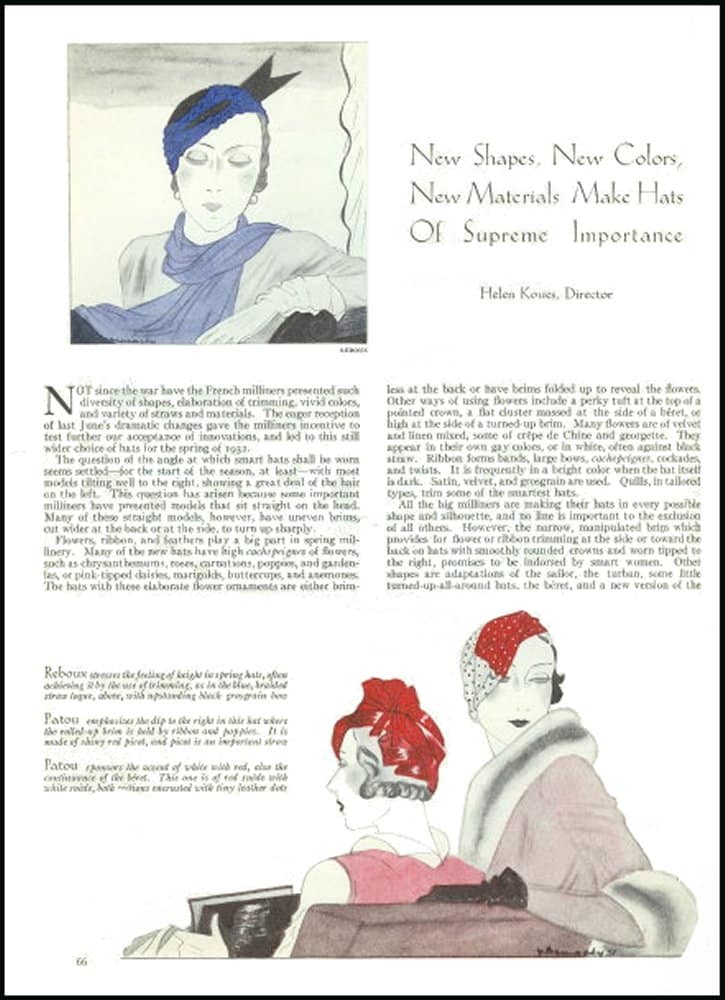
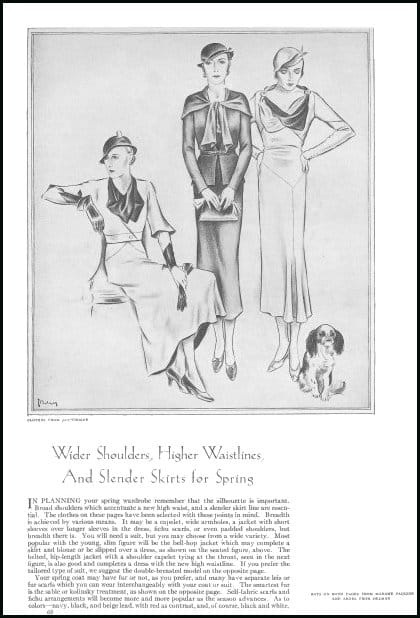
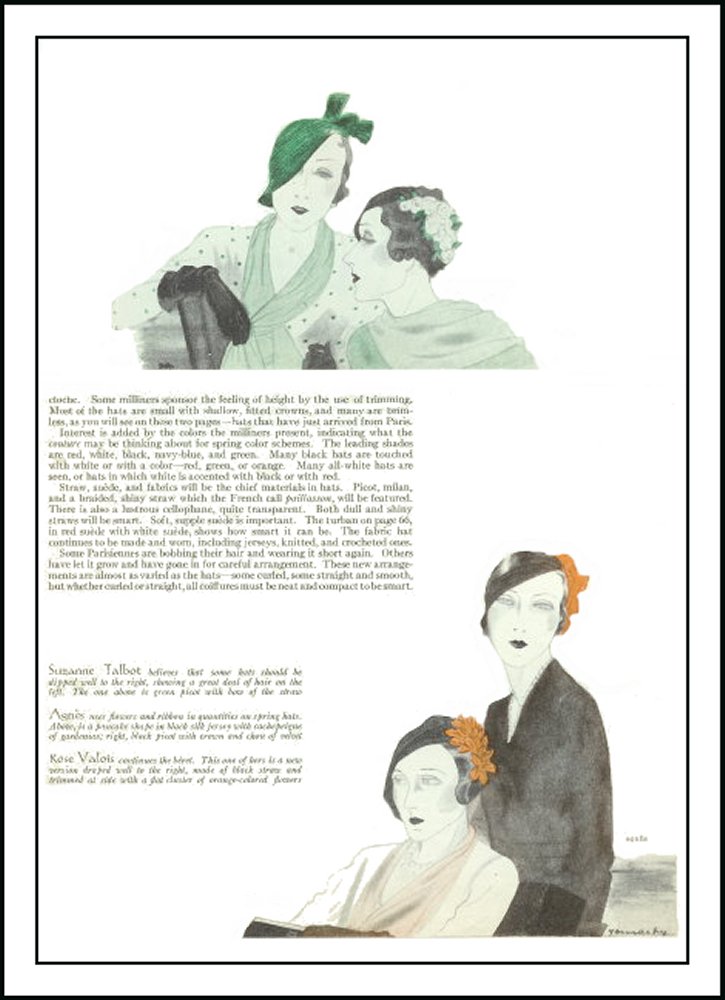
These images show how the hat fitted closely to the head in 1932. The 1930s style was also firmly established with bias cutting, a longer skirt length, the waist at the waistline and interesting sleeve lengths with cape angel sleeves and fuller bloused sleeves. These styles showed best on slender, but womanly more feminine figures than the boyish silhouettes of the 1920s.
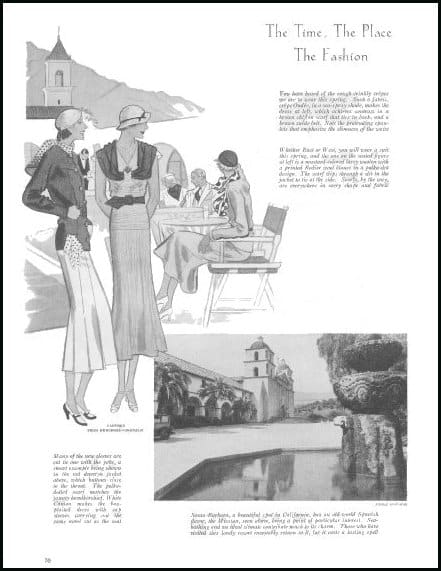
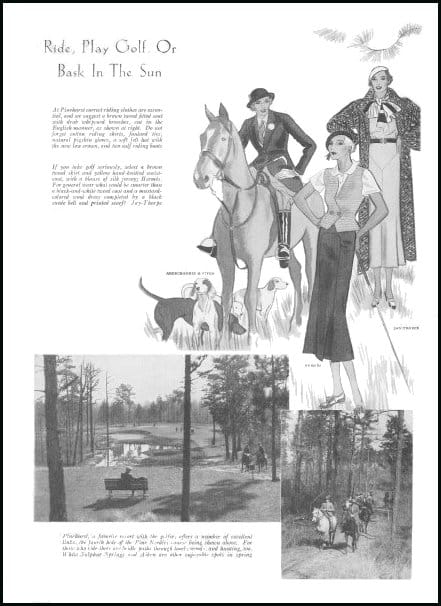
The original scans for the images I've presented here were kindly provided by Cynthia McCracken of Florida who sells vintage paper ephemera at eBay. My sincere thanks Cynthia for all your efforts in sending me these great images so all the site visitors and students can enjoy them freely.
You can read more detailed text about 1930's fashions for women in the stylish thirties and see more 130 Good Housekeeping fashions like this in the next page.
The selection of fashion history images above on this page and in 1930 Part 2 are taken from a Good Housekeeping magazine dated April 1930. The original scans for the images I've presented here were kindly provided by Cynthia McCracken of Florida who sells vintage paper ephemera. Original images such as these look wonderful when framed and used as part of a room scheme theme. I hope to feature more of Cynthia's quality images in the near future.
My sincere thanks Cynthia for all your efforts in sending me these great images so all the site visitors and students can enjoy them freely.
You can see some free line drawings of earlier 1930s silhouettes here.
