By Pauline Weston Thomas for Fashion-Era.com
1914 -18 Changes for Women
Socio economic changes that occurred during the First World War 1914-18 and became accepted, changed the role of women in a way that no amount of campaigning by a few liberated ladies could have.
The Flapper

The costume history image in our minds of a woman of the 'Roaring Twenties' is actually likely to be the image of a flapper. Flappers did not truly emerge until 1926.
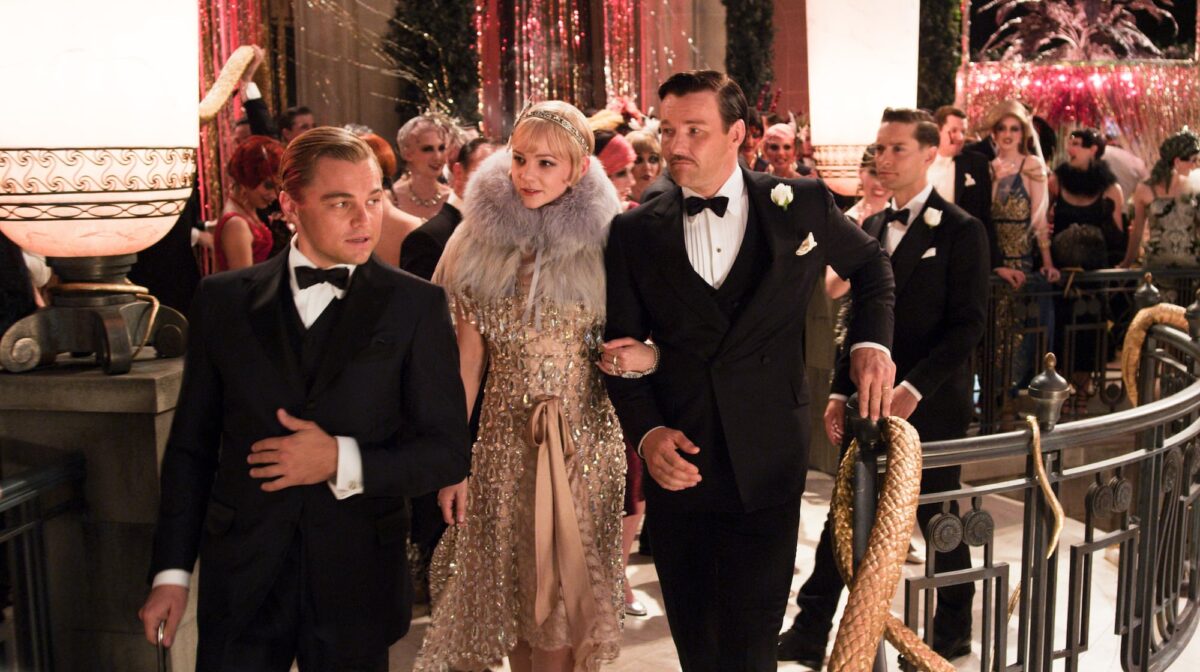
Flapper fashion embraced all things and styles modern. A fashionable flapper had short sleek hair, a shorter than average shapeless shift dress, a chest as flat as a board, wore makeup and applied it in public, smoked with a long cigarette holder, exposed her limbs, and epitomized the spirit of a reckless rebel who danced the nights away in the Jazz Age.
The French called the 1920s flapper fashion style the 'Garconne'.
Attainable Fashion for All
High fashion until the twenties had been for the richer women of society. But because the construction of the flapper's dress was less complicated than earlier fashions, women were much more successful at home dressmaking a flapper dress which was a straight shift.
It was easier to produce up-to-date plain flapper fashions quickly using flapper fashion Butterick dress patterns.
The flapper fashion style flourished amid the middle classes negating differences between themselves and the truly rich, but continuing to highlight some differences with the really poor.
The really rich still continued to wear beautifully embellished silk garments for the evening, but the masses reveled in their newfound sophistication of very fashionable flapper clothes.
The Short Skirt Misconception of the Twenties
New students of costume history often mistakenly assume that all dresses day and evening were short in every year of the twenties and that flappers were the only fashion style of the twenties. Dress and coat lengths were actually calf length and quite long for most of the decade.
Shortness is a popular misconception reinforced by the availability of moving film of the Charleston dance which shows very visible knees and legs on the dancing flappers.
Skirts only revealed the knee briefly between 1926 and 1928, and this was the only period when evening dresses were short in line with day dress lengths. This was the flapper period.
Dating the Twenties Hemline


From 1913 the hemline had begun to show a little ankle. Between 1916 and 1929 hemlines rose steadily, faltered then rose again.
In 1918 skirt lengths were just below calf length and in 1919 skirt lengths were calf length.
Calf-length loose dresses circa 1918 compared with those of 1920 where the waist has shown a definite drop, but the length remains steady around the calf area.
Between 1920 and 1924 skirts remained calf length with fluctuations of an inch or two according to garment style. Skirts were actually still rather long but were designed to confuse.
The Elusive Hemline of the 1920s.


Gradually by degrees, they gave the illusion of being first long and then shorter with dipping, scalloped and handkerchief hemlines in floating fabrics. It was only in 1925 that skirts rose 14 to 16 inches (45 to 50 cm) from the ground making the shorter hemline we associate with the era.
By 1926 skirts were at their shortest in the Twenties decade and showed the knee until 1928. The whole leg as far as the kneecap was revealed.
By 1929 uneven hems and asymmetric skirt hemlines again helped the transition to longer skirts. Longer sheer overskirts and semi-sheer top skirts were worn over shorter linings.
By 1930 the hemline was several inches below the knee.
The Masculine Silhouette of 1920's Females
After the war when women's dress became more mannish, each year seemed to get more severe in line which almost emphasized the feminine woman beneath. Female clothes became looser and more shapeless in fit.
The bust was suppressed, the waist disappeared, the shoulders became broader, and the hair shorter and shorter. Narrow boyish hips were preferred. The silhouette emphasized a flattened chest and womanly curves were eliminated as the line became more simplified.
The Flat Chest of the Twenties
The slender flat chested tanned body and face of a 15-year-old became the desired silhouette of the bright young things of the 1920s. Health and beauty clubs helped women refine their silhouettes whilst getting fitter and healthier.
It was a difficult time for the former matrons of Edwardian society, the previous leaders of fashion whose style of dressing became as passé as their rounded figures and older faces. More youthful women who could party all night and carry the boyish fashions well were all the rage.
The 1920's Bra

The bras of the early 20s include homemade ones in white cotton and which were little more than bust bodices with extra separation. Some purchased bras were like camisoles and they offered no support.
Big-busted girls turned to bandage their breasts flat, but many adopted the Symington Side Lacer, a bra that could be laced at both sides and pulled and pulled in to flatten the chest.
For young ladies with youthful figures, a satisfactory bra was the four-sectioned lace bandeau bra, lined in net. None of the bras gave much shape, but few ladies were seeking anything more than stopping the bust from wobbling. As long as they looked boyish they looked fashionable.
By the 1930s Triumph, Maidenform, Gossard, Warner Brothers, Spirella, Twilfit and Symingtons were all making bras that did the job of separating the breasts. At the same time it was finally acknowledged that women had differing cup sizes and bra sales doubled with the new designs.
Girdles and Underwear

Between 1920 and 1928 corset sales declined by two thirds, but it adapted to changing needs.
Fast flappers refused to wear corsets and rolled their stockings to the knee to enable them to dance easily.
Long Corsets produced the boyish figure, but instead of thick boned corsets many women preferred thin elastic webbing Lastex girdles that flattened the abdomen.
Suspenders were attached to the girdles. The underwear was minimal, sheer and lightweight.
Women wore cami-blockers (directoire knickers and chemise) or cami-knickers or knickers and a petticoat.
An Air of Nudity in Stockings and Bare Arms

Although the 1950s are thought of as the first time for teenagers and the 1960s as the era when the young first led fashion there is no doubt that the possession of a youthful body was a prerequisite of 1920s fashion.
The arms were bared not only for evening, but also for day and the legs were covered in beige stockings visible to the knee which gave an overall more naked look than ever before.
Feet, ankles and calves formerly hidden and encased in black stockings were suddenly on show.
Young women always wore black wool stockings until the end of World War I.
By the 1920s stockings with patterns were hot fashion items. Embroidery snaked around the ankles and up to the knees.
Flesh and soft pastel colors were popular and they were made in either silk or artificial silk known as art silk later called rayon.

The rayon stockings were very shiny so girls powdered their legs to dull them before venturing out. Names of stocking colors were Honey Beige, Teatime, Rose Morn, Boulevard, and Spanish Brown. Lastex, a rubber-based thread was used in knee highs in bright colors.
Gabrielle 'Coco' Chanel
Coco Chanel sporting short hair wearing one of her simple jersey outfits and revealing bare arms and flesh-toned stockings.
The great fashion designer Gabrielle Chanel 1883-1971 self-styled herself to be known as Coco Chanel. By 1920 the silhouette of her clothing designs have come to be the epitome of 20's style.
The work of other famous designers beside hers seemed old fashioned and outmoded belonging as they did to the pre World War One era.

She promoted the styles we associate with flappers. She worked in neutral tones of beige, sand, cream, navy and black in soft fluid jersey fabrics cut with simple shapes that did not require corsetry or waist definition.
They were clothes made for comfort and ease in wear making them revolutionary and quite modern. She was the Jean Muir or Donna Karan of her day and the originator of the LBD - that little black dress.
Short Hair
The 1920s saw a universal fashion for short hair a more radical move beyond the curtain styles of the war era. Hair was first bobbed, then shingled, then Eton cropped in 1926 - 1927.
An Eton crop was considered daring and shocked some older citizens since hair had always been thought a woman's crowning glory. Only maiden aunts and elderly dowagers avoided the severe shorter styles, but by the 1930s softer waved hairstyles were a refreshing change.

1920s Cloche Hats
Women wore cloche hats throughout the twenties.
A cloche hat told everyone that you had short hair.
It was only possible to get a close-fitting cloche on the skull if the hair was cropped short and flat.
The cloche hat affected body posture as it was pulled well over the eyes which meant young women held their heads at a specific angle in order to see where they were going.
Foreheads were unfashionable in the 1920s.

Hats of 1926


I have a hat photo on the right that Helen sent to me from PA and it compares very much with a similar style in the image of Emily Davies taken in 1926 in Cardiff, UK, but 6000 miles or so apart.
The hat fashions are amazingly similar which shows how modern communications and in particular silent movies had begun to make a real impact on fashion and style.
You can see more about hats in fashion in the hats hair in the twenties.
Make Up Rites
During the era, there was an increased use of makeup and it was fashionable to perform the rites of makeup in public.
Instead of disappearing to the powder room women got out their engraved compact and applied lipstick and powder in sight of a whole restaurant or nightclub or tearoom.
Ox blood lipstick was used lavishly, but rouge was still used sparingly. Today compacts from the 1920s are sought after by collectors.
Fashionable Twenties Coats and Outerwear
Coats of the 1920s were mostly long until 1926. They all seemed to have one thing in common in that almost all illustrations of them show them as wrap-over whatever the length.
They often wrapped to just one side fastening which was a feature of the garment as either a huge button or some complex tab and buckle.
Many coats had shawl fur collars. A fashion for coordinating coat linings with dress fabrics started at this time.

1920s Shoes

T-bar shoes with buckles, bows, and straps were featured in the 1920s. Footwear was visible beneath short dresses and was selected with more care as a fashion accessory.
Once shoes began to be mass manufactured in the 1920s footwear became an essential fashion accessory. Now it was truly visible beneath shorter dresses it needed to be selected with more care.
Heels were over 2 inches high and waisted until the 1930s when they were lower straighter Cuban shapes. Strapped shoes were called Mary Janes.
T-bar shoes or others with buckles and bows made interesting fashion statements. Sequin or diamante trims were quite usual.
In the 1930s shoes began to look heavier, but the toes were less pointed and more rounded, often of peep style.
In 1936 Ferragamo the Italian shoe designer made wedge heel designs and by the 1940s, chunkier wedged platform shoes with thicker soles made the wearers feel they could walk for miles if needed.
Unisex Styles
Chanel had introduced the world to the jumper and it was worn by both men and women. Knitted garments for men really took off in the twenties and women eagerly wore the same knits too. Fair Isle patterns became very popular for both sexes.
Free from corsetry and wearing simplified clothing modern women were able to indulge in sports. Soon swimming, golf, and tennis along with keeping fit were the passions of young ladies. Shorts became acceptable to wear for cycling and for skating normal dresses were roomy enough for movement.
The fashionable modern women of the twenties unlike their Edwardian laced and boned mothers truly belong to the twentieth century.
Real Historically Accurate 1920s Flapper
These are original family photographs of ordinary people in everyday clothes and taken 1926, 1927, 1928, and 1929. My special thanks to Helen Dudzic of Pennsylvania, USA and Carol Morgan of Cardiff, UK who gave me these marvelous costume history photographs which are such great images.
You can read more detailed text about 1920's fashions in flapper fashion. You can see some 1920s wedding photos.
These 1920s photographs should not be published/used elsewhere - © Copyright www.fashion-era.com 2005-2023.
Two Flappers in Evening Dress 1929


This is a wonderful happy relaxed old USA photograph from Helen Hudzic of two sisters in the 1920s. Both wearing their best partying flapper frocks. The old studio photo may well have marked a special birthday or an engagement.
It could even be a wedding photographer as the woman on the right is wearing a white or light-toned lace dress and both appear to wear exotic magnificent orchid corsages. Orchids were a very popular decorative floral fashion for both women and men in the 1920s. If you see the film Aviator; you will notice orchids used throughout the 1920's scenes.
The dresses are very fashionable looking for any era and look more than just ordinary fashion wear. These were special dresses in my opinion. I'd estimate the old photograph above was taken circa 1929 - 1930. Elements that suggest this include the softer waving hair of the late 1920s and the rounded necklines.
Most importantly the dress on the left shows evidence of a more normal waist which returned circa 1929-1930 depending on how fashionable the dress.
The skirts are also longer than those of 1926 when skirts were at their shortest and interestingly both of these have curved scalloped hems a favourite feature of late 1920's dresses, just like the line drawing sketches from my pages of 1928 and 1929 .
These women appear to have confidence and assurance that came to ordinary women as they became more and more emancipated and acquired a new sophistication. Have you noticed those really stylish shoes?
1928 Flapper Dress Image


You can see in this 1920s photograph how the skirt was just that bit shorter c1928 in this image below. The dress has godet inserts, a popular style addition of dresses of 1928. Some were inserted as handkerchief godets as the hemline dithered and was gradually falling in 1929.
The hemline plummeted after the Wall Street stock market crash. The fox fur with its tails was often referred to as a scarf or stole in USA. In the UK it was often called my fox or tails. The line drawing shows a swathed scarf effect collar giving a similar line as the fox. Helen also sent me this old mid-1920s photograph of 2 younger girls in wrap coats with fur trims.
The whole look from coat, to hair to footwear is so very representative of flapper fashion styles then.
Flapper Coat Image


The old photo of Helen's relatives wearing coats is in the same time frame as the photo below. The old photograph below was known to be taken in 1926 and is of Emily Lewis of Cardiff, South Wales.
When you enlarge the image you can really see the deep hem on the skirt which appears to have been shortened in tune with the ever rising hemline of the era.
The picture shows it is not as short as fashion plates or commercial fashion photos in magazines of the same date, but shows a woman trying to keep up to date with the rapidly rising hemline. Fashionable long coat will look stylish if worn along with classy pants.
1920s Attire Pictures
1920s Fashion Pictures of Women's Dresses Illustrations of fashions from a lady's magazine circa 1923.


